A Chicago Historic Hotels collection
Grand hotels and private clubs in the guide's most ornate buildings — Classical Revival, Modern French, Venetian Gothic and Romanesque Revival, each style named by the building's own designation report.
Nine buildings whose designation reports name a revival style: Classical Revival, Modern French, Venetian Gothic, Romanesque Revival, a modified Louis XVI. The reports trace their ornament to French, Italian and Renaissance precedent. Chicago was inventing the tall building in the same decades, a few streets away.
The oldest is the 1893 Chicago Athletic Association, Henry Ives Cobb’s Venetian Gothic clubhouse on Michigan Avenue — a private club no member of the public could enter for 114 years. The Auditorium Annex went up the same year, designed by Clinton J. Warren so its fenestration, stringcourses and cornice would harmonize with Adler and Sullivan’s Auditorium Building across the street. It is now the Congress Plaza.
The 1896 Silversmith Building on Jewelers Row carries a red-brick and green terra-cotta front its report calls Romanesque Revival. The Canopy and the Hilton Garden Inn share a single landmark, the 1905 Chicago & North Western Railway Office Building, whose report devotes a whole section to the Classical Revival style. The Majestic of 1906 wears ornate terra cotta drawn from 16th- and 17th-century Renaissance France. The Blackstone of 1908–10 is Marshall & Fox’s “French variation of Beaux-Arts classicism”. The Palmer House carries the oldest name of all — the hotel dates to 1870, though the building you walk into is 1925–27 — and the 1927 Stevens, now the Hilton Chicago, closes the run with a modified Louis XVI base and crown.

1893 Venetian Gothic Landmark
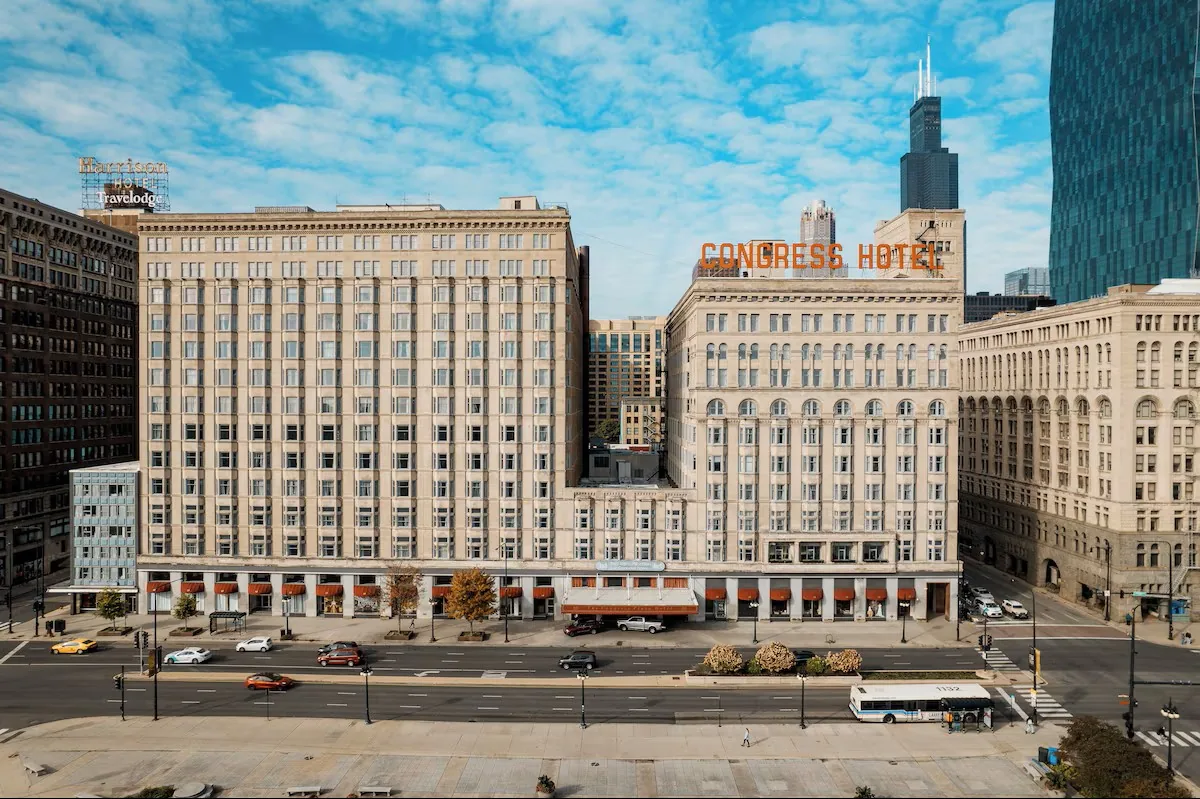
1893 Auditorium Annex
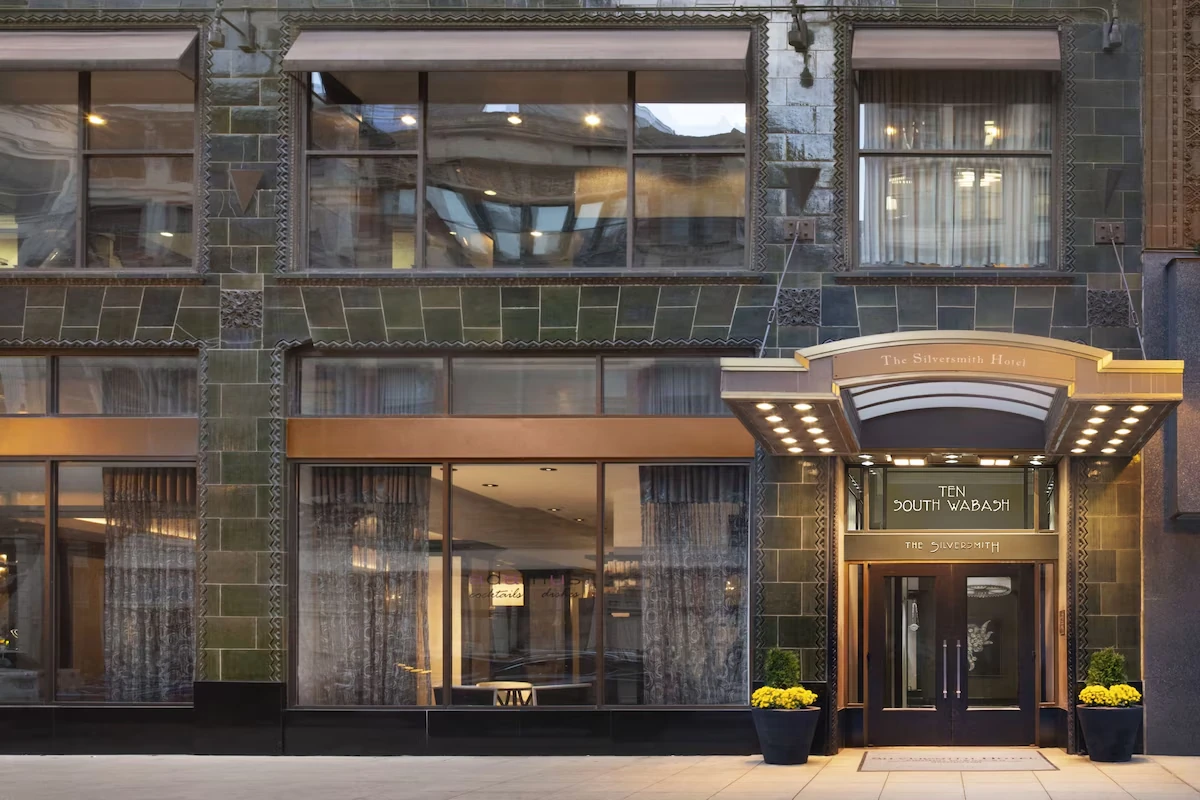
1896 Silversmith Building

1905 C&NW Railway Office Building
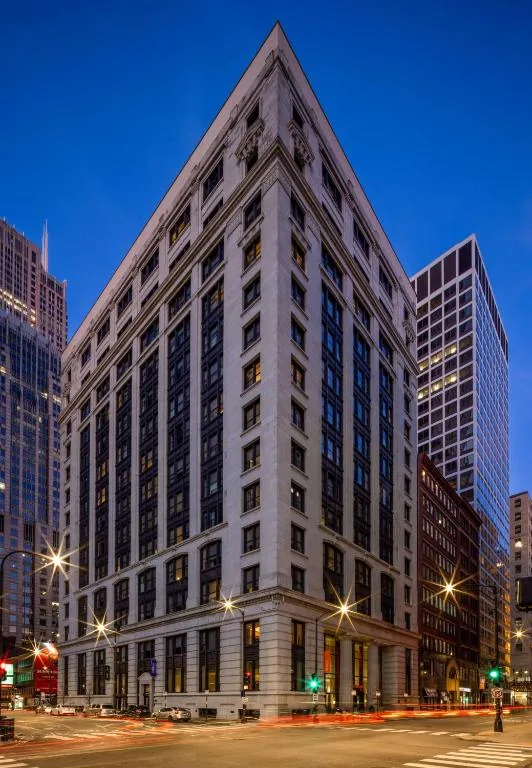
1905 C&NW Railway Office Building

1906 Majestic Building
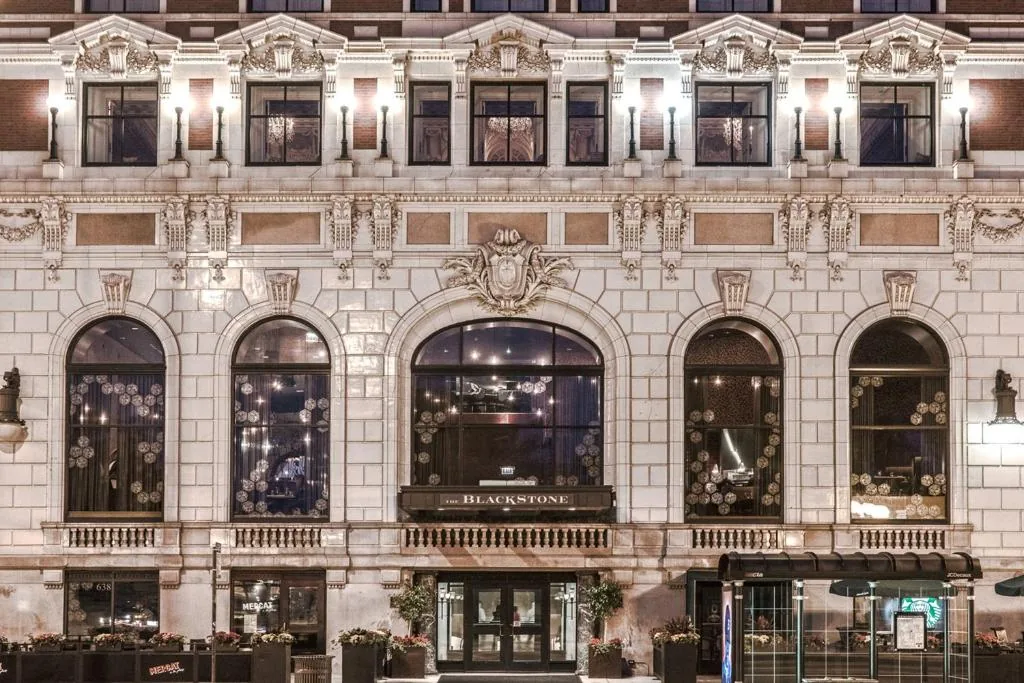
1910 Beaux-Arts Landmark
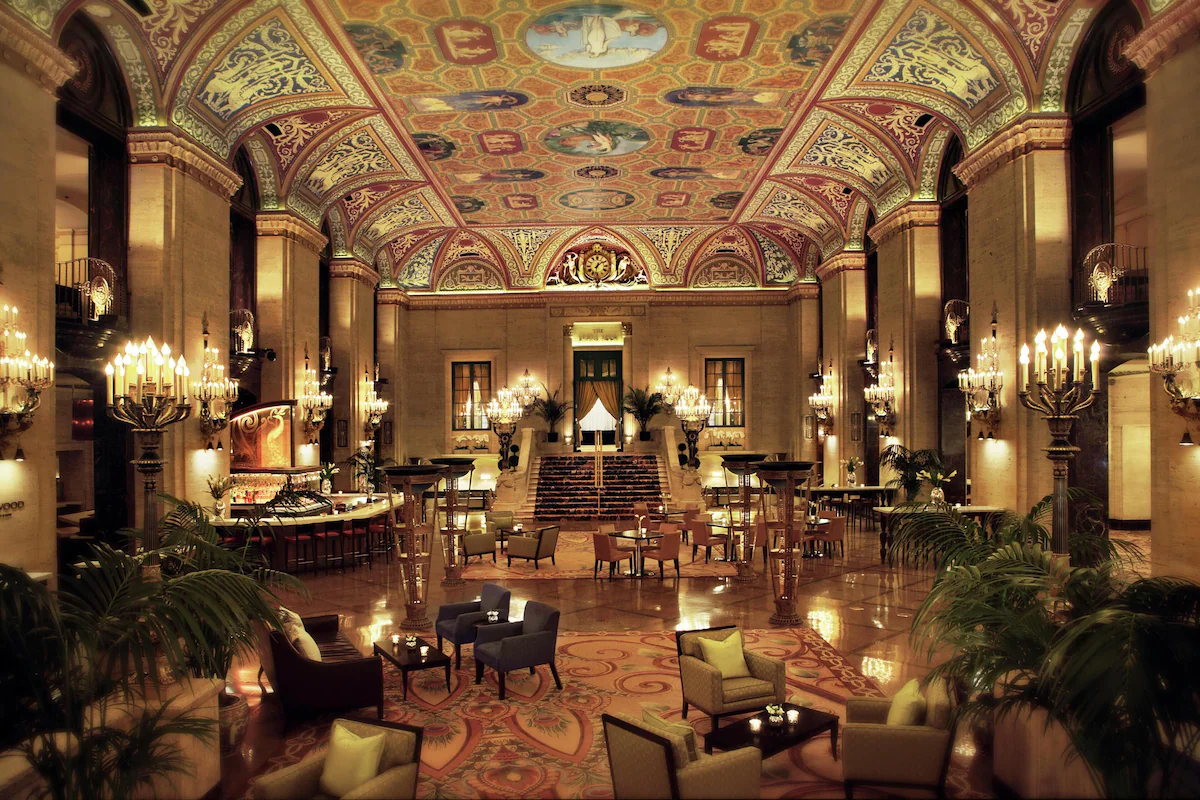
1925 Classical Revival Landmark
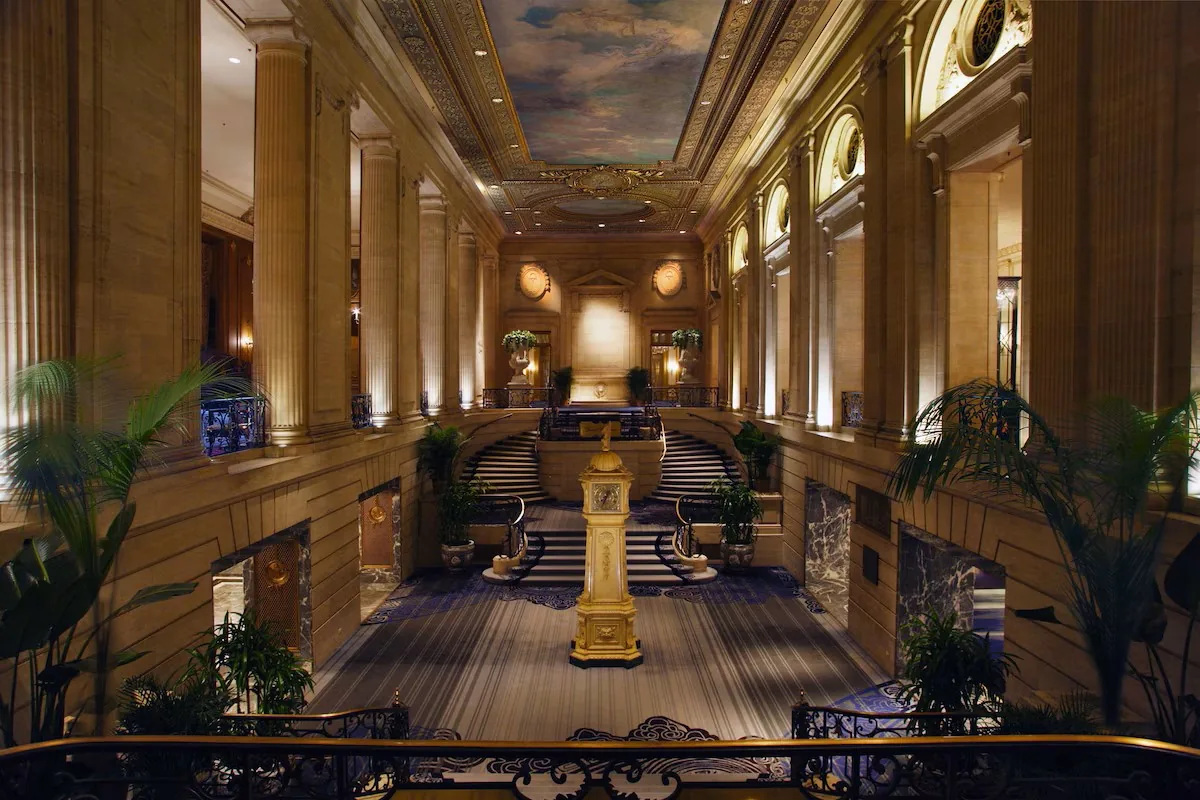
1927 Stevens Hotel