













What guests are saying
What guests love
- A genuine World’s Fair–era landmark with grand, atmospheric public rooms.
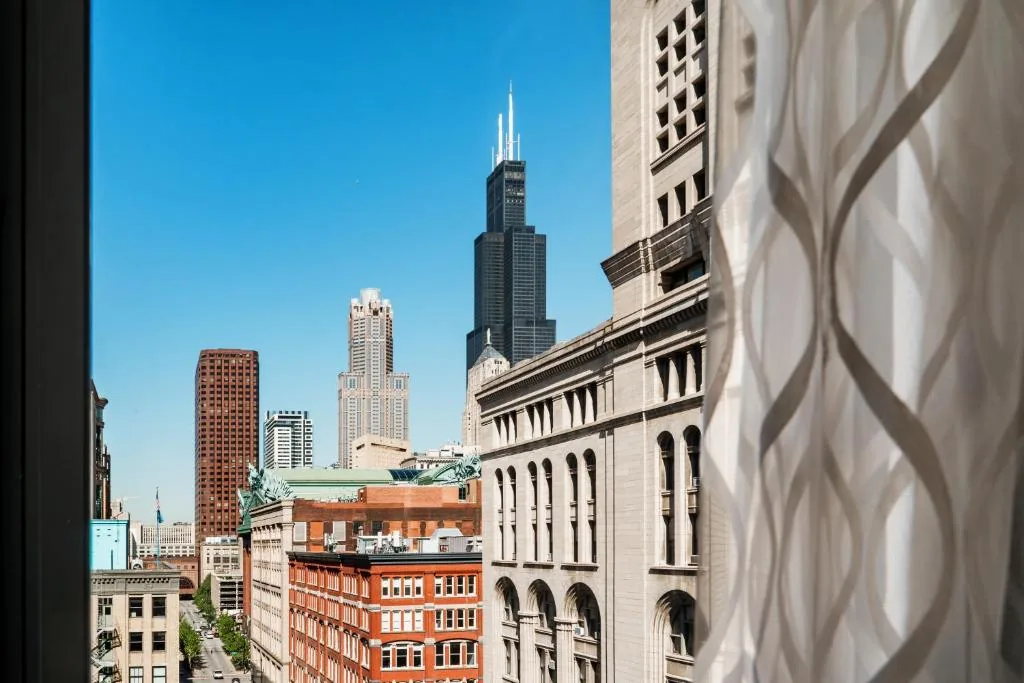
- A budget-friendly rate for a Michigan Avenue address facing Grant Park.
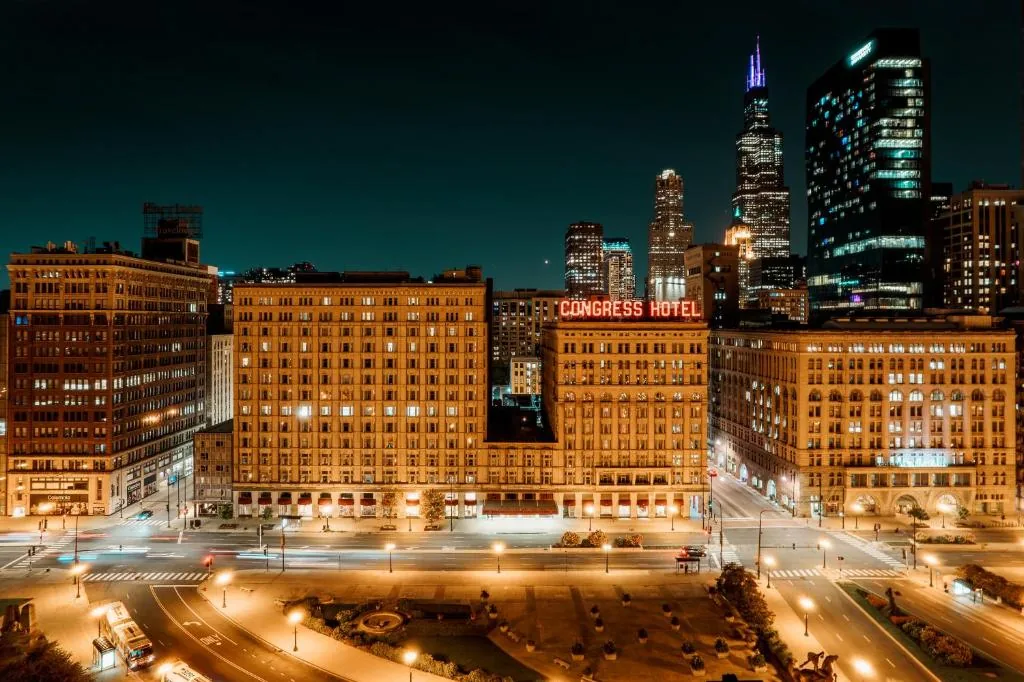
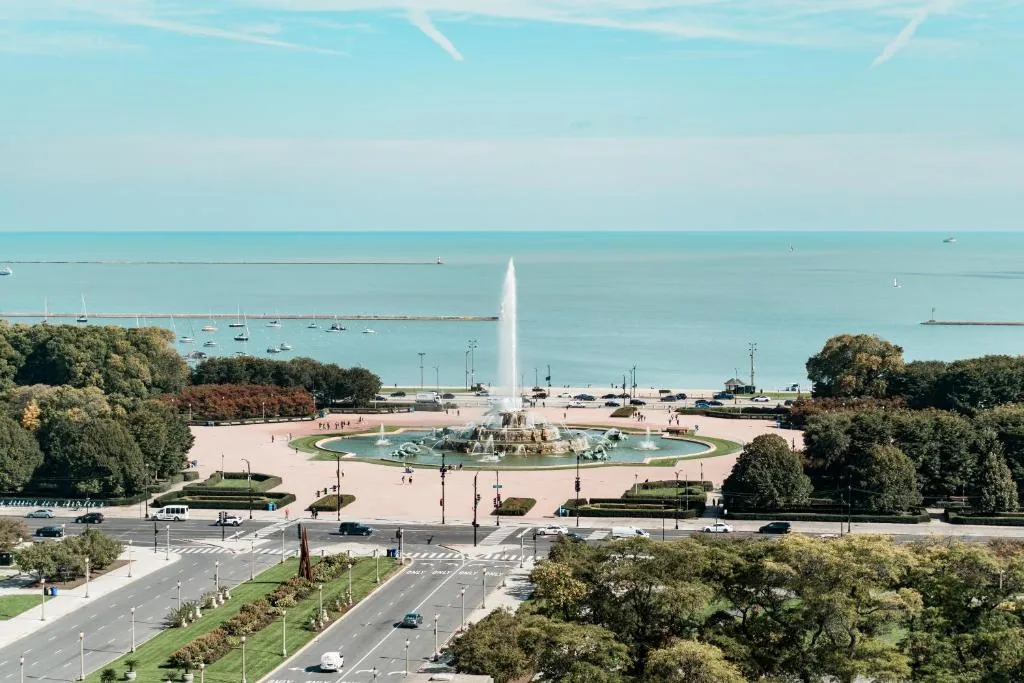
- On Michigan Avenue overlooking Buckingham Fountain and Grant Park, a 7-minute walk to the Art Institute.
What to keep in mind
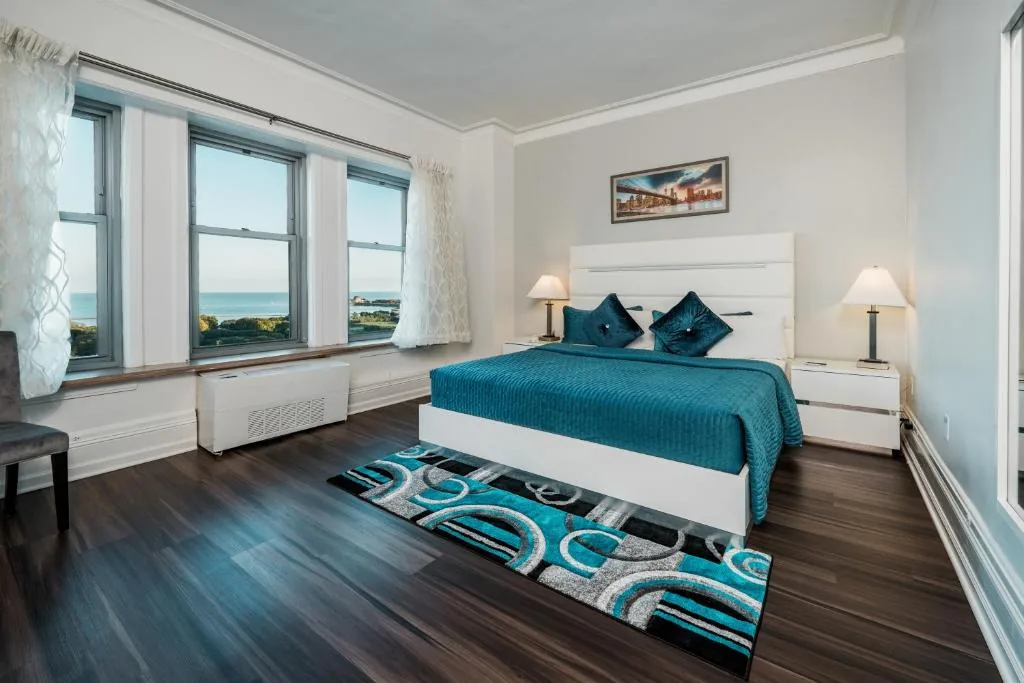
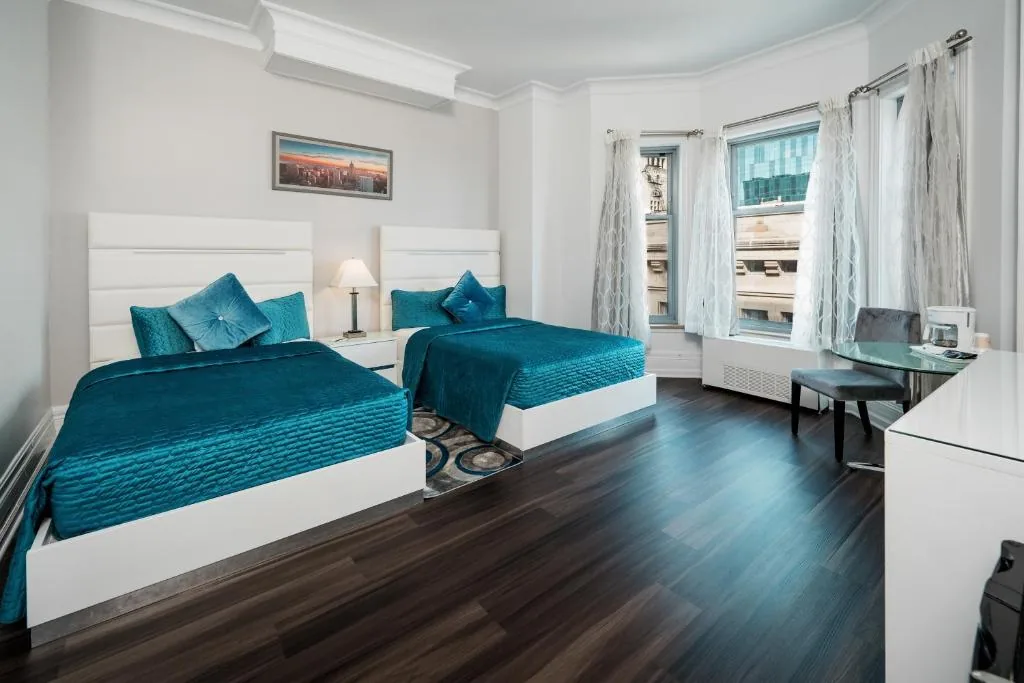
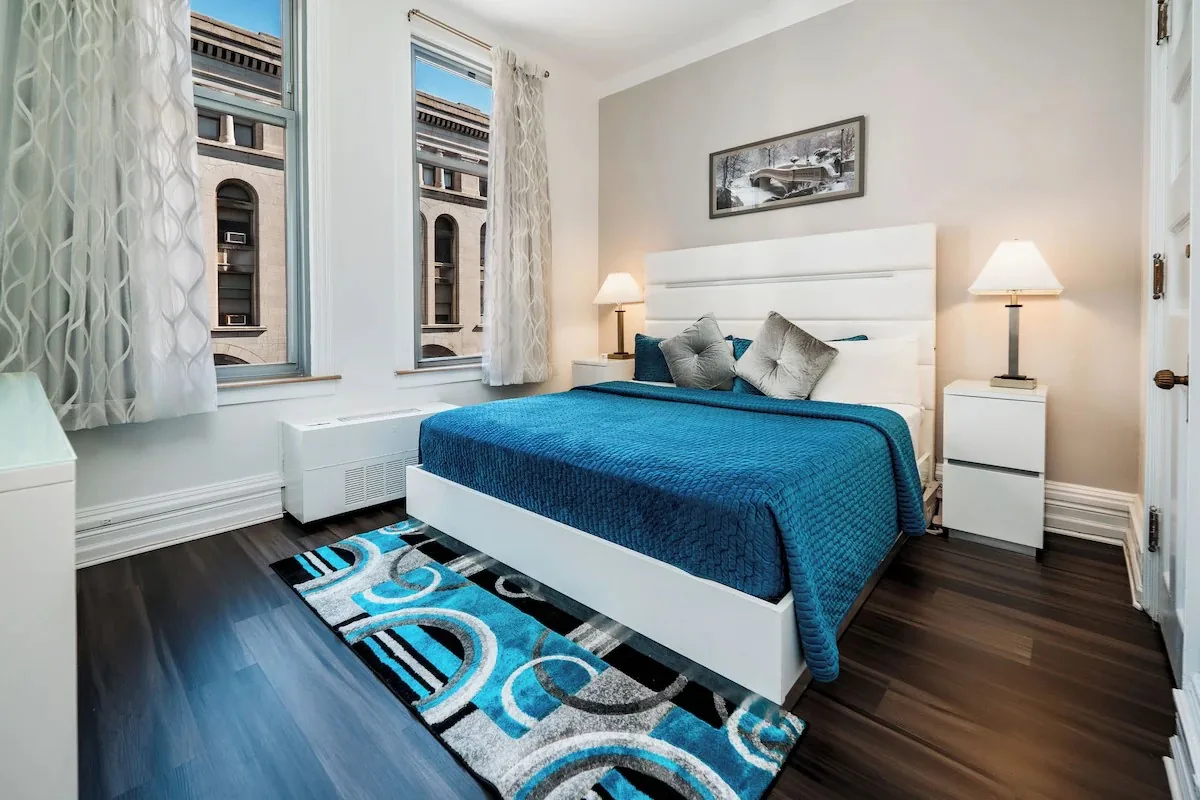
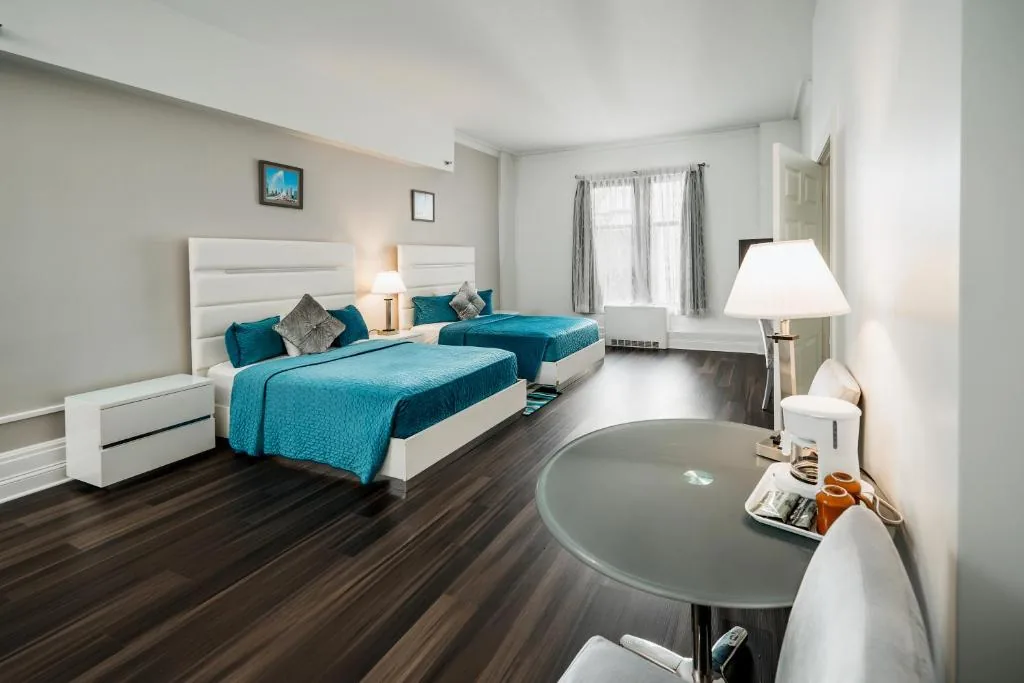
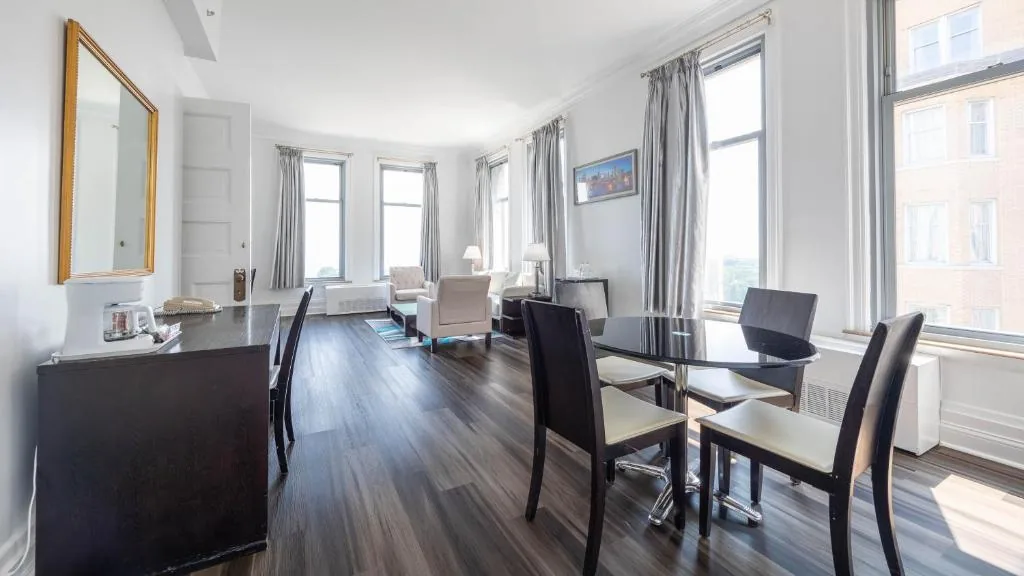
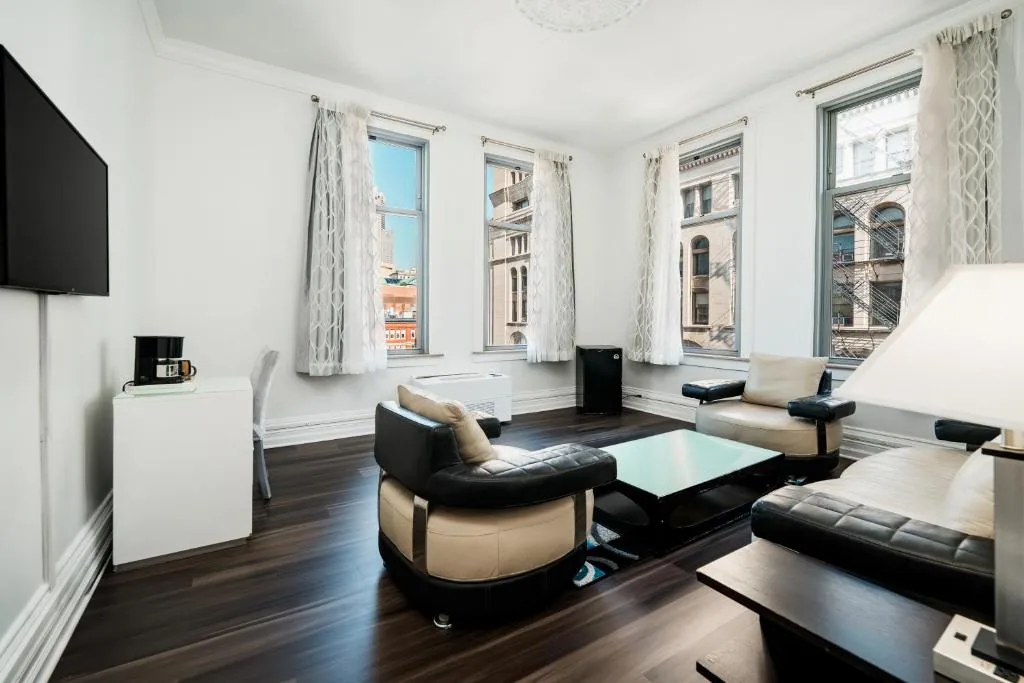
- A faded grande dame — rooms are dated and vary widely; read recent reviews
- A vast old hotel with uneven modernization
Best for History-minded, budget-conscious travelers who value a landmark Michigan Avenue address over modern polish.
Summary of guest reviews. Sources: Developer, room count, the 1902 and 1907 additions and the marble-walled corridor from the Historic Michigan Boulevard District designation report (Commission on Chicago Landmarks), pp. 4 and 44. The Congress Plaza Hotel, Commission on Chicago Landmarks, Preservation Chicago. Photography courtesy of Congress Plaza Hotel, used with permission. Details may change over time.
Why this building matters
The Congress opened in 1893 as the Auditorium Annex, an overflow hotel for Louis Sullivan and Dankmar Adler’s Auditorium Building across the street, built for the crowds of the World’s Columbian Exposition. Designed by Clinton J. Warren and expanded in the early 1900s by Holabird & Roche, it grew into one of the city’s great convention hotels, with elegant historic ballrooms. It anchors the south end of the Historic Michigan Boulevard District.
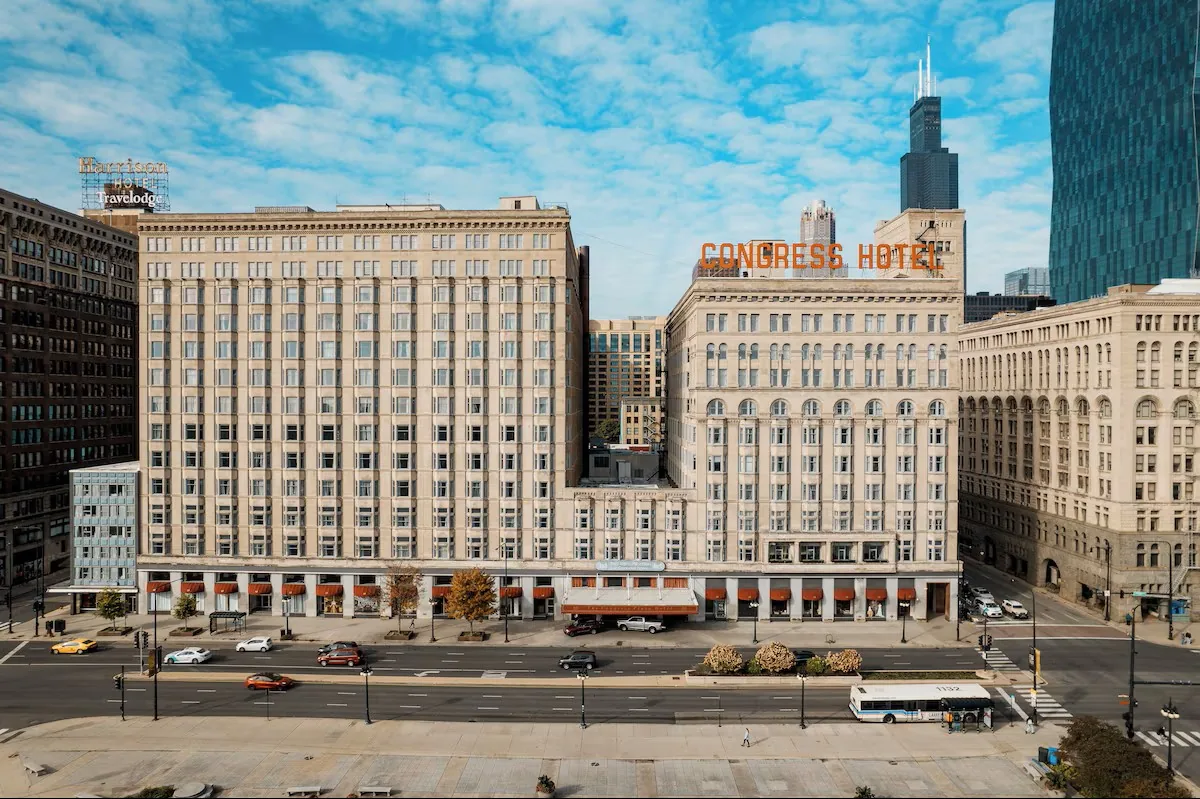
The Historic Michigan Boulevard District designation report sets out how the hotel began. In 1893, just before the World’s Columbian Exposition opened, the developer Ferdinand Peck opened it as an annex to the Auditorium Building, which he had built three years earlier — eleven stories and 400 rooms, by Clinton J. Warren. Holabird & Roche added to it twice, in 1902 and 1907.
The detail worth keeping is how the two buildings were joined. Guests crossed between the annex and the Auditorium through a marble-walled corridor running beneath Congress Parkway. The report also records the hotel’s height as 160 feet on the north and 175 on the south, the two halves having gone up fourteen years apart.
Clinton Warren, matching the Auditorium
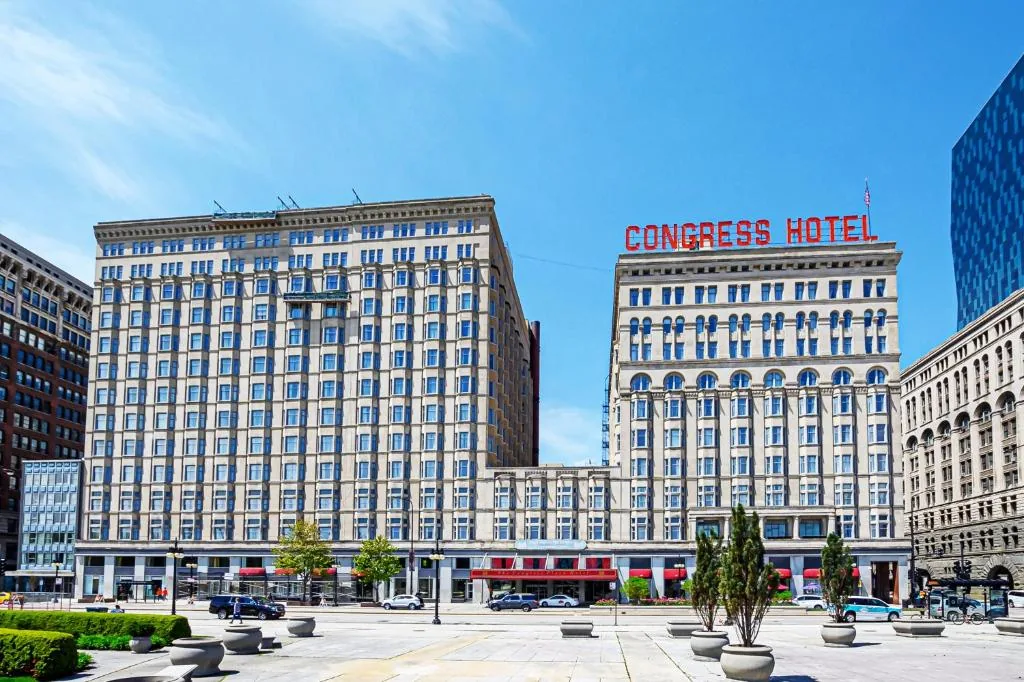
Warren trained in the office of Burnham and Root, and the designation report calls him “generally regarded as the Chicago School specialist for the design of hotels and apartments.” His problem here was the building across the street. He calculated the fenestration, the stringcourses, the cornice line and the rough-faced limestone base of the Michigan Avenue front so that they would harmonize with Adler and Sullivan’s Auditorium Building. That limestone base has since been covered with polished gray granite.
A three-story south wing held private apartments. When Holabird & Roche came to add fourteen stories to the south, they used part of Warren’s formula rather than starting over. The first four bays went up in 1902, and the remainder, with a new top floor, in 1907.
The Pompeian Room and Peacock Alley
The report puts the contrast plainly: “The straightforward exterior belied the lavish interior public spaces.” The most remarkable of them was the two-story Pompeian Room, a re-creation of a first-century A.D. design, with murals by Edward J. Horslag and a Tiffany-designed skylit atrium and fountain. Almost as opulent was Peacock Alley, a marble-walled corridor.
Neither room survives. Most of these spaces were taken out when the Army occupied the hotel during the Second World War.
When Congress Parkway was widened
In 1951 the road was widened, and the covered walkway along Congress was carved into the building to make room for it. The base and the arched entrance were removed around the same time, and the original ground-floor facade was covered over in a remodeling in the early 1950s.
The Albert Pick Hotel Company renovated the hotel again between 1959 and 1962, work that coincided with the opening of the McCormick Place convention center.
Explore more like this
Chicago’s Beaux-Arts hotels · Chicago’s haunted historic hotels · more affordable historic stays · more historic hotels near Millennium Park