







What guests are saying
What guests love
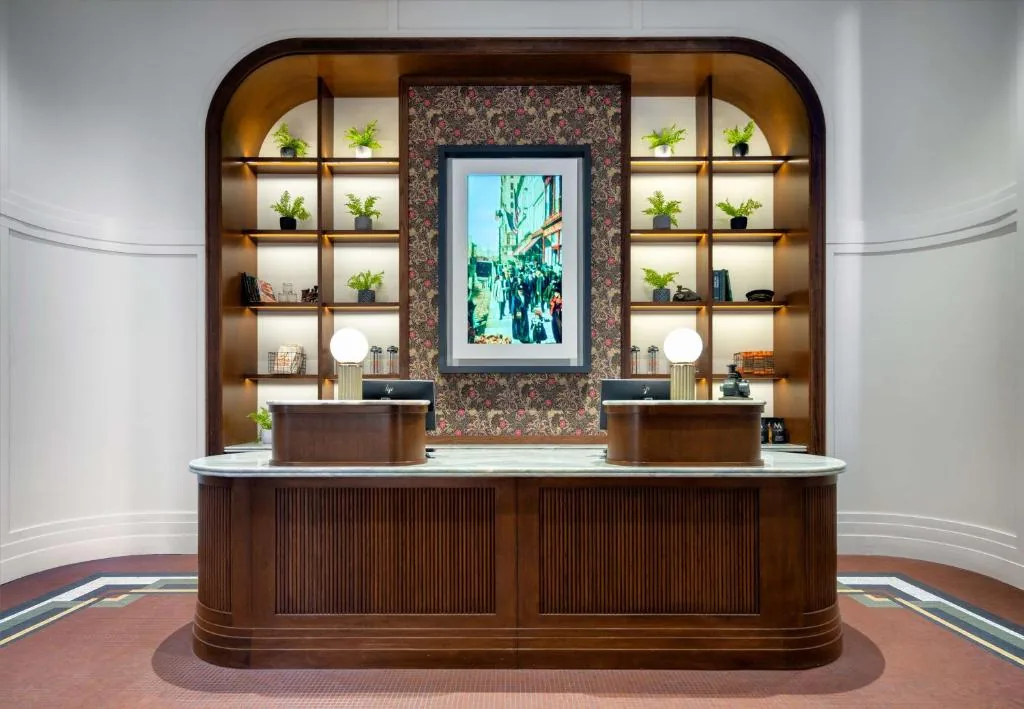
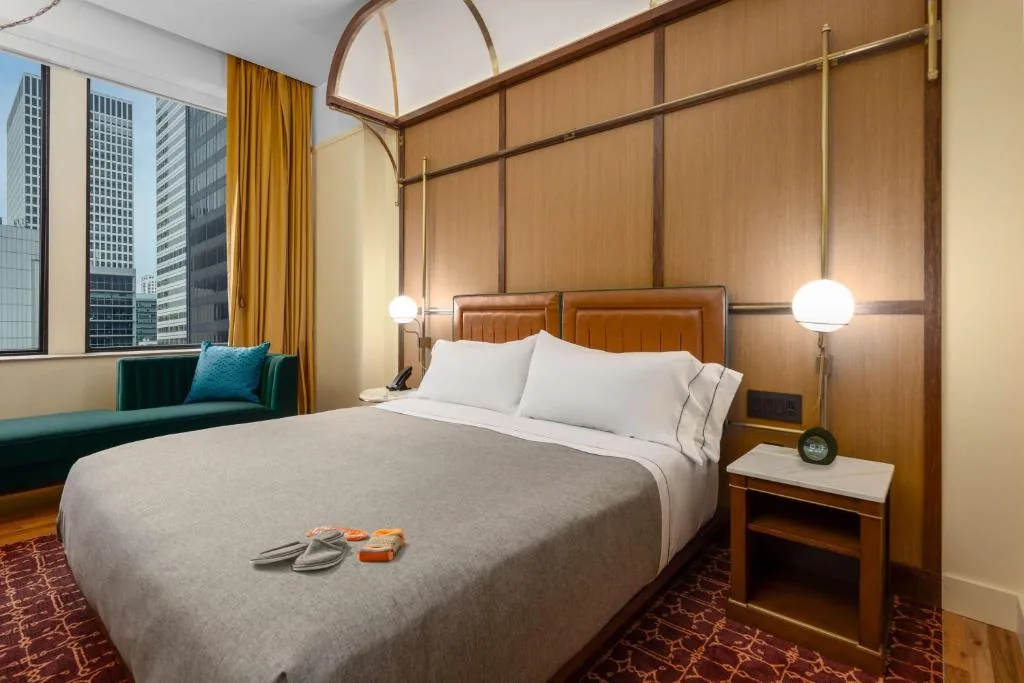
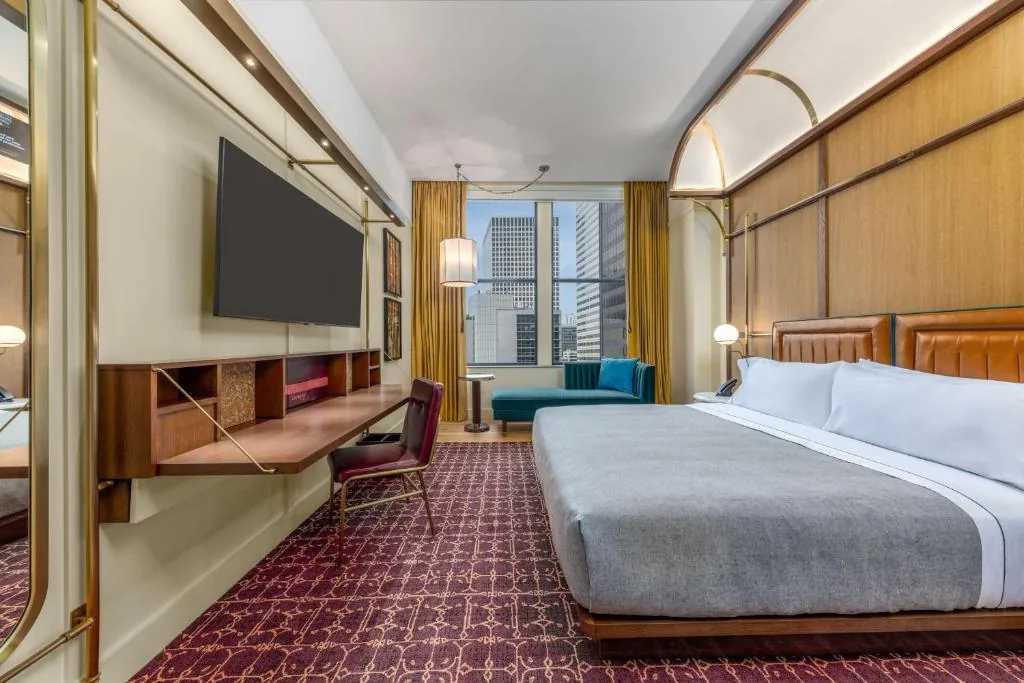
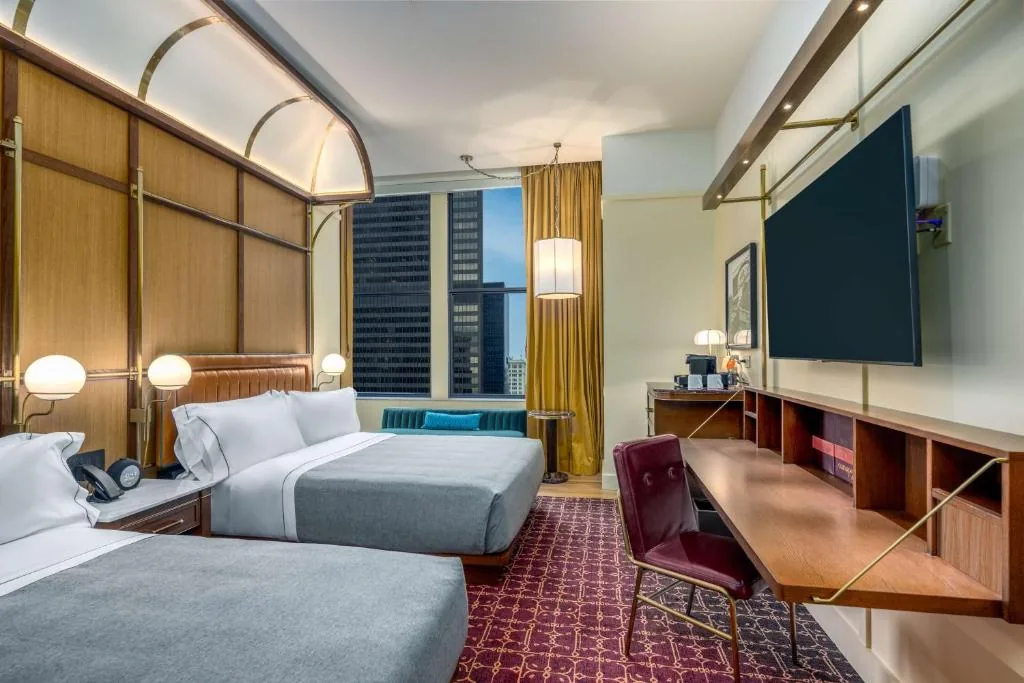
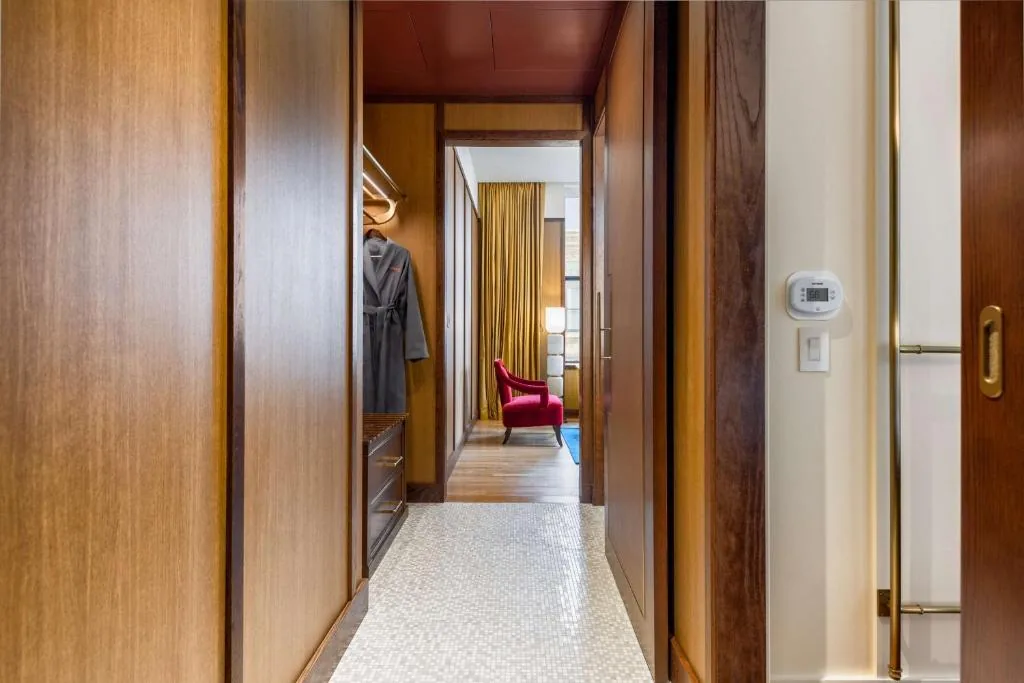
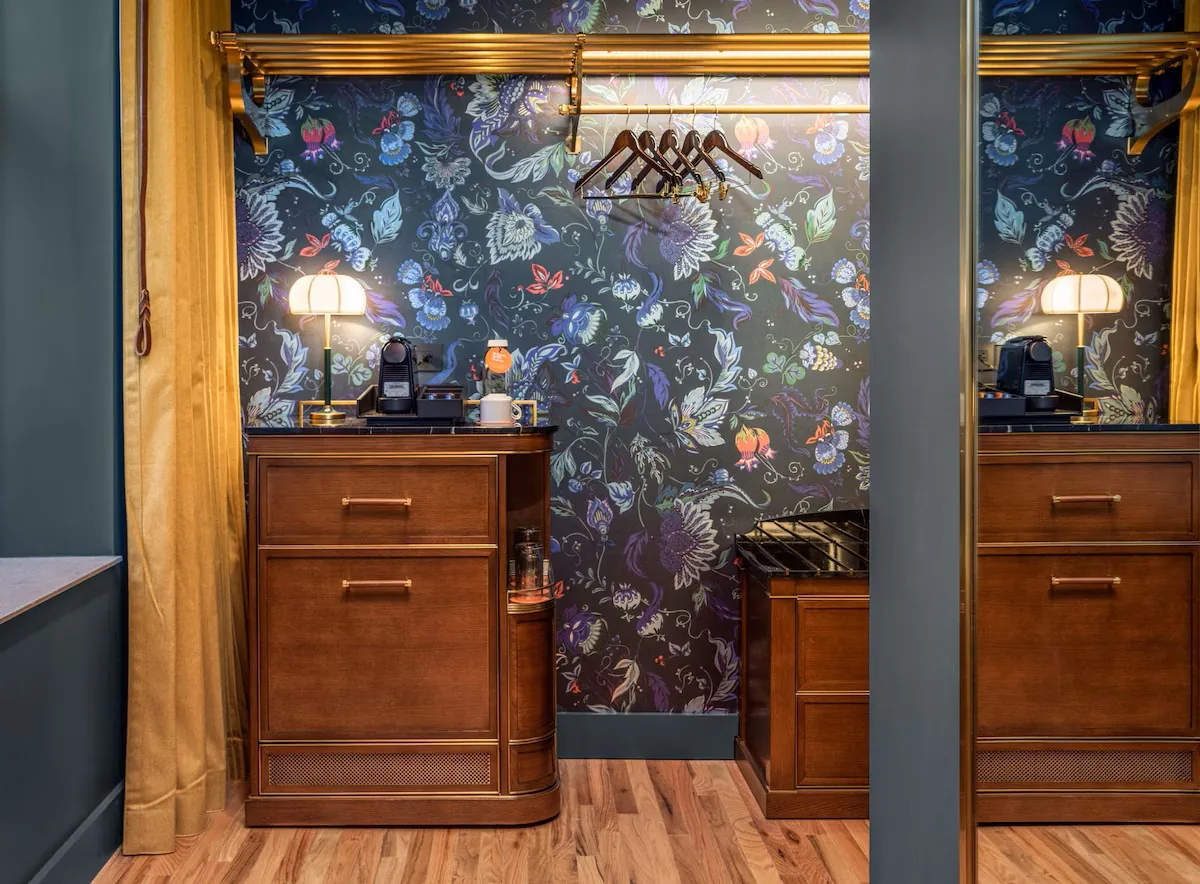
- A meticulous restoration that keeps the golden-age-of-rail story front and center — original staircases and lobbies retained, with historical pieces and architectural fragments woven through the design.
- An unbeatable Financial District location directly across from Willis Tower and the Skydeck, a short walk to the Theatre District and Art Institute, with the Riverwalk a 15-minute walk.
- Lifestyle-brand extras: complimentary Canopy bikes, the Depot 226 restaurant, and the Seville rooftop lounge with skyline views.
What to keep in mind
- Financial District quiets on weekends
- A 1905 structure: floor plans and room shapes vary
Best for Travelers who want a stylish, story-rich base in the Loop’s financial core — architecture lovers, and anyone who appreciates that their stay supports a genuine preservation success.
Summary of guest reviews. Sources: Canopy by Hilton Chicago Central Loop, Commission on Chicago Landmarks, Preservation Chicago. Photography courtesy of Canopy by Hilton Chicago Central Loop, used with permission. Designation report: Chicago and North Western Railway Office Building (L-358) at Chicago Landmark Reports. Details may change over time.
Why this building matters
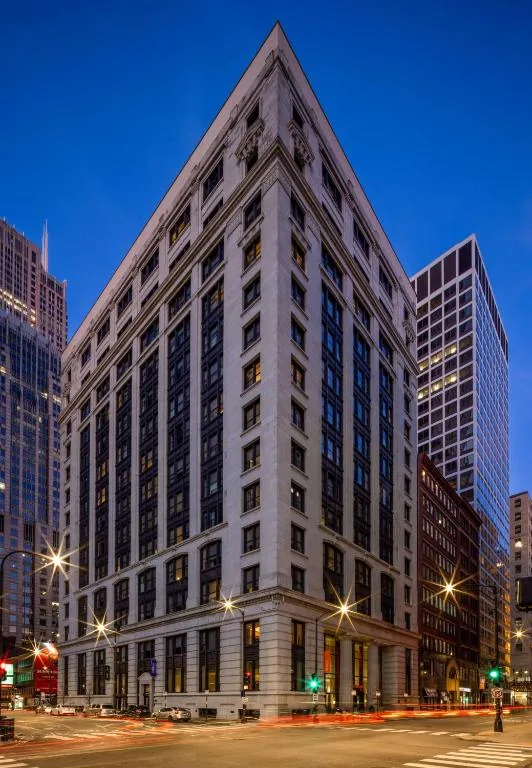
The hotel occupies the former Chicago & North Western Railway Company Building, a fourteen-story Classical Revival landmark completed in 1905 by Frost and Granger and later home to the City Colleges of Chicago. Preservation Chicago worked closely with the developer throughout the project — encouraging them to value and embrace the building’s historic elements, and helping the adaptive-reuse effort secure its permits and, most importantly, its Chicago Landmark designation, which was essential to allowing the project to move forward. Like so many Preservation Chicago efforts, it is a case of taking a project from impossible to inevitable.
Built to run a railroad
In 1904 the Chicago & North Western carried more than 21 million passengers across the country and another 11 million commuters around Chicago and its suburbs, on top of the freight. It was the largest railroad in the Midwest, and over that decade its track grew from five thousand miles to more than ten thousand across seven states. Running all of that took a building, and this is the building it took.
The company put its headquarters up here in 1904–05, at the corner of Jackson and Franklin, and had it built by the George A. Fuller Company — one of the first general contractors in the country, and the firm behind the Rookery and the Monadnock. Fourteen stories of steel faced in honed light-gray granite, arranged to read like a classical column: a heavy two-story base, a ten-story shaft, a two-story capital on top. The Jackson Boulevard entrance is set back behind two fluted granite Doric columns that run the full height of the base. It was meant to look like an institution you could lend money to, and it does.
Behind the granite the plan is more practical than it looks: a light court cut into the east side gives the upper floors a C shape, so that clerical floors full of people got daylight from both sides in an age before decent artificial light.
The building is shared today with the Hilton Garden Inn Central Loop — two hotels, two brands, one 1905 landmark.
The architects who married into the railroad
C&NW president Marvin Hughitt gave the commission to Frost and Granger, and the designation report is refreshingly direct about why that might have been: Charles Frost was Hughitt’s son-in-law. It adds, fairly, that the firm had plenty of merit to stand on without the family connection.
The connection ran deeper than one marriage. Charles Sumner Frost married Mary Hughitt in 1885; Alfred Hoyt Granger married her sister Belle in 1893. The two architects were brothers-in-law before they were partners, and when they formed the firm in 1898 their father-in-law ran the railroad that became their principal client. Between 1900 and 1910 they designed roughly eighty stations, depots and service buildings for the C&NW alone. The three families built houses beside one another in Lake Forest in 1897, with interconnected gardens.
Both men trained at MIT — Frost graduating in 1876, Granger in 1887, after which Granger went on to the École des Beaux-Arts in Paris. Their earlier work is scattered across the city: Frost, in partnership with Henry Ives Cobb, built the Newberry Library and Potter Palmer’s vanished lakefront castle; Granger came to Chicago to supervise construction of the Art Institute’s Allerton Wing and the old Chicago Public Library, now the Cultural Center.
Drawn from the building’s Chicago Landmark designation report. Read the report →
Chicago’s first mayor, and Chicago’s first railroad
The company that needed this building began with William Butler Ogden, who wanted a railroad running from the farmlands of Nebraska to the timber forests of Minnesota with Chicago in the middle of it. He was well placed to try. Ogden had already served as Chicago’s first mayor, and he supplied the capital and the political connections that finally got the Galena & Union — the city’s first railroad — running in 1848.
It had taken twelve years to get that far. The line was chartered in 1836 and then sat, short of money. When it opened in 1848 it carried freight and passengers between Chicago and what was then the bedroom community of Oak Park. It reached Elgin in 1850, the Mississippi at Fulton, Illinois in 1855, and by 1862 had leased two Iowa lines that carried it clean across the state to Council Bluffs, on the far side of the river from Omaha.
The Chicago & North Western was organized separately, in 1859, and at that point ran north rather than west — out of Chicago to Kenosha and Green Bay. In 1864 Ogden brought the two together, absorbing the Galena & Union and its leased lines into the C&NW and producing a railroad that genuinely went both north and west. Because the Galena & Union had been chartered long before any of the other constituent lines, the report calls it the parent line of the whole railway.
Ogden retired in 1868. Marvin Hughitt joined four years later as general superintendent and became president in 1887, holding the office until 1910 — which is to say that the man who commissioned this building, and handed the job to his son-in-law, was running a company his predecessor had assembled out of a line older than the company itself.
Drawn from the building’s Chicago Landmark designation report. Read the report →
Explore more like this
more Gilded Age & Beaux-Arts hotels · hotels in historic Chicago buildings · Loop hotels near Millennium Park