















What guests are saying
What guests love
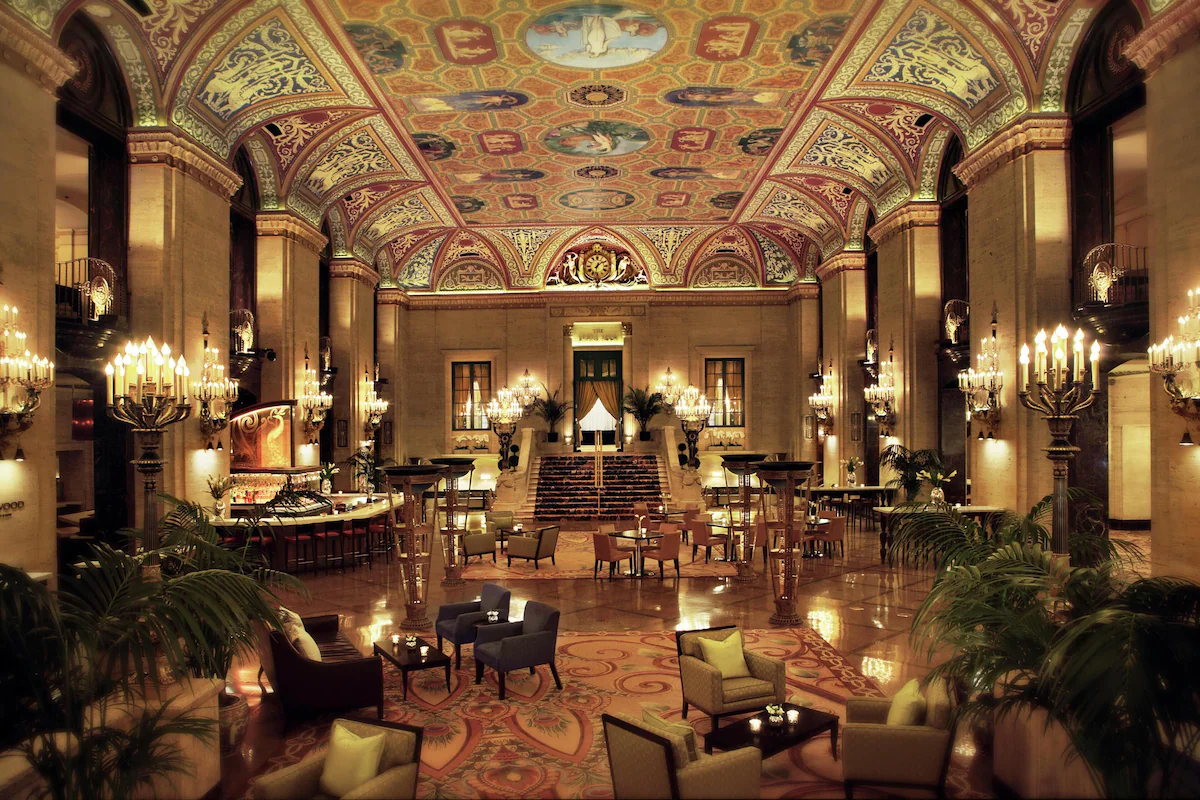
- The jaw-dropping frescoed lobby — one of the most photographed interiors in Chicago.
- A central Loop location two blocks from Millennium Park, the Art Institute, and State Street shopping.
- Genuine layered history, from the Empire Room nightclub to the original brownie.
What to keep in mind
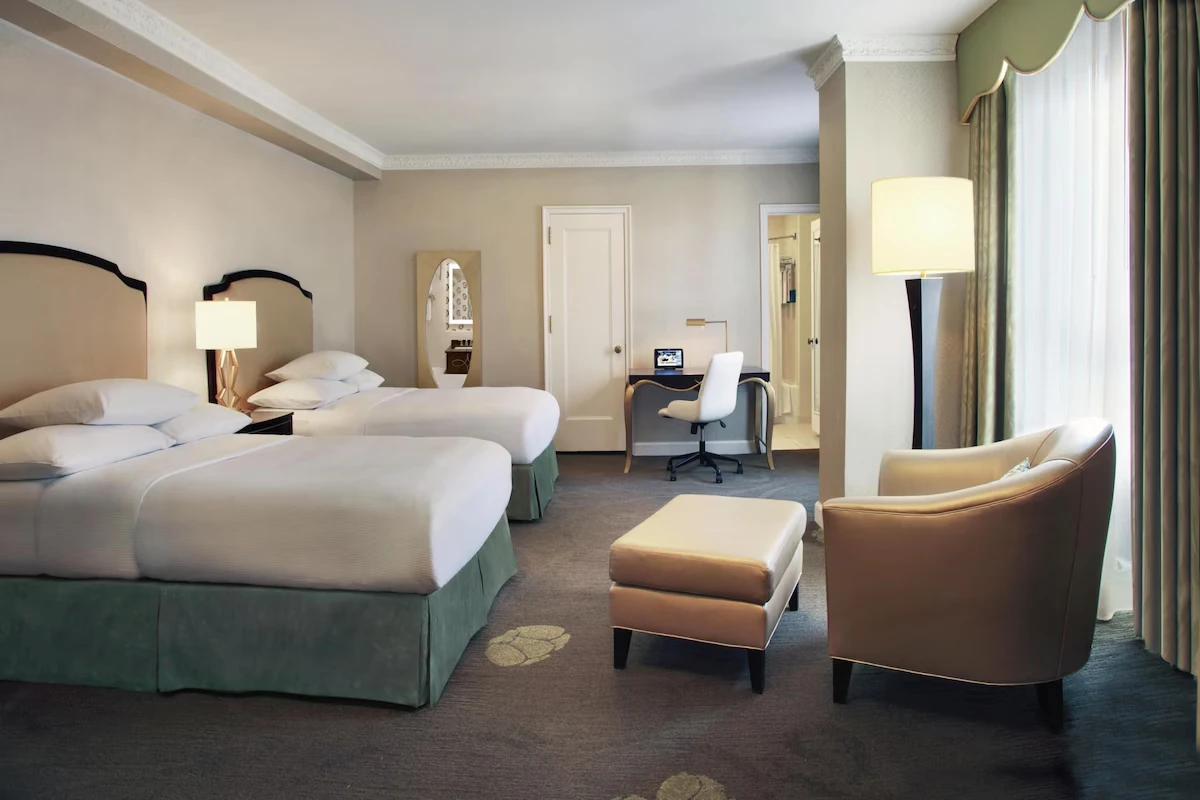
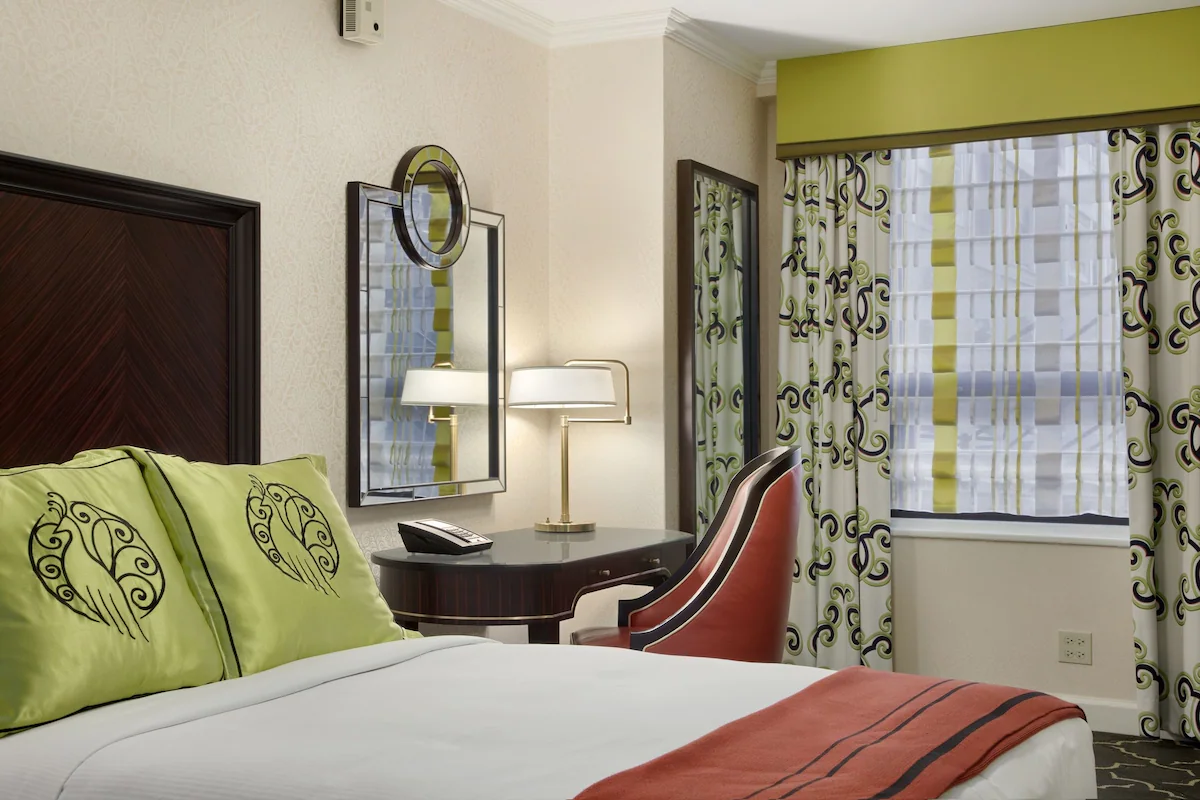
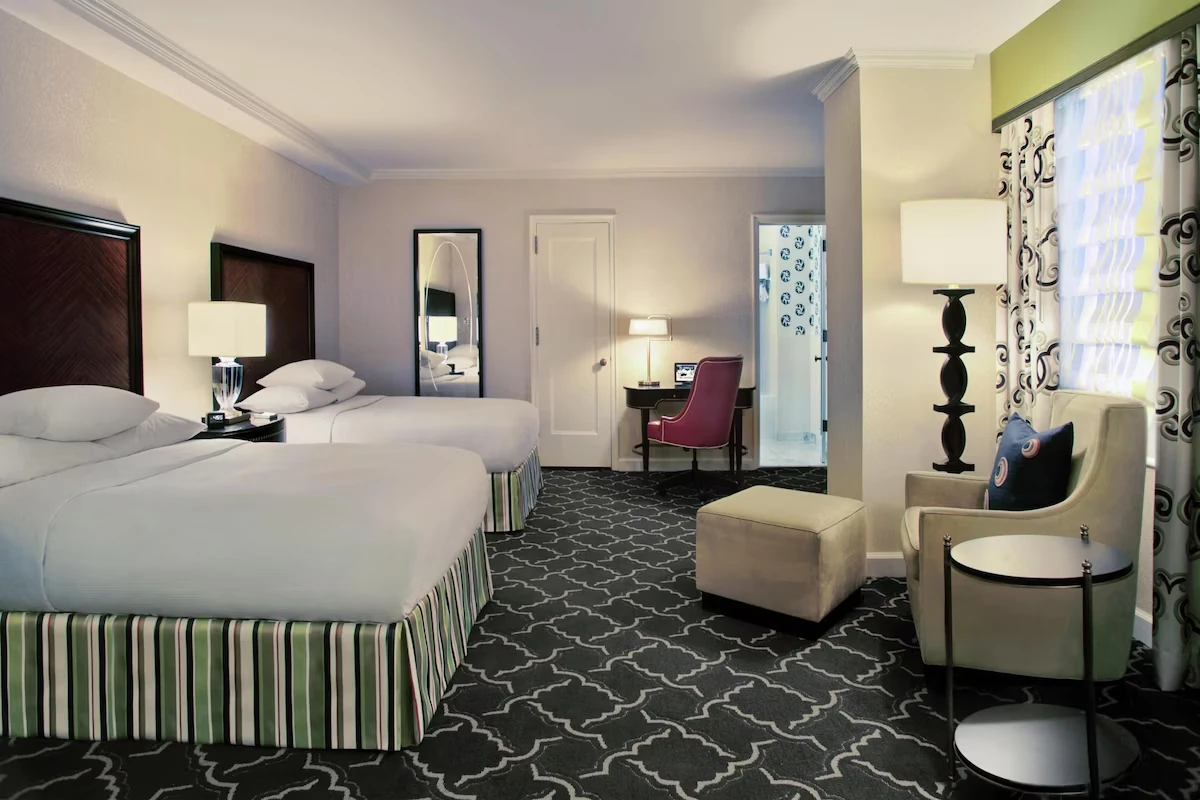
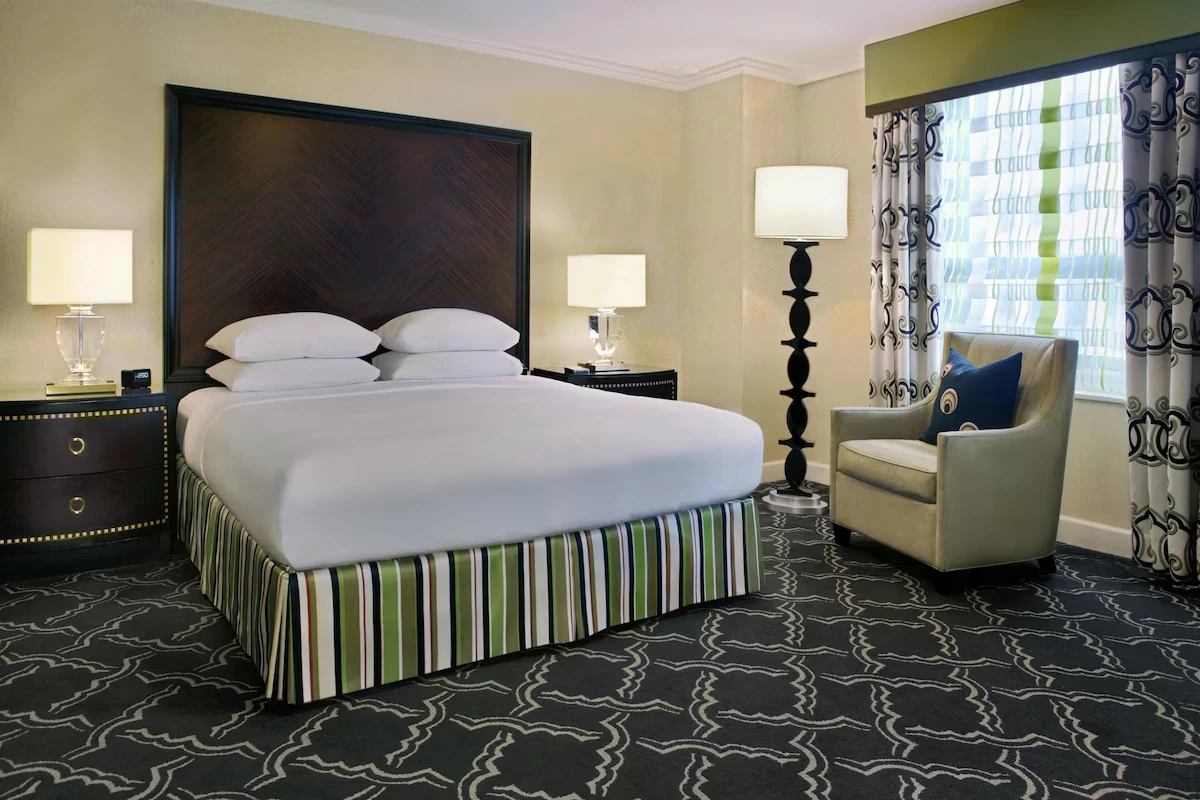
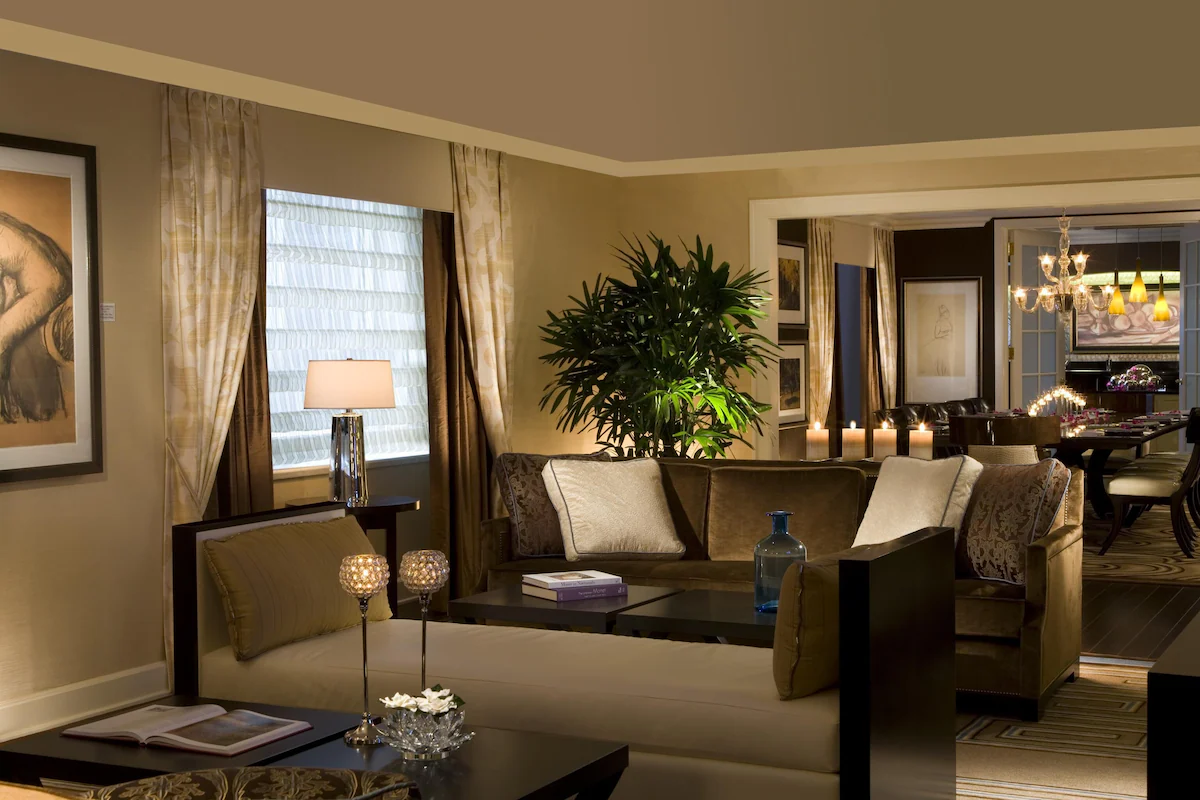
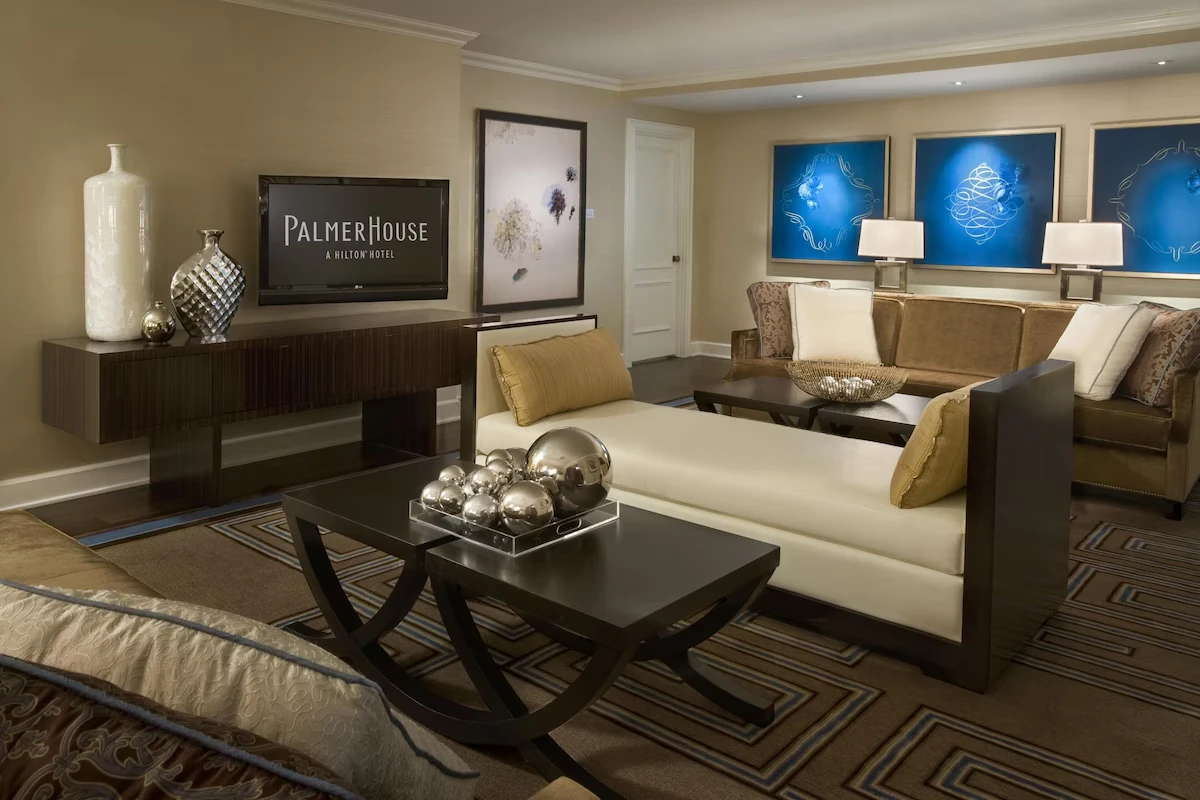
- A vast historic hotel — rooms vary widely in size and updating
- A busy Loop location; a grande dame, not a boutique
Best for Travelers who want to stay inside a piece of living Chicago history in the heart of the Loop.
Summary of guest reviews. Sources: Palmer House, Commission on Chicago Landmarks, Preservation Chicago. Photography courtesy of Palmer House a Hilton Hotel, used with permission. Designation report: Palmer House Hotel (L-35) at Chicago Landmark Reports. Details may change over time.
Why this building matters
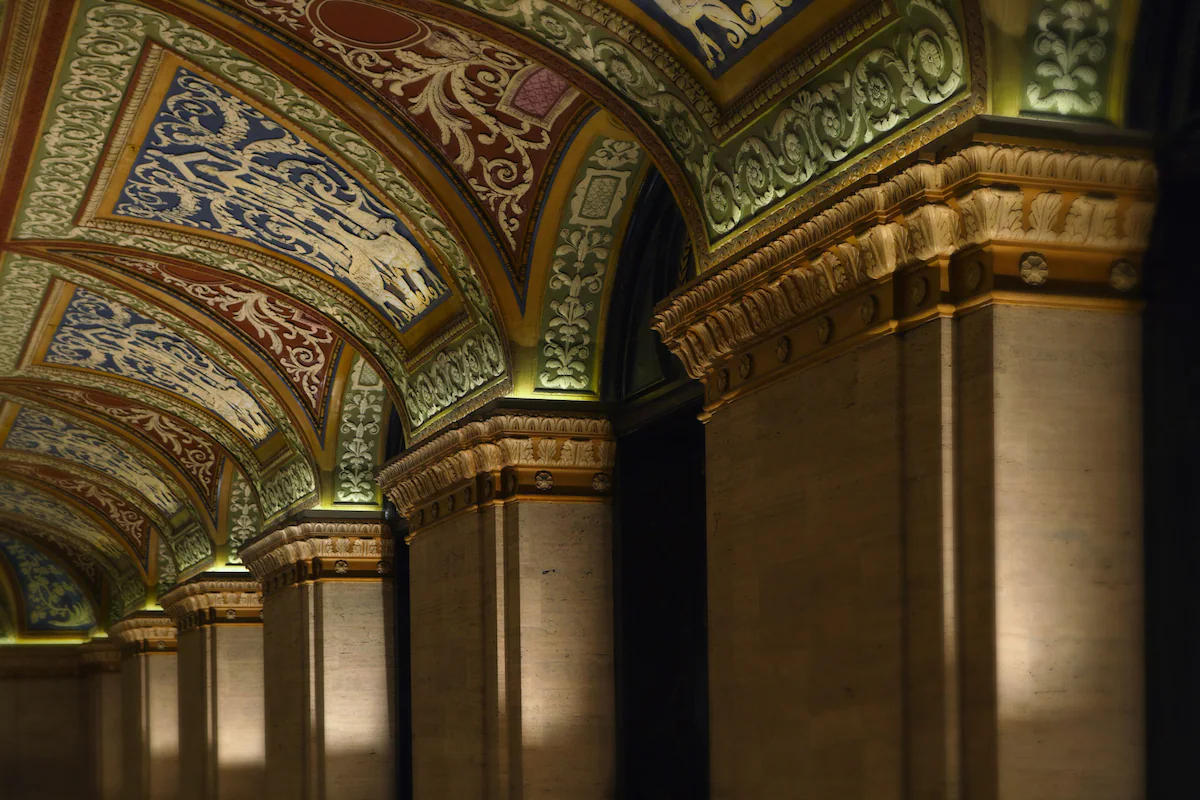
The Palmer House’s story is the city’s story. The first opened at State and Quincy in September 1870; a second was still under construction at State and Monroe when the Great Chicago Fire destroyed both in October 1871. Potter Palmer rebuilt at once — the third opened in 1875 and stood for fifty years — and the lavish current building, designed by Holabird & Roche, followed in 1925–27. Its grand lobby is crowned by ceiling frescoes by the French painter Louis Pierre Rigal. The hotel is also the birthplace of the brownie, created in its kitchens for the 1893 World’s Columbian Exposition at the request of Bertha Palmer.
The hotel that rebuilt itself without closing
The Palmer House you can book today went up between 1925 and 1927, and the hotel it replaced stayed open for almost all of it. Holabird & Roche built the eastern section first, along Monroe and Wabash, rising behind the working hotel; once that section opened in December 1925, the old building was demolished and the rest went up in its place. The first guest to sign the new register was Honore Palmer, Potter and Bertha’s son.
When the cornerstone was laid on June 8, 1925, Potter Palmer Jr. sealed a silver dollar inside it — one of the coins pried out of the previous hotel’s barbershop floor, by then worn to the thickness of a dime.
For a short time the new hotel was the largest in the world. It lost the title to another Chicago hotel, the Stevens — now the Hilton Chicago — which opened soon after. Its architect, John Wellborn Root Jr., described what he had built as a hotel of 2,350 bedrooms wrapped around a five-floor shopping arcade on State Street.
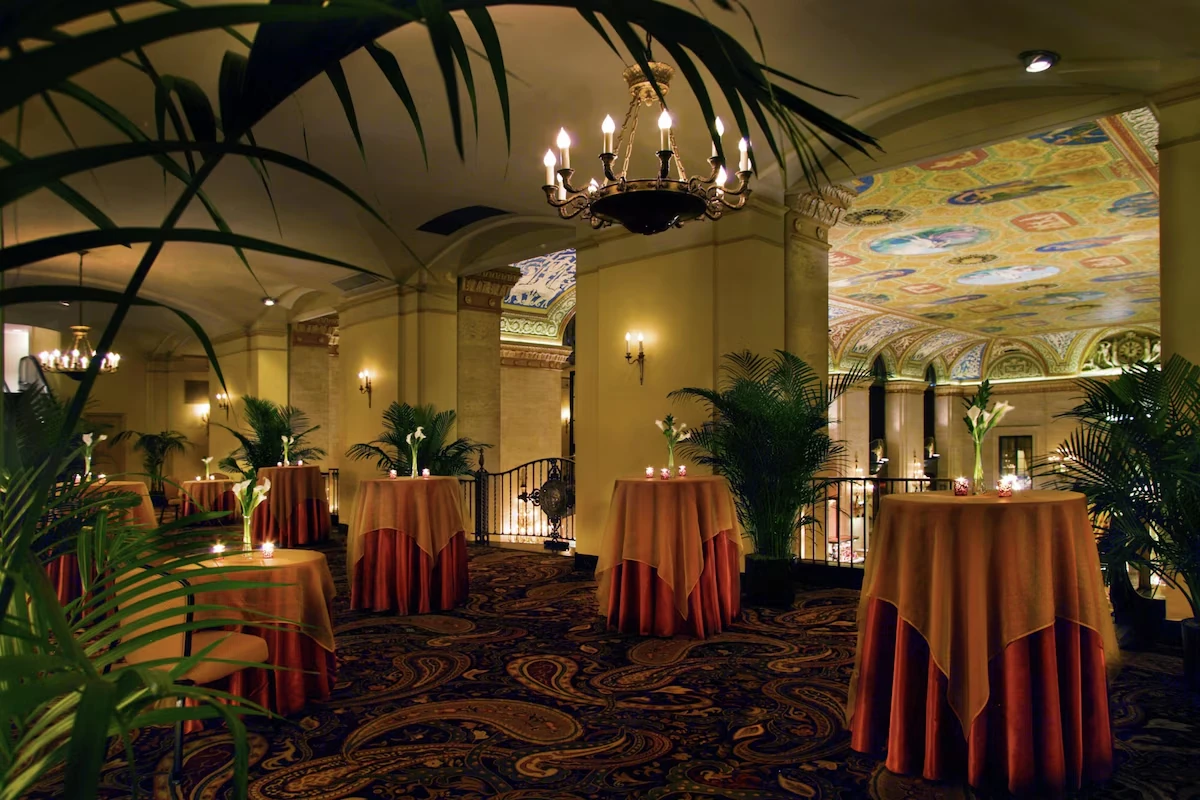
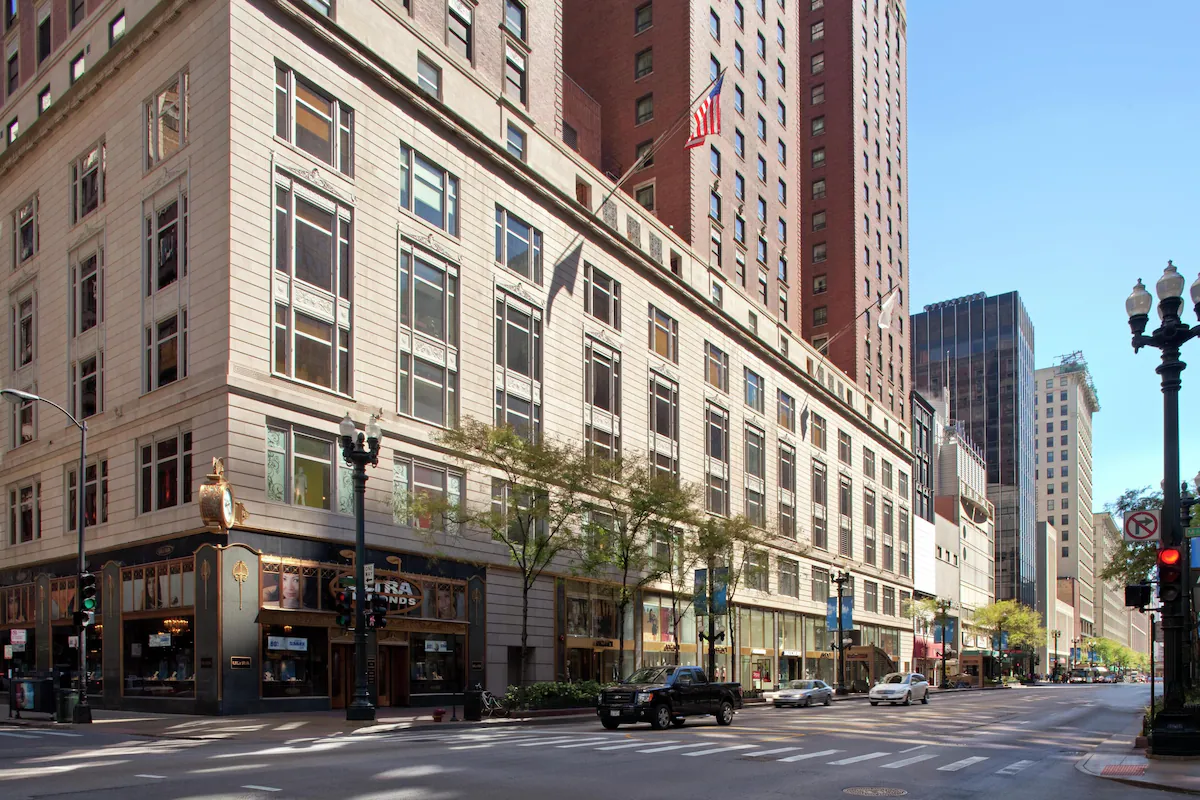
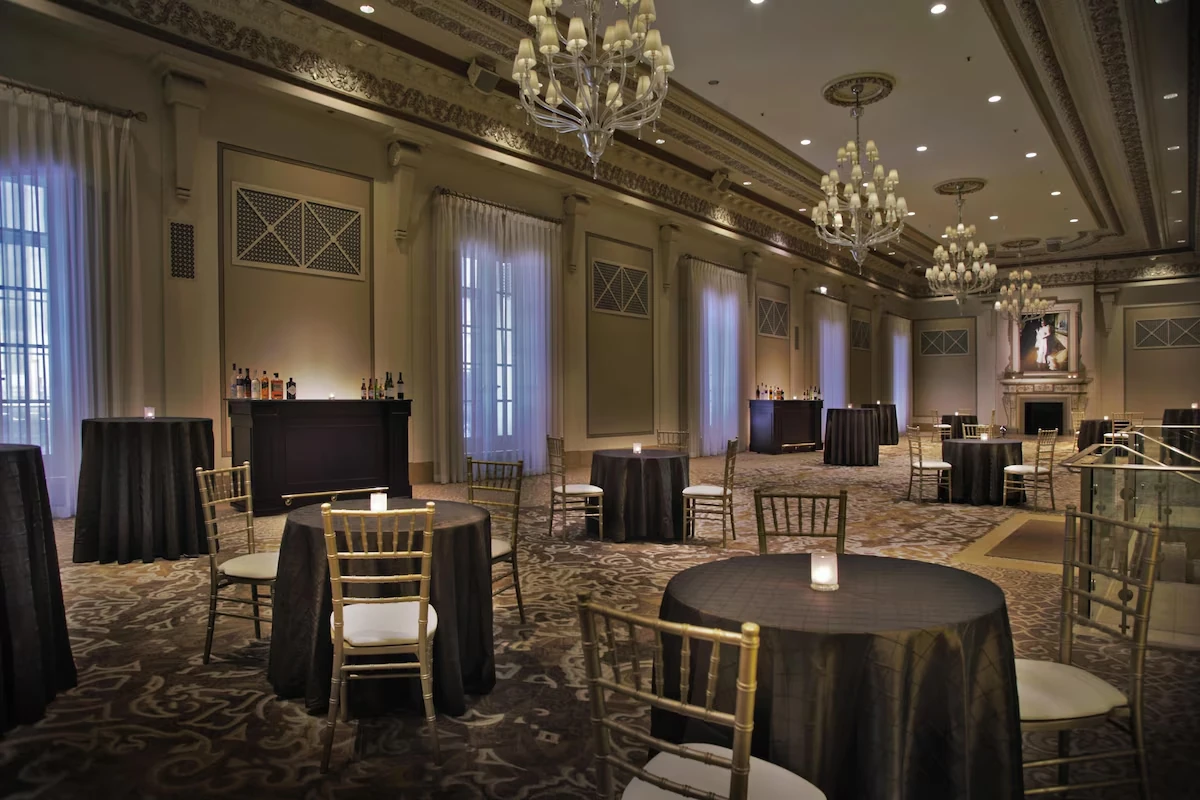
The fourth-floor ballrooms were built for dancing in the most literal sense: their floors rest on thousands of coiled steel springs, put there to give dancers extra bounce. Off the second-floor lobby, the Empire Room served as the main dining room before becoming one of Chicago’s premier nightclubs from 1932 to 1976, booking big-name entertainers for more than forty years. And at the corner of State and Monroe, the storefront built for C.D. Peacock — one of Chicago’s oldest and most exclusive jewelers — survives almost intact, down to the bronze doors and corner clock ornamented with peacocks, and the green Verde Antico marble inside.
Drawn from the building’s Chicago Landmark designation report. Read the report →
The hotel that came before
The building standing here in 1925 was the third Palmer House, and for fifty years it was the one everybody meant. It opened in 1875 with 850 rooms, and it was the first hotel in Chicago with electric lights, telephones and elevators — a combination nothing else in the city could match. Chicago’s early chronicler A.T. Andreas said it was built on a “scale of magnificence and completeness unparalleled in Western hotel history.”
Not everyone was charmed. Rudyard Kipling, passing through, dismissed it as “a gilded and mirrored rabbit warren” with a “huge hall of tessellated marble, crammed with people talking about money and spitting about everything.”
Its barbershop was the part people talked about. The floor was inlaid with silver dollars — until an 1876 federal law barred that use of American coinage, at which point they were pried out and replaced with Mexican ones. Those were the coins that ended up in the cornerstone.
When the old hotel finally emptied in 1926, some residents took persuading; a few had to be threatened with their utilities being cut off. One of them, an 83-year-old named Rutt who had lived there since the 1870s, told a reporter he had paid five dollars for a room “four times as big” as his new one, meals included. “It’s pretty fine all right here with everything new,” he said, “but you should have seen the old place.”
Potter and Bertha Palmer
Potter Palmer made a fortune on Lake Street, then sold his dry goods business in 1865 to Marshall Field and Levi Leiter — the firm that became Marshall Field & Co. He came back from Europe two years later and bought three-quarters of a mile of State Street, widened it, and set about persuading Chicago’s merchants to abandon Lake Street for it. Within two years, thirty to forty new buildings had gone up. One observer called it the “Haussmanizing of State Street,” after the rebuilding of Paris. Palmer is still known as the father of State Street, and his hotels were meant as its anchor.
He and Bertha then did it a second time, further north. Palmer bought and drained swampland along the lakefront, pumping sand onto the shore to make buildable lots, and in 1882 built a house there so extravagant it was known simply as the Castle — widely believed the most expensive in Chicago. Fashionable Chicago followed them from Prairie Avenue to the Gold Coast, which is why that neighborhood exists in the form it does.
Bertha Honore Palmer had married Potter in 1871 and once called herself, half jokingly, “an innkeeper’s wife.” After his death in 1902 she ran the family’s real estate herself and more than doubled the estate’s value, to over $16 million, before she died in 1918. Their sons Honore and Potter Jr. commissioned the hotel you can book today.
Drawn from the building’s Chicago Landmark designation report. Read the report →
Worth stepping inside for
The Palmer House’s designation covers interiors as well as the exterior, which is unusual and worth knowing before you walk through it. Seek out the second-floor reception lobby, the Empire Room, the two ballrooms on the fourth floor, and the former C. D. Peacock and Co. Jewelers store at the corner of State and Monroe.
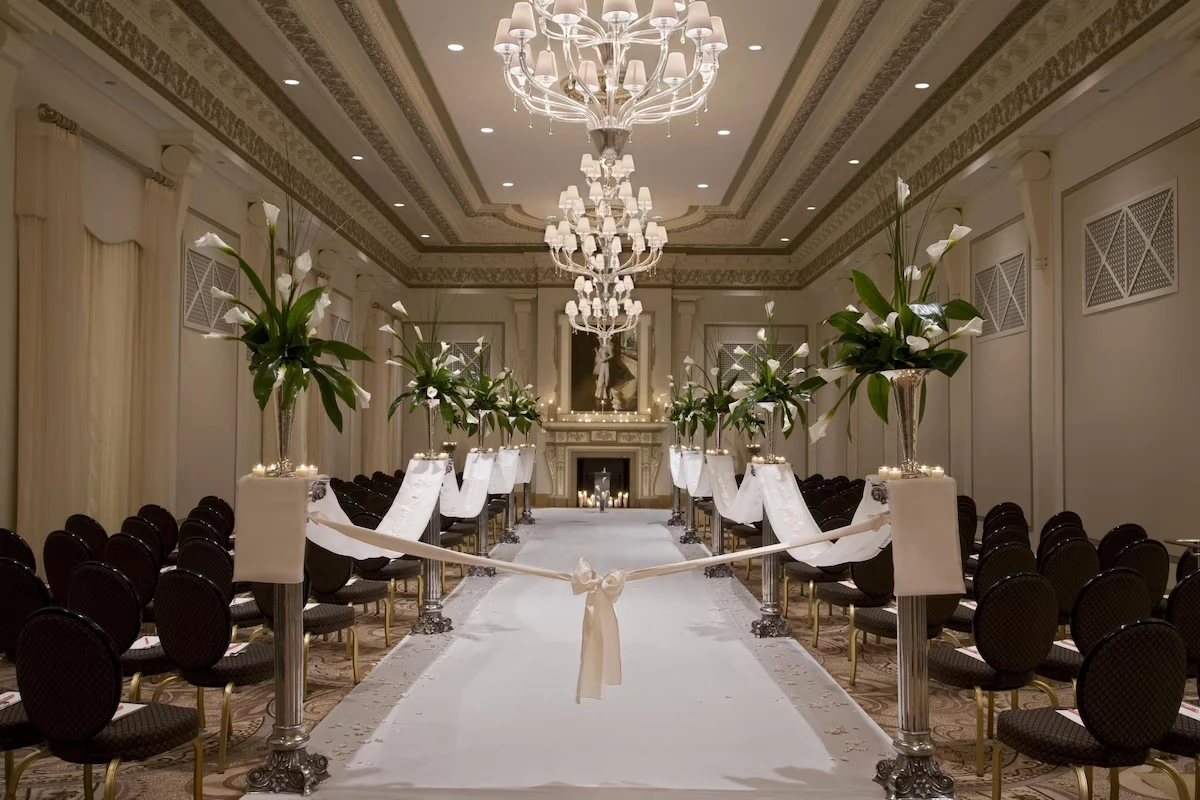
Those ballrooms have names. John Wellborn Root Jr. designed both with finely crafted Classical ornament, and gave them opposite characters. The Grand Ballroom is painted cream and gold, with a small balcony ringing the room; Root wrote that it “displays the restrained and monumental character of the period of Louis XVI.” The Red Lacquer Room is bright red, and Root described it as one that “hints at rococo, its walls are red lacquer and gold relieved by mirrors.” Both rooms still carry their original lighting fixtures.
The Empire Room off the second-floor lobby was finished to match. The report records “flat ebony pilasters against dark green walls and softly tapestried panels, the whole lightened by gold leaf in the decoration of trim, of capitals, and cornice and ceiling.” Since the nightclub closed in 1976 the room has served for conferences and meetings.
One more thing about the architects. Holabird & Roche became Holabird & Root in 1927, while this building was going up, and the new name belonged to two sons: John Holabird, son of William Holabird, and John Wellborn Root Jr., son of the John Wellborn Root who had been Daniel Burnham’s partner. The hotel Potter Palmer’s sons commissioned was finished by the sons of the men who built Chicago.
Drawn from the building’s Chicago Landmark designation report. Read the report →
Explore more like this
Chicago’s Art Deco hotels · Chicago’s Beaux-Arts hotels · Chicago’s haunted historic hotels · historic hotels near Millennium Park