
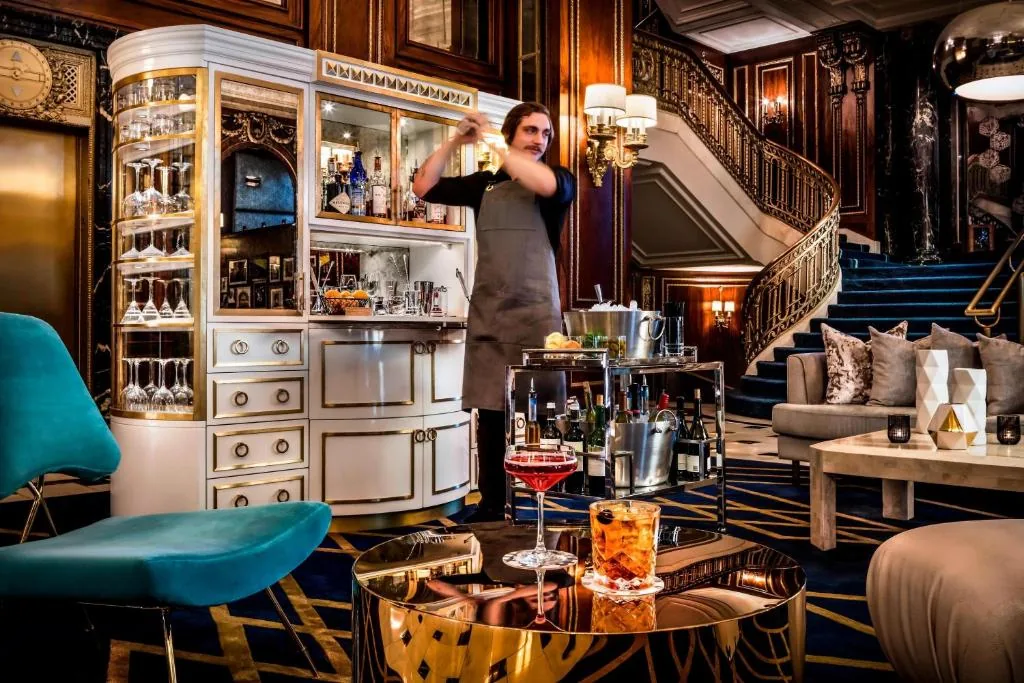
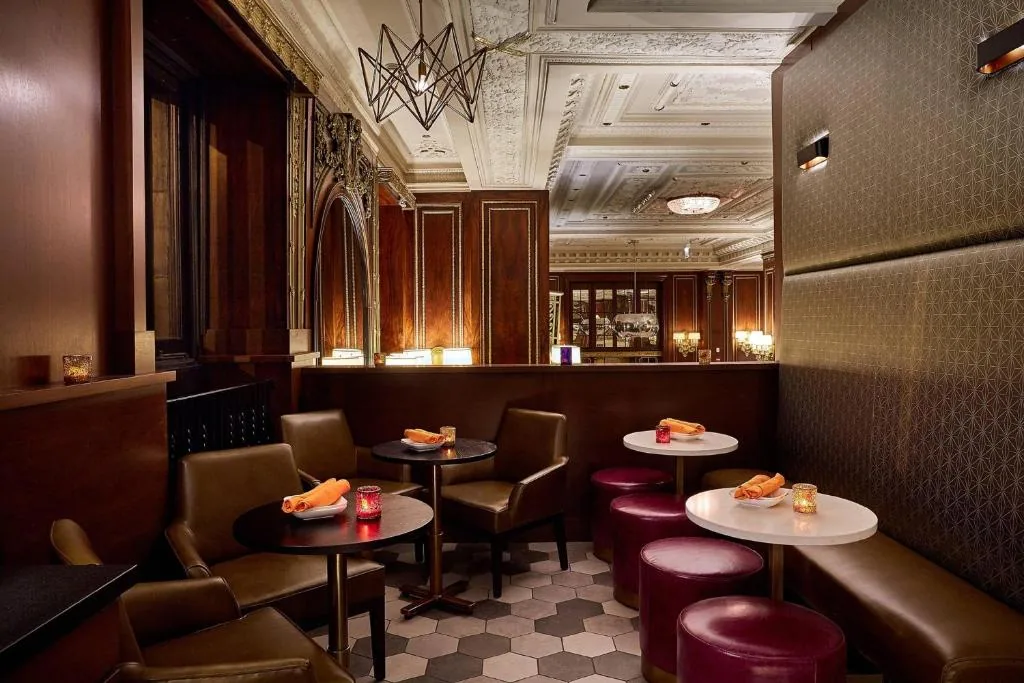
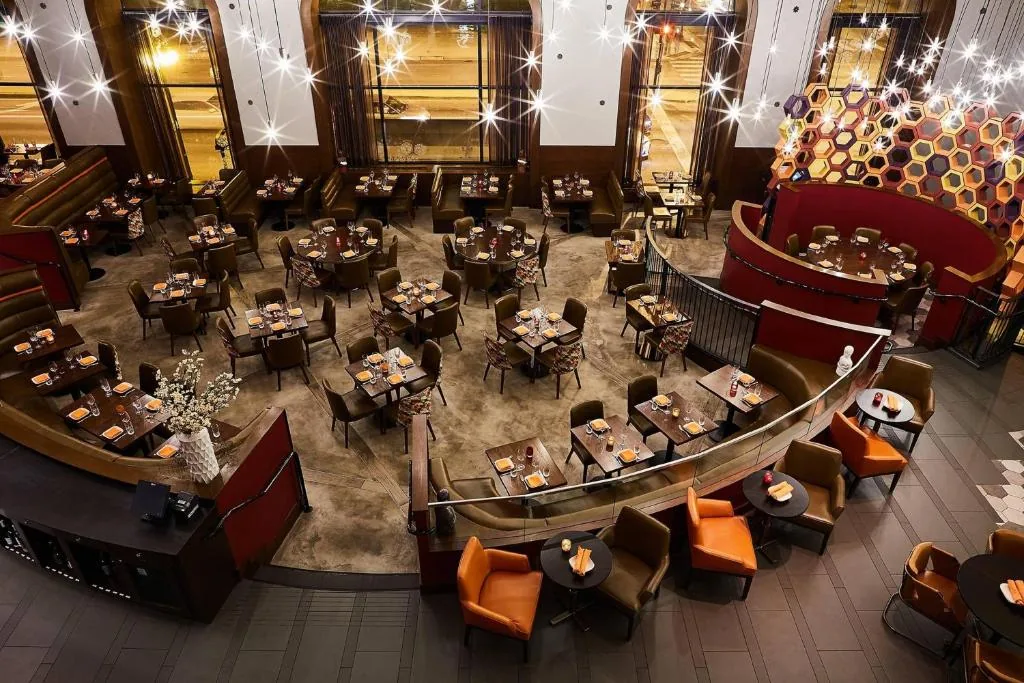
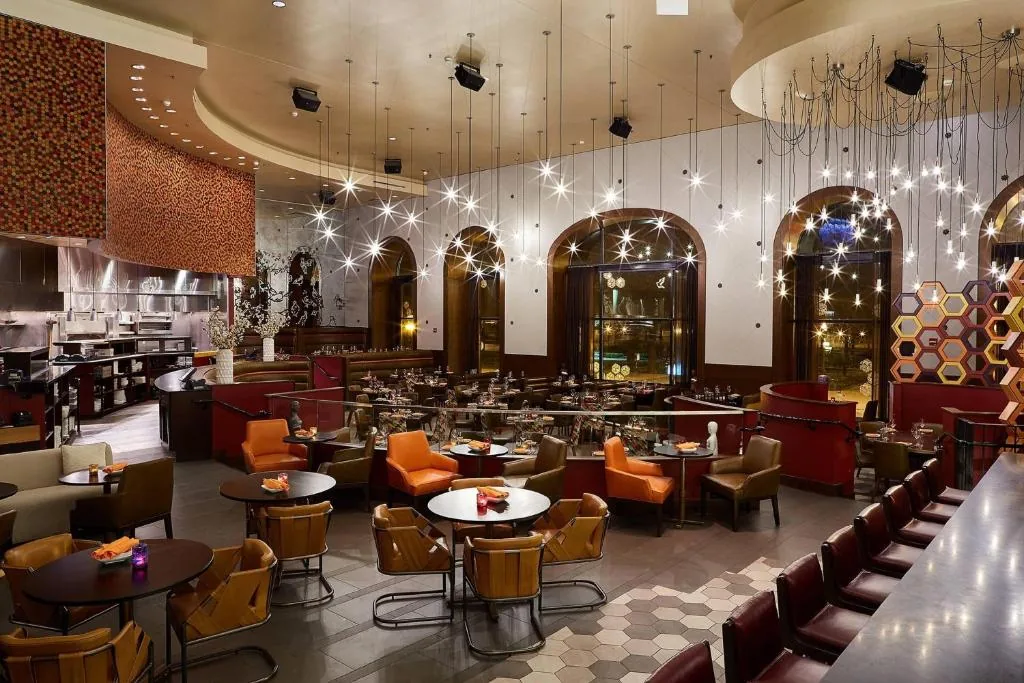
What guests are saying
What guests love
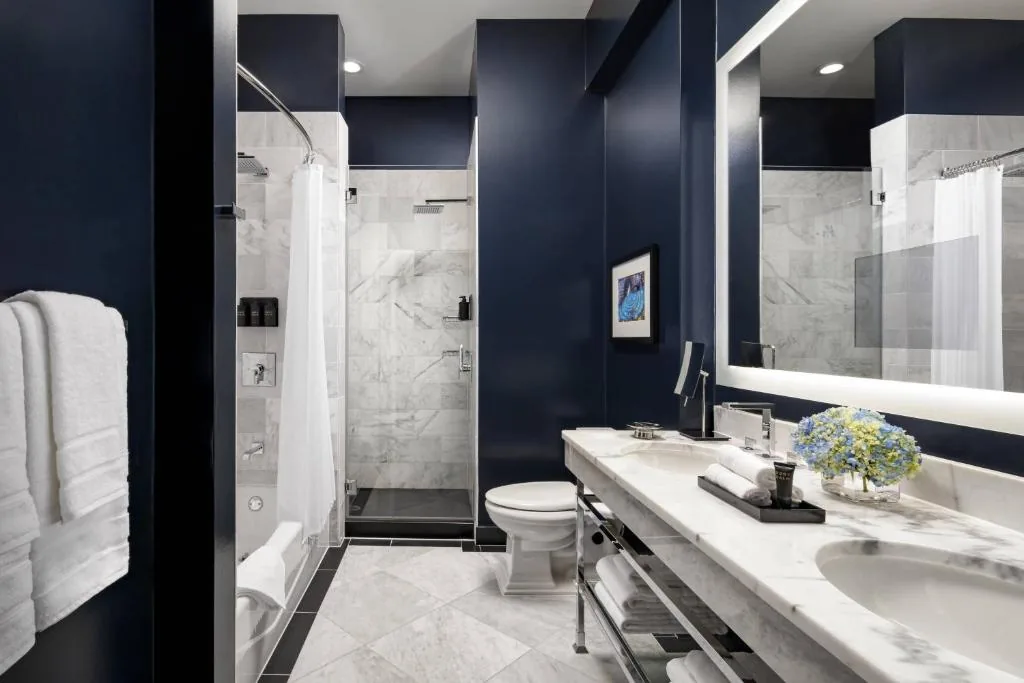
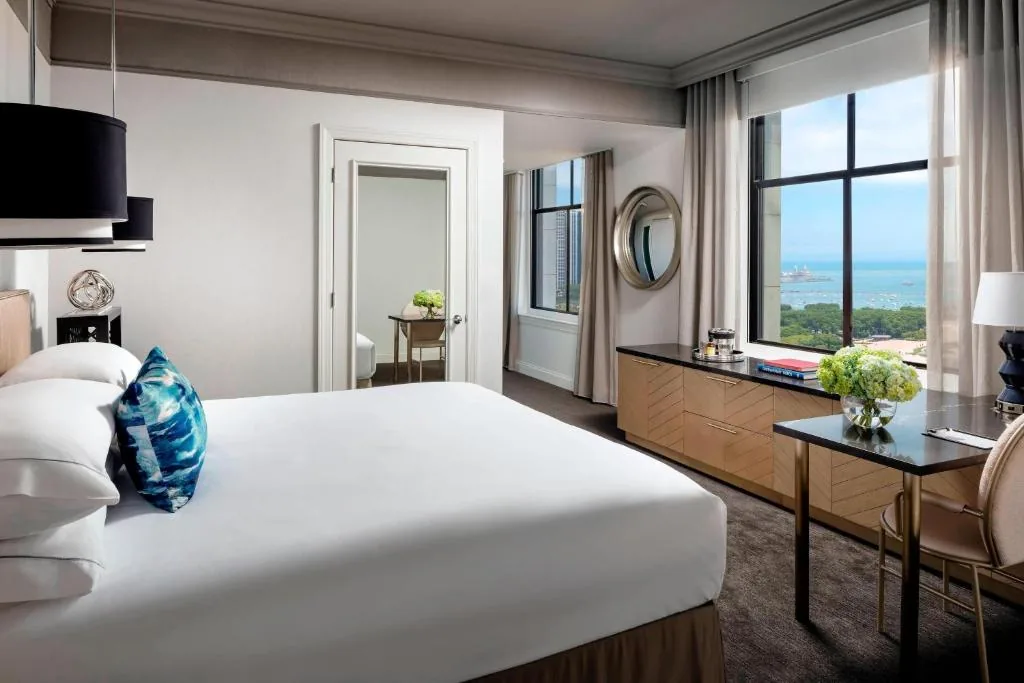
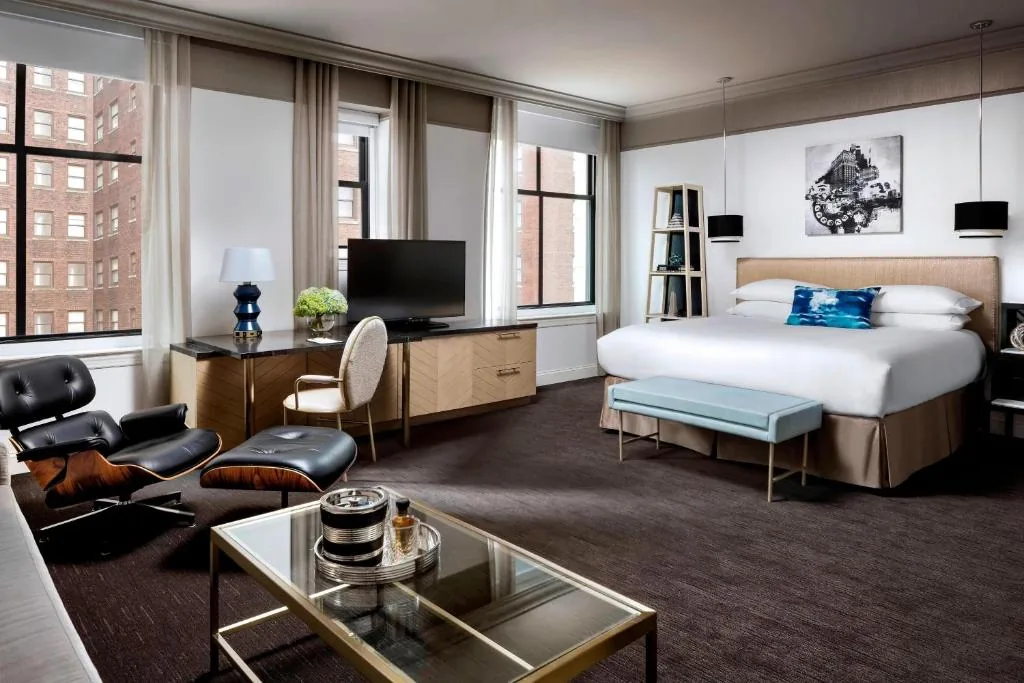
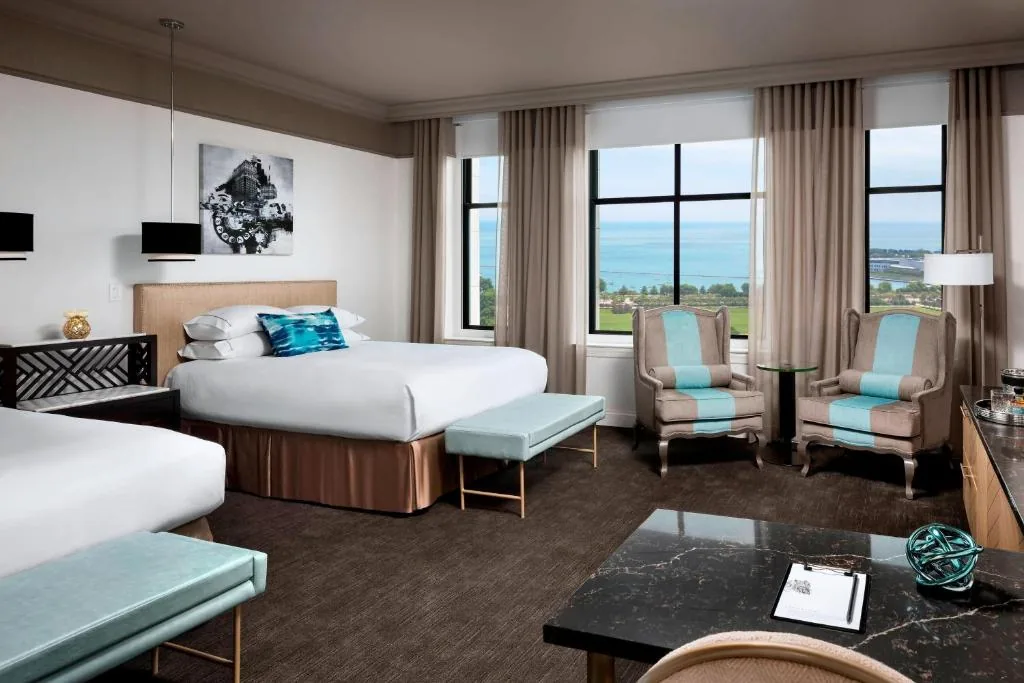
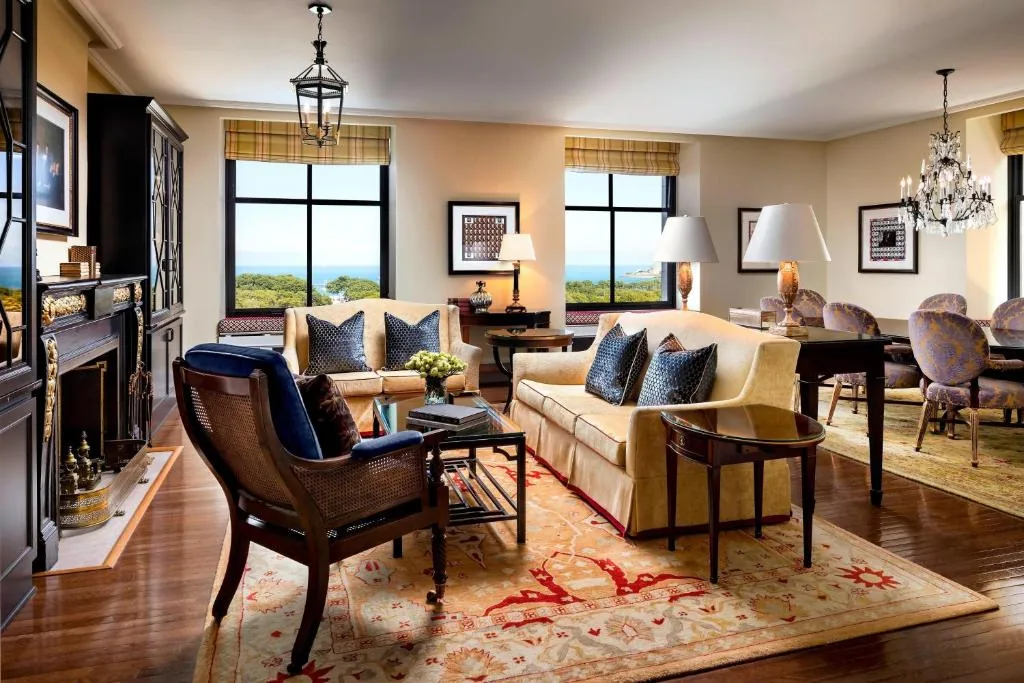
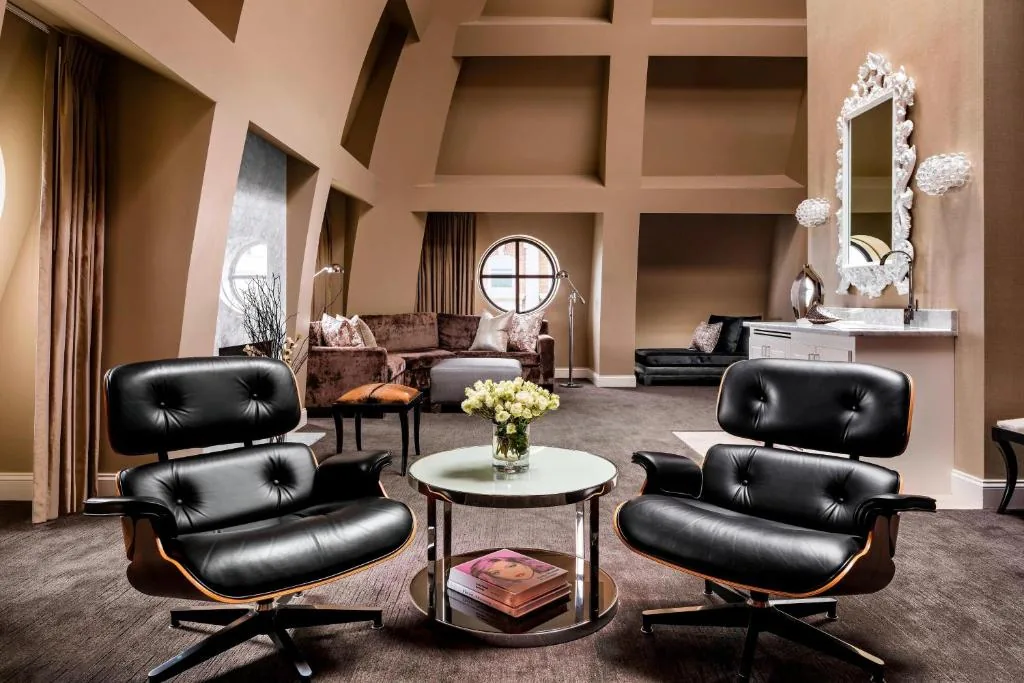
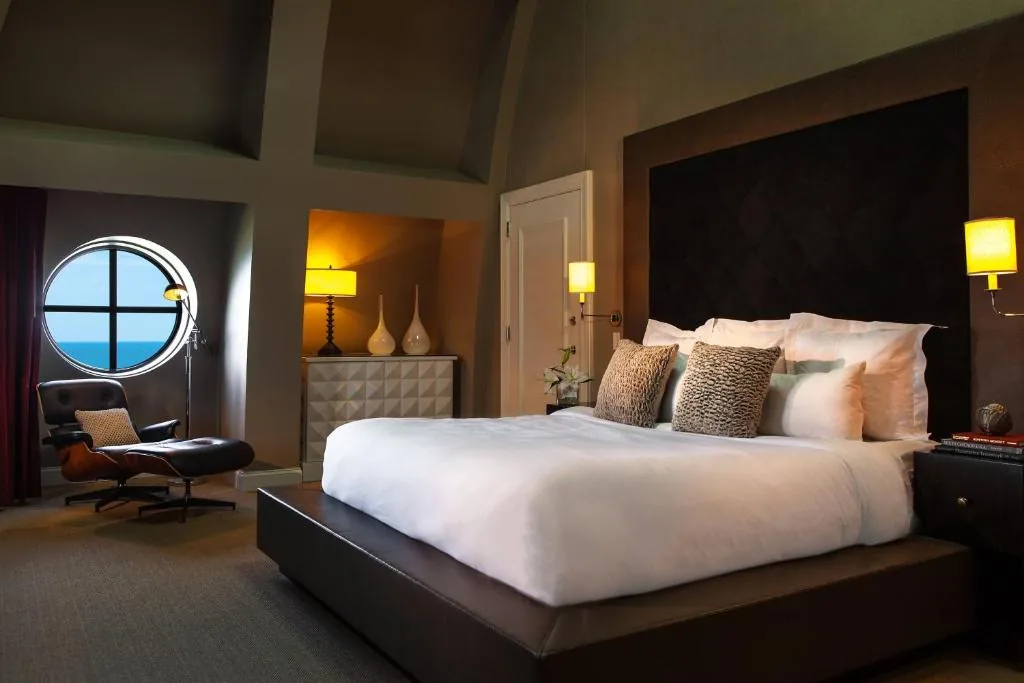
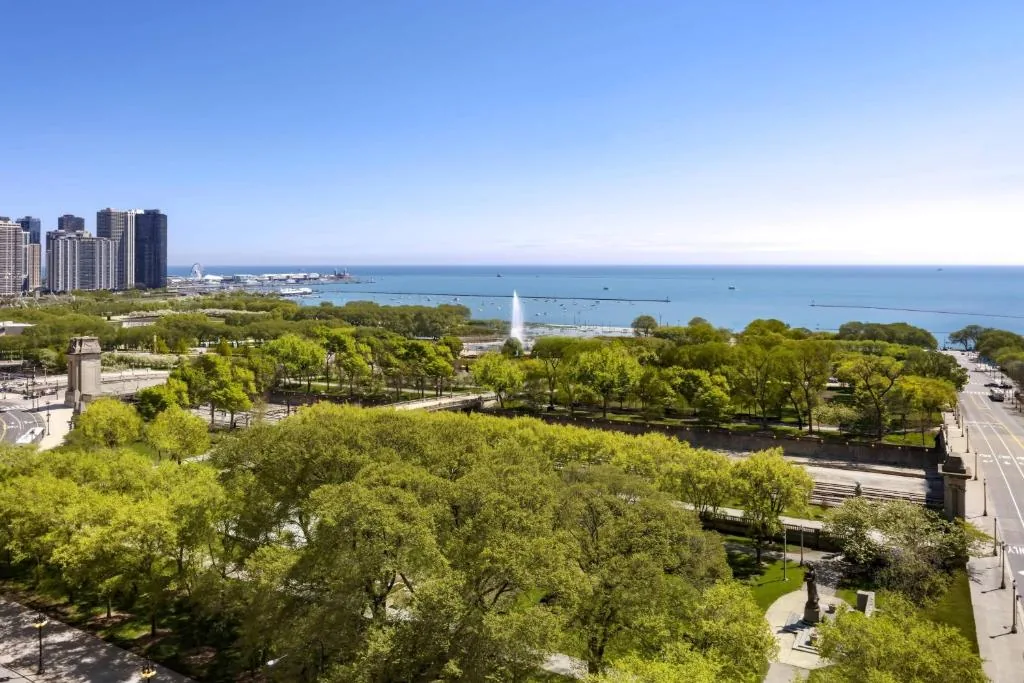
- A genuine grande-dame landmark with Grant Park and lake views.
- Layers of history — presidents, the Art Deco-era ballrooms, and a renowned art program.
- A cultural-corridor location near the Art Institute, Auditorium Theatre, and Museum Campus.
What to keep in mind
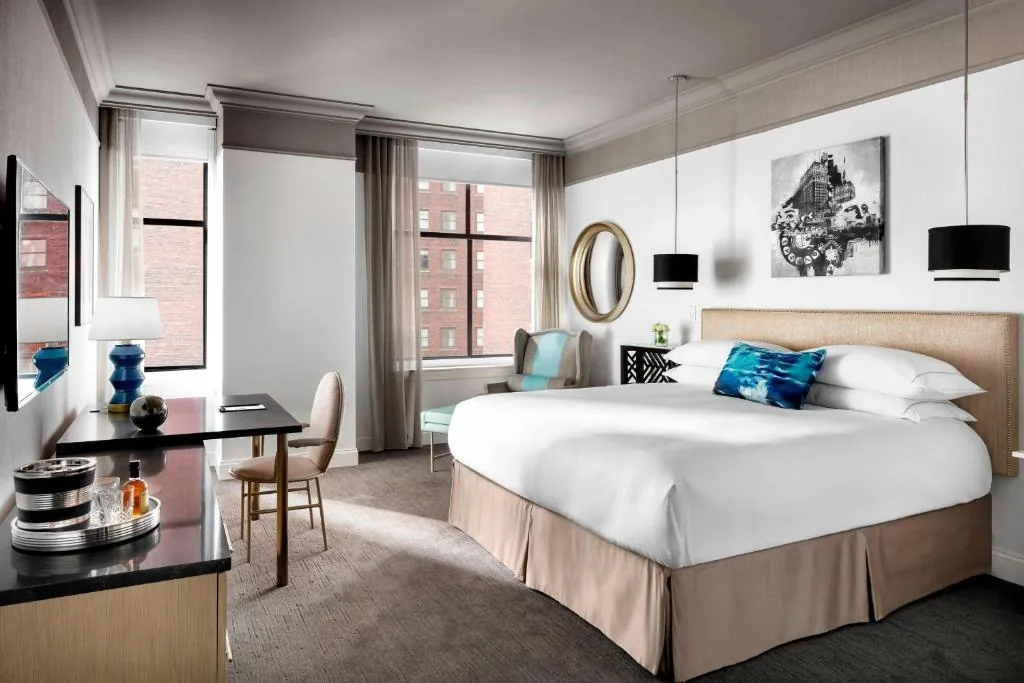
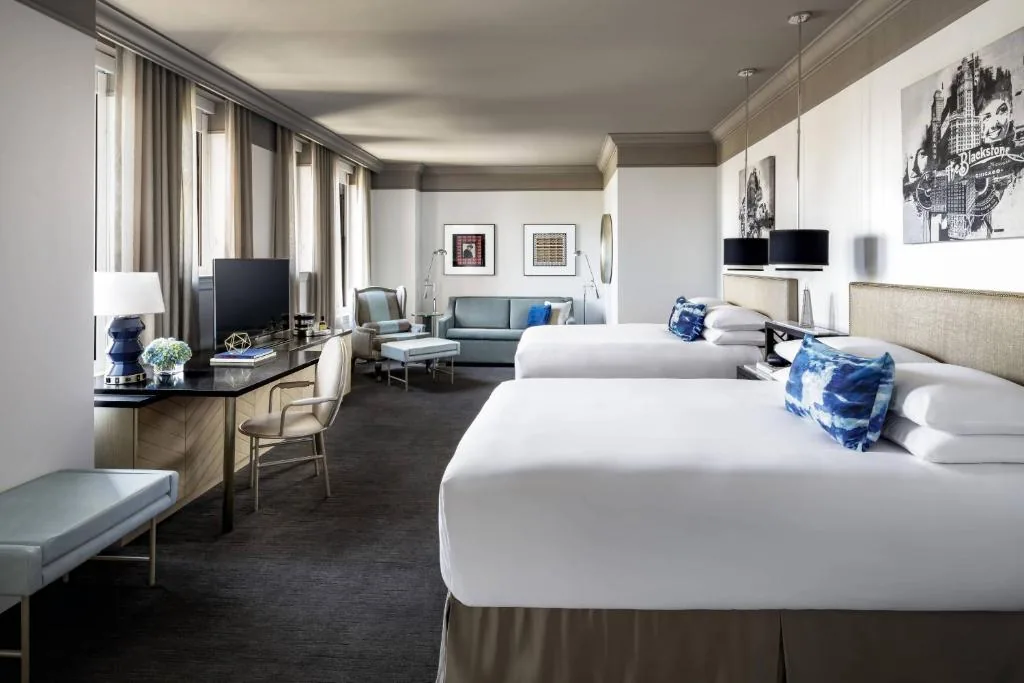
- A historic hotel — rooms vary in size
- A busy Michigan Avenue stretch
Best for History lovers who want a landmark stay with presidential pedigree on the Michigan Avenue cultural mile.
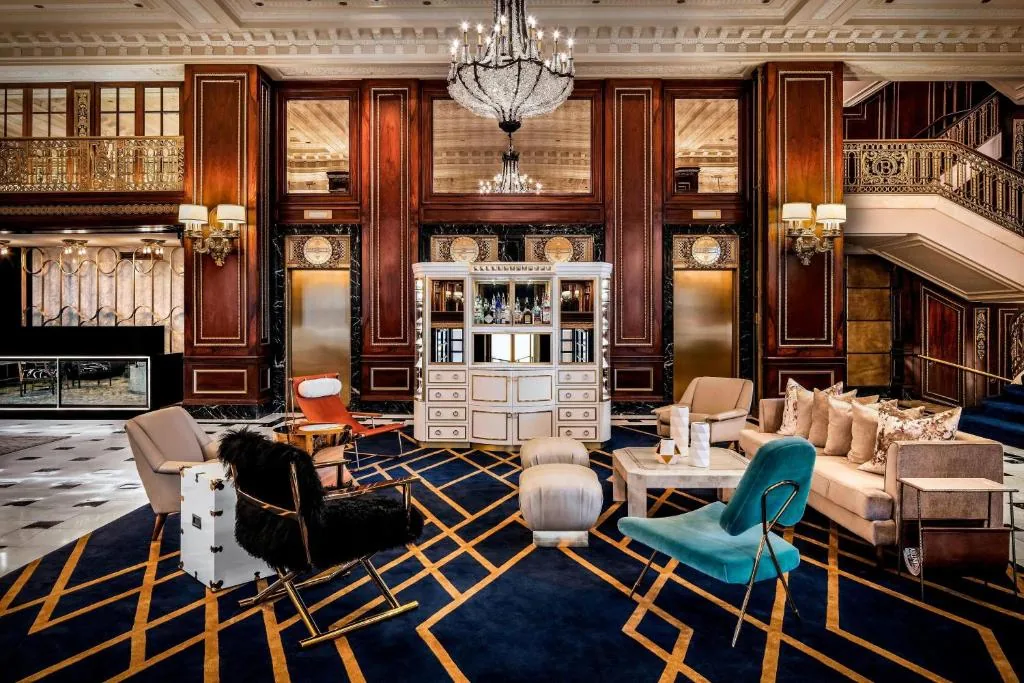
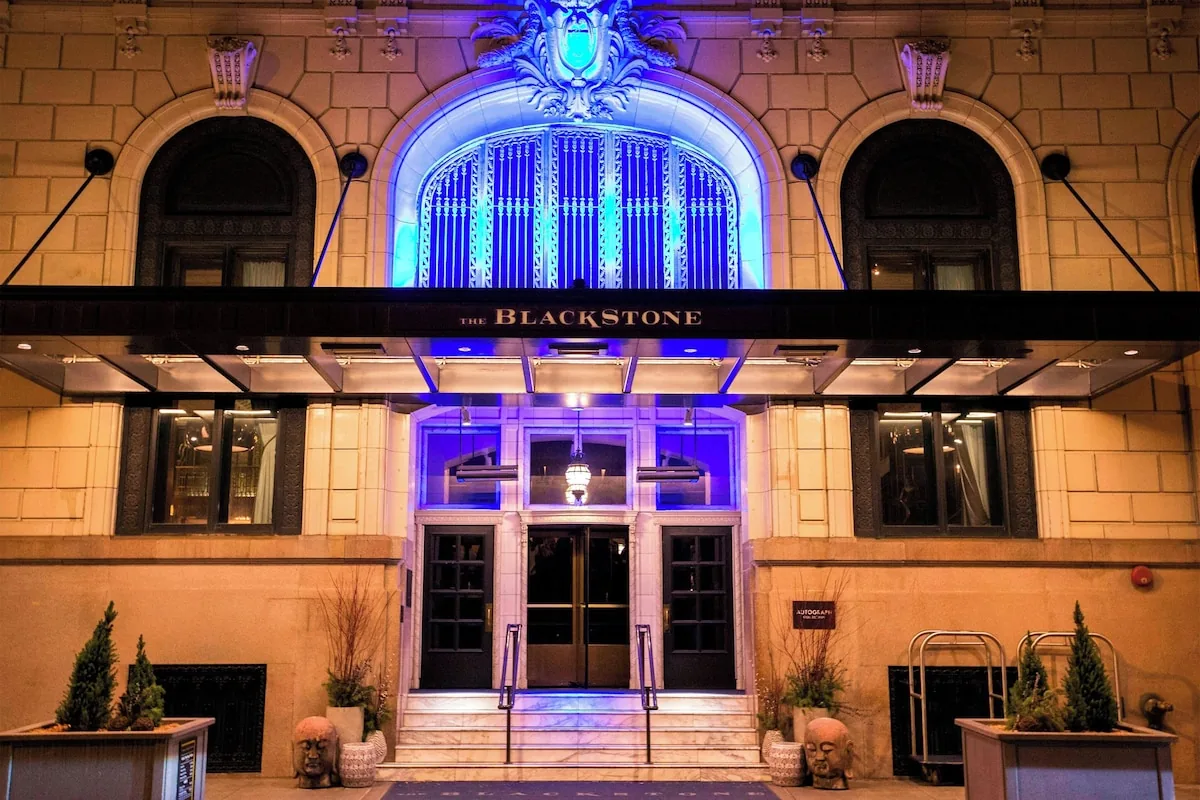
Summary of guest reviews. Sources: The Blackstone Hotel, Commission on Chicago Landmarks, Preservation Chicago. Photography courtesy of The Blackstone, Autograph Collection, used with permission. Designation report: Blackstone Hotel (L-18) at Chicago Landmark Reports. Details may change over time.
Why this building matters
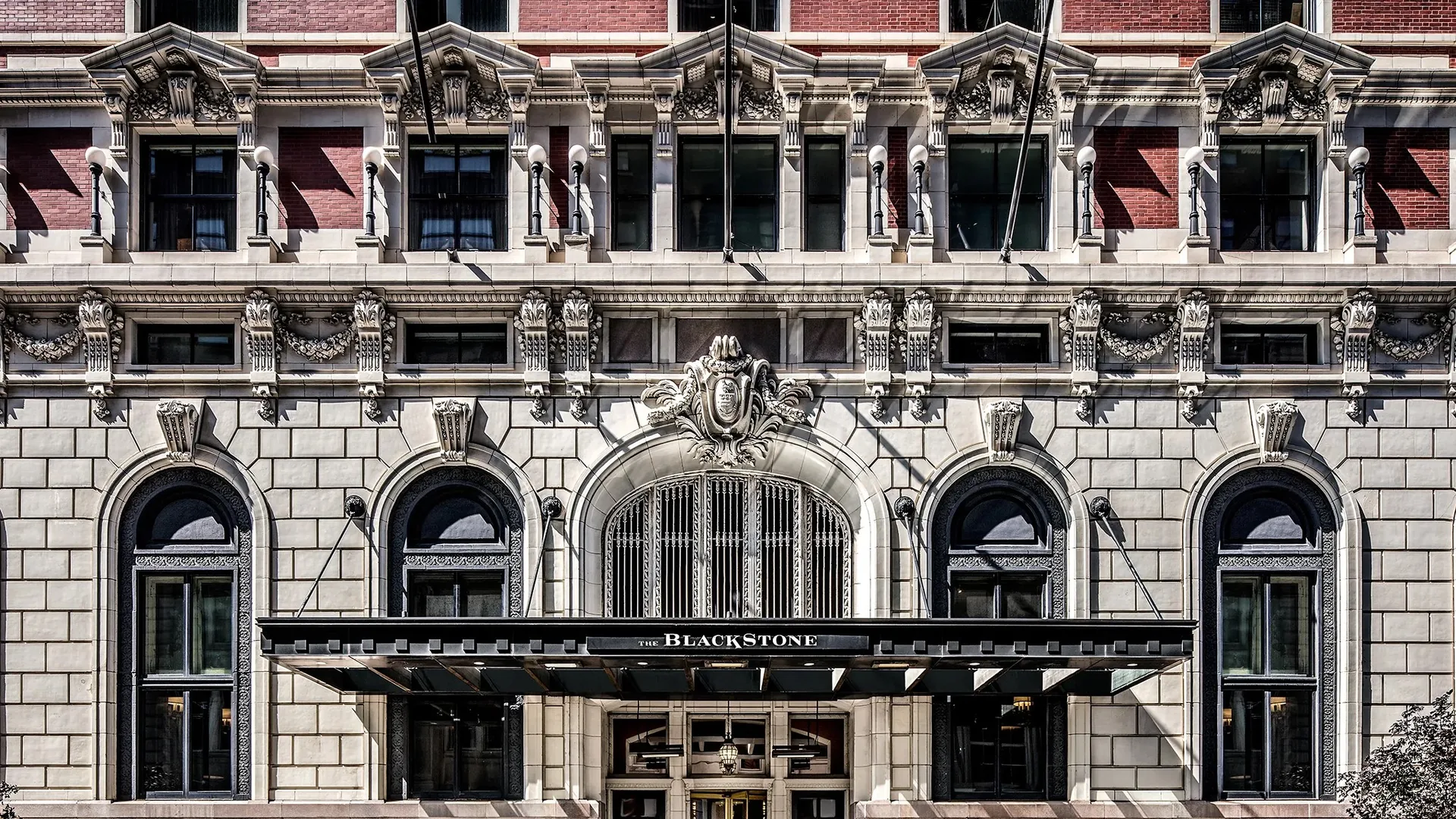
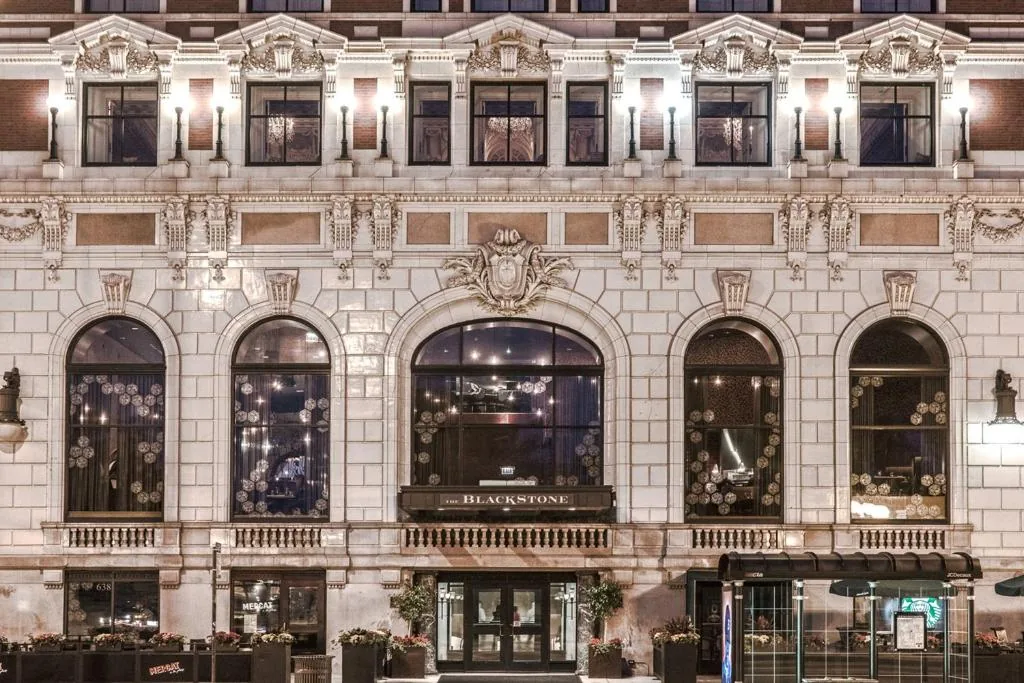
Completed in 1910 to the designs of Marshall & Fox, the Blackstone is a French Renaissance–inspired confection of limestone, brick, and a mansard roof on the Historic Michigan Boulevard District. Nearly every U.S. president from Theodore Roosevelt onward stayed here, and it was in a Blackstone suite during the 1920 Republican convention that the phrase “smoke-filled room” was coined. Named a Chicago Landmark in 1998, it was restored and reopened in 2008, today an Autograph Collection hotel.
Rooms 408 to 410
In February 1920, four months before the Republican convention came to Chicago, Warren Harding’s campaign manager Harry Daugherty made a prediction. His candidate would not win on the first ballot, or the second, or the third. But at about eleven minutes past two on the Friday morning, he said, “when 15 or 20 men, somewhat weary, are sitting around at a table, some one of them will say, ‘Who do we nominate?’” At that moment, Harding’s friends could put his name forward.
The convention deadlocked after four ballots on Friday, June 11, and the delegates went back to their hotels. What happened next took place in rooms 408 through 410 of the Blackstone, booked by Colonel George Harvey, publisher of Harvey’s Weekly. Those present denied it afterwards. But by half past three in the morning the corridors were carrying the rumor, and on the tenth ballot Harding had the nomination.
The Associated Press writer who covered it, Kirke L. Simpson, described the choice as having been made in a “smoke-filled room.” The phrase escaped into the language and never came back. The designation report cannot resist noting that those rooms are now in the non-smoking part of the hotel.
Other rooms here have their own footnotes. In 1940 an aide telephoned Franklin Roosevelt in the Governor’s Suite to tell him he had been nominated for a third term. And Truman always said it was in suite 708–09, belonging to the Democratic Party chairman, that Roosevelt talked him into the vice-presidency in 1944 — over the telephone, and without much patience. Told that Truman was refusing, Roosevelt asked whether the chairman had him lined up yet. “No,” came the answer. “He’s the contrariest … mule from Missouri I ever saw.”
The Hotel of Presidents
The fifth-floor Presidential Suite — a run of interconnecting rooms looking out over Michigan and Balbo — has been used by twelve presidents: every one from Theodore Roosevelt through Richard Nixon. Jimmy Carter was the last president to visit. The hotel also served as convention headquarters for Taft in 1912, Eisenhower in 1952 and Nixon in 1960.
None of that was accidental. Chicago had been hosting national conventions since the one that nominated Lincoln in 1860, and from 1904 they were held at the Coliseum on Wabash — a short walk from the hotel row growing along South Michigan Avenue.
The building is named for a man who never stayed in it. Timothy B. Blackstone was a railroad executive and the founding president of the Union Stockyards, and his mansion stood on this ground before the hotel did. It was built by the brothers Tracy and John Drake, known in their day as “Chicago’s Innkeepers,” who went on ten years later to build the Drake at the far end of Michigan Avenue — same architects, opposite ends of the same street.
Where the blues stayed
After the Second World War the Blackstone became the hotel of choice for visiting jazz and blues musicians. Shirley Dixon Nelson, daughter of the bluesman Willie Dixon, has explained the appeal: big rooms with tall ceilings, a South Loop address within easy reach of the Chess and VeeJay studios, and what the musicians called the hotel’s laid-back atmosphere. Her father kept staying here until his death in 1992. “He just loved the history of the place,” she said.
Long-term residents were part of the character from the start. A 1911 directory lists A. B. Dick, who manufactured mimeograph machines; the family of the meatpacker Michael Cudahy; and Mr. and Mrs. Avery Coonley, whose house in Riverside was designed by Frank Lloyd Wright. Mayor William “Big Bill” Thompson lived out his later years here.
Architecturally it is a rarity: the report calls it the city’s best example of the Modern French manner, a Beaux-Arts style common in New York and scarcely used in Chicago. Its plan won a gold medal from the Illinois chapter of the American Institute of Architects, and it is the only hotel in Chicago rated “Red” — the top ranking — in the Chicago Historic Resources Survey.
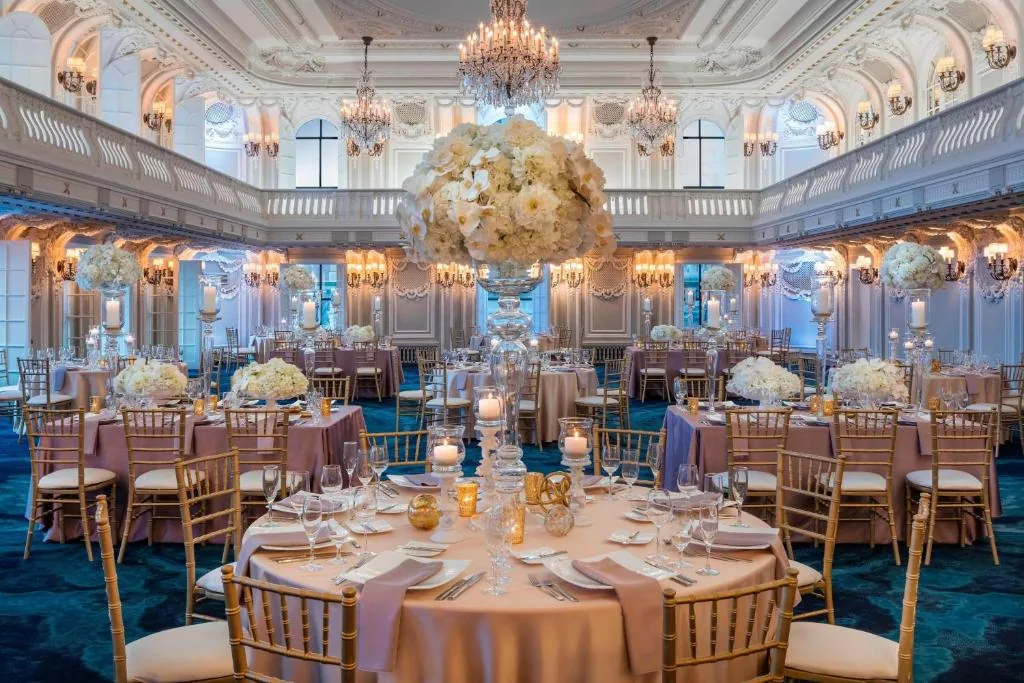
Success bought the Blackstone a neighbor, and nearly a second tower. Marshall & Fox designed the Blackstone Theater next door, finished in 1911, the year after the hotel. The Drakes then had them draw up a twenty-two-story annex to stand west of the theater, its lower seven floors given over to banquets and ballrooms, reached from the hotel by a passageway running through an “art hall” built atop the theater itself. The First World War intervened and the plans were dropped.
Drawn from the building’s Chicago Landmark designation report. Read the report →
Explore more like this
Beaux-Arts hotels in Chicago · haunted historic hotels in Chicago · Loop hotels near Millennium Park