





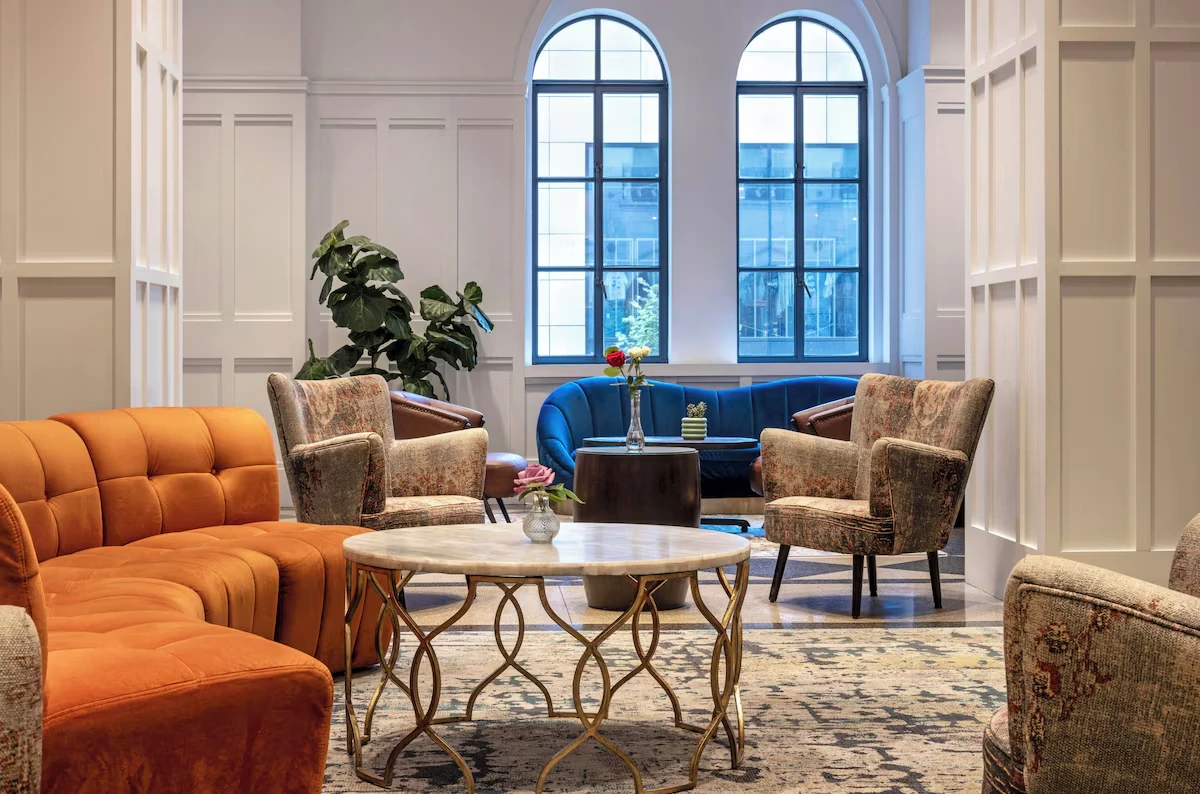


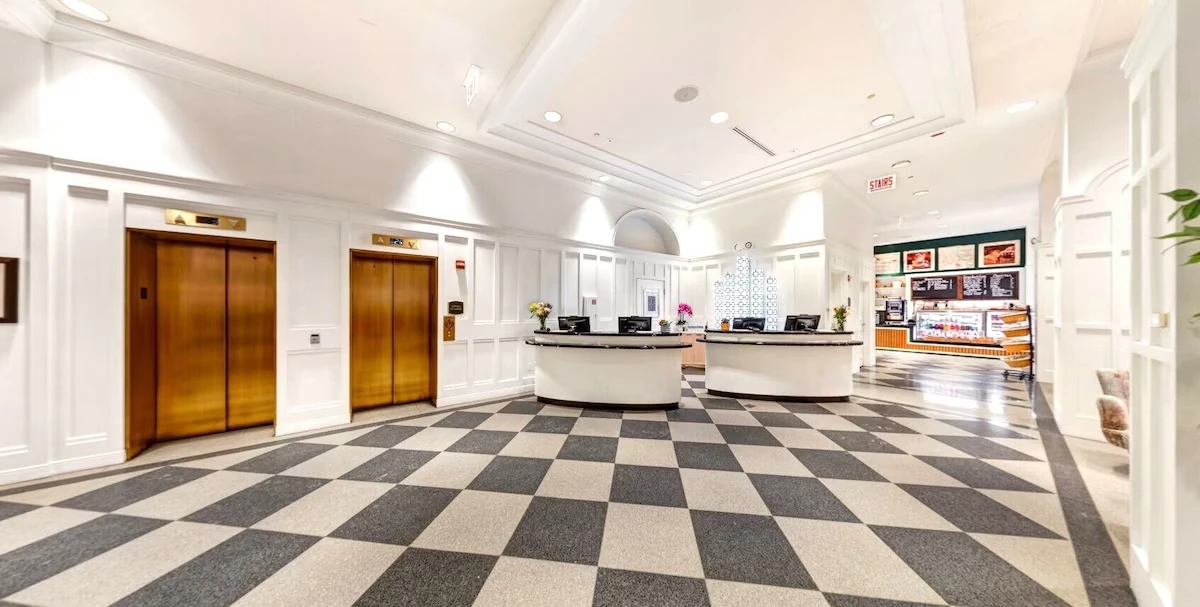


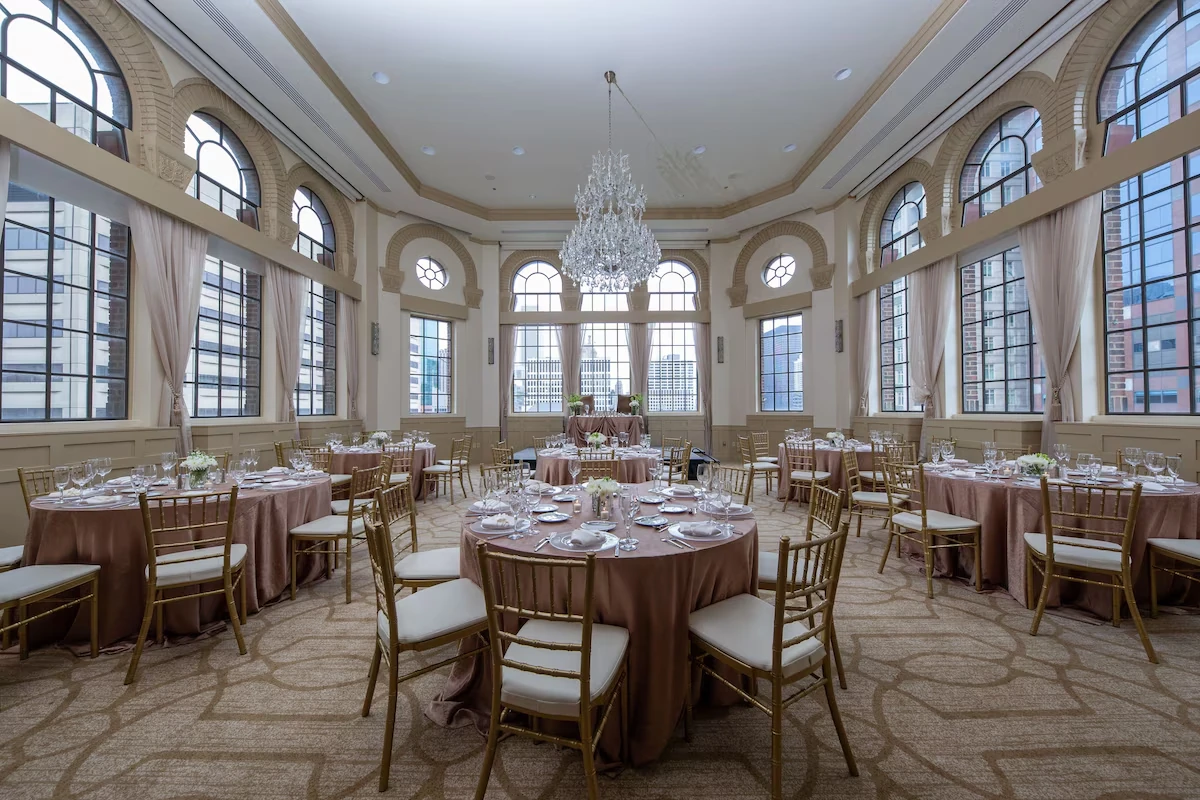

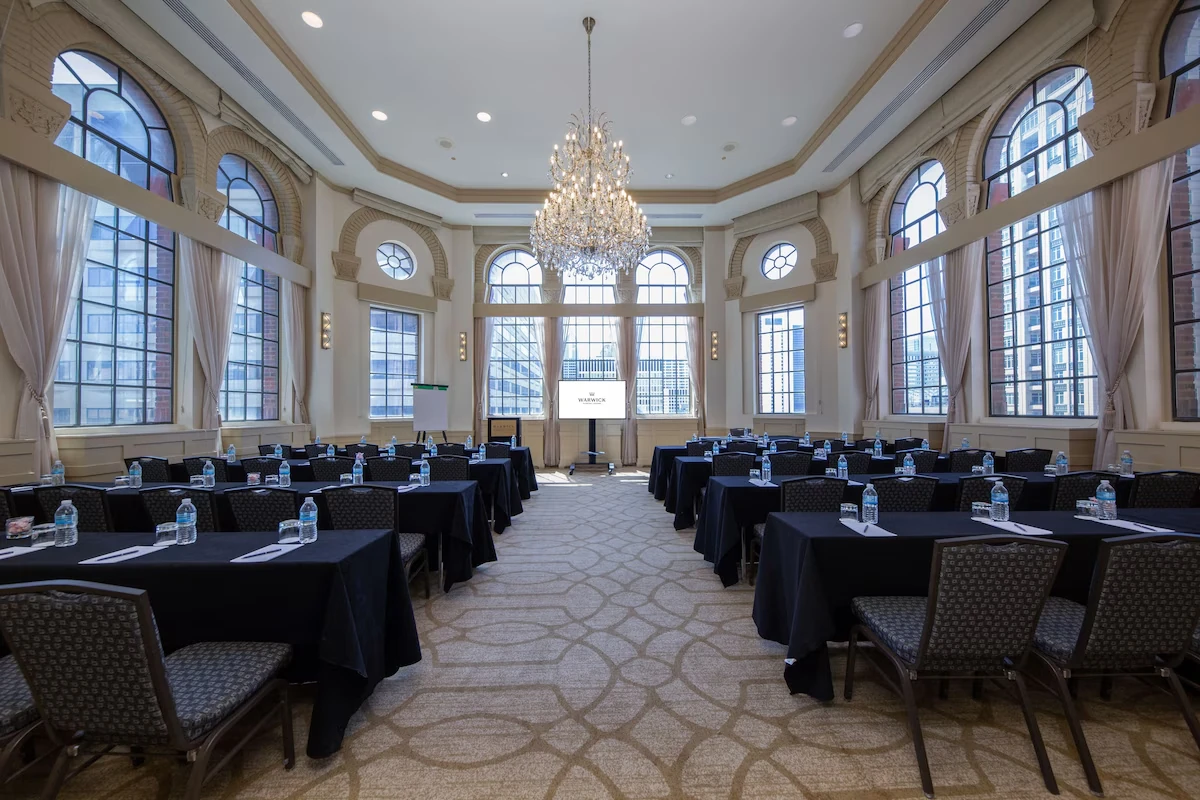


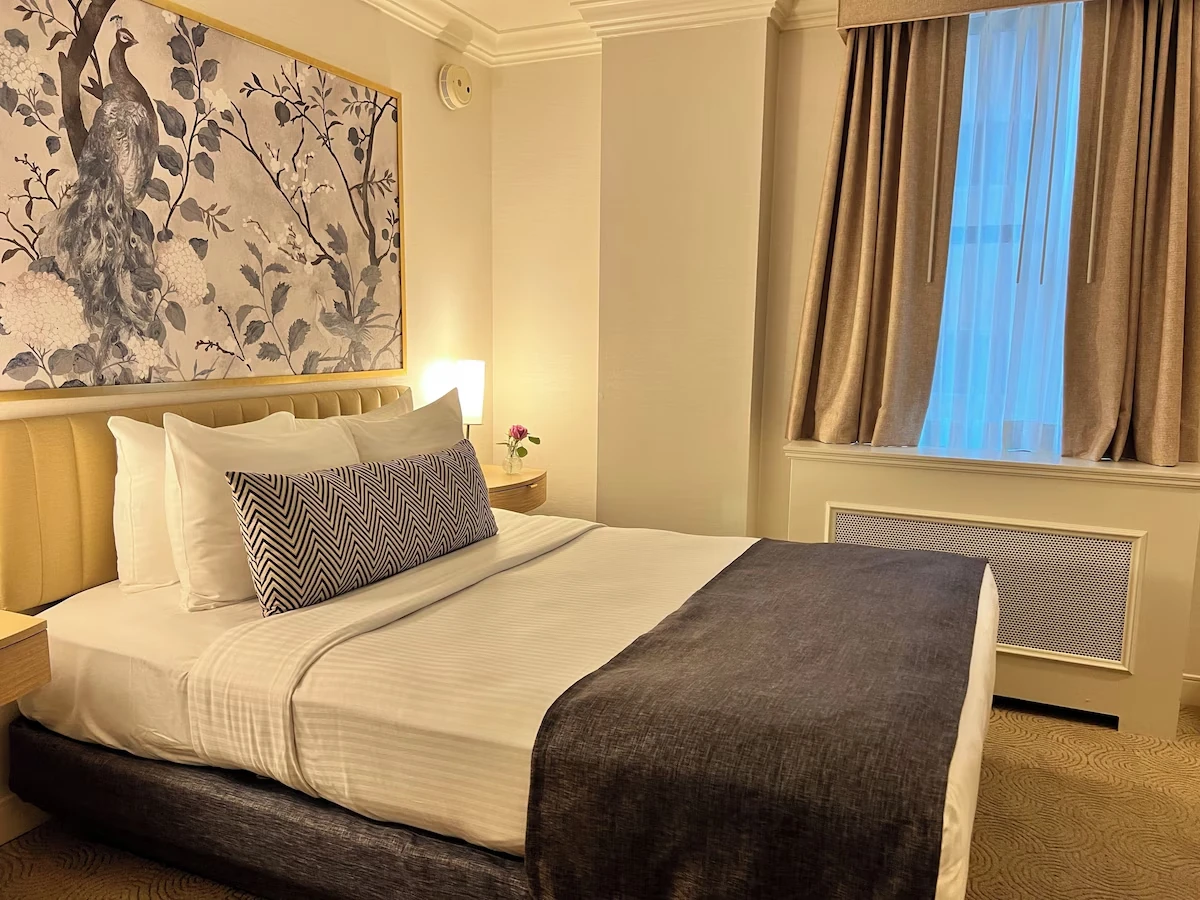


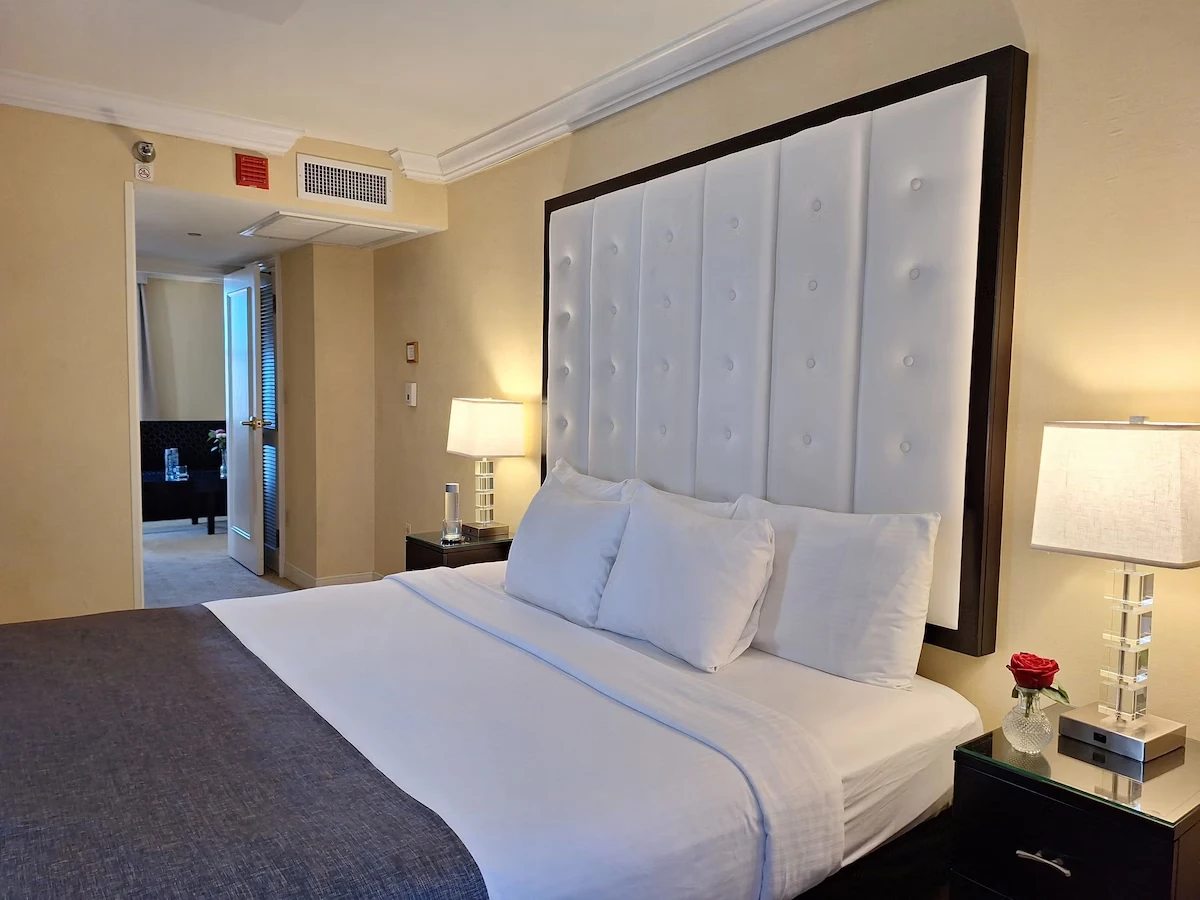


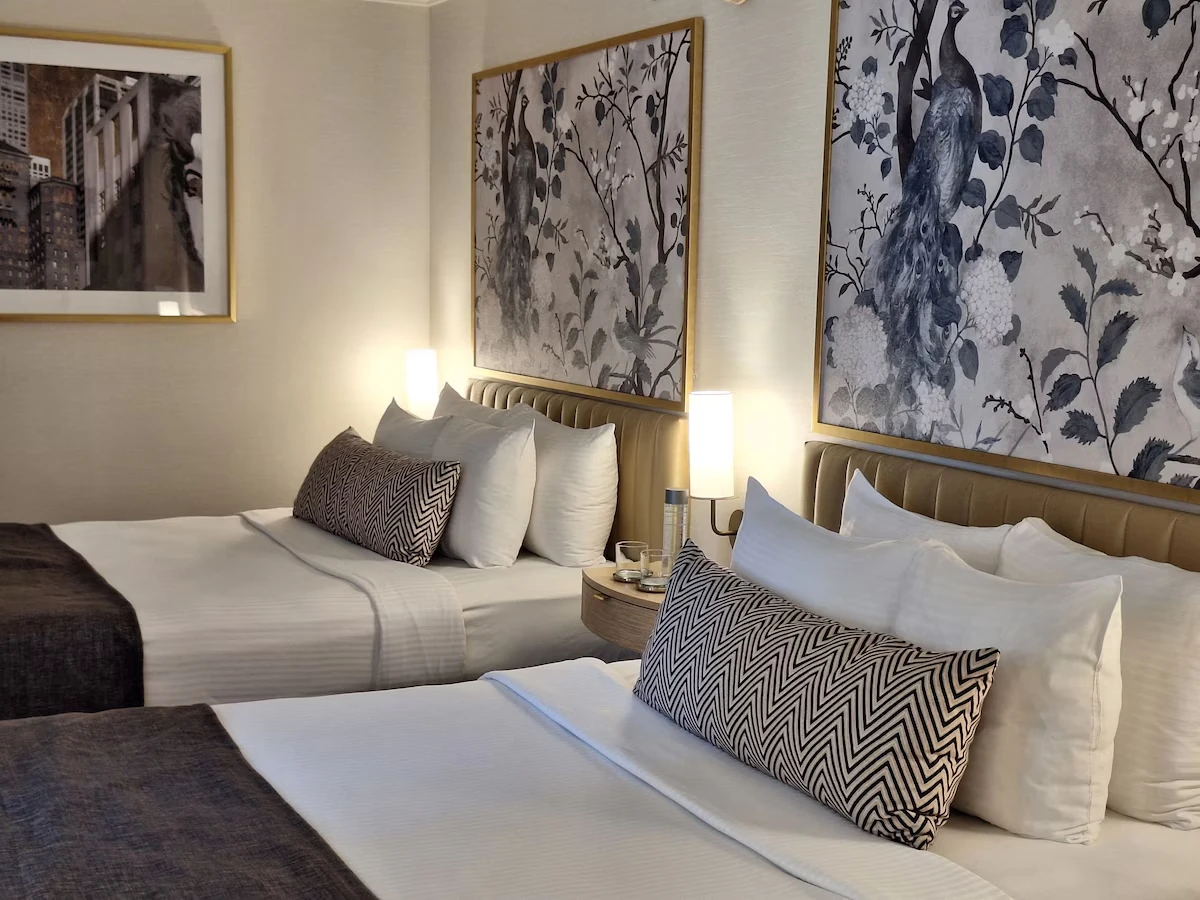
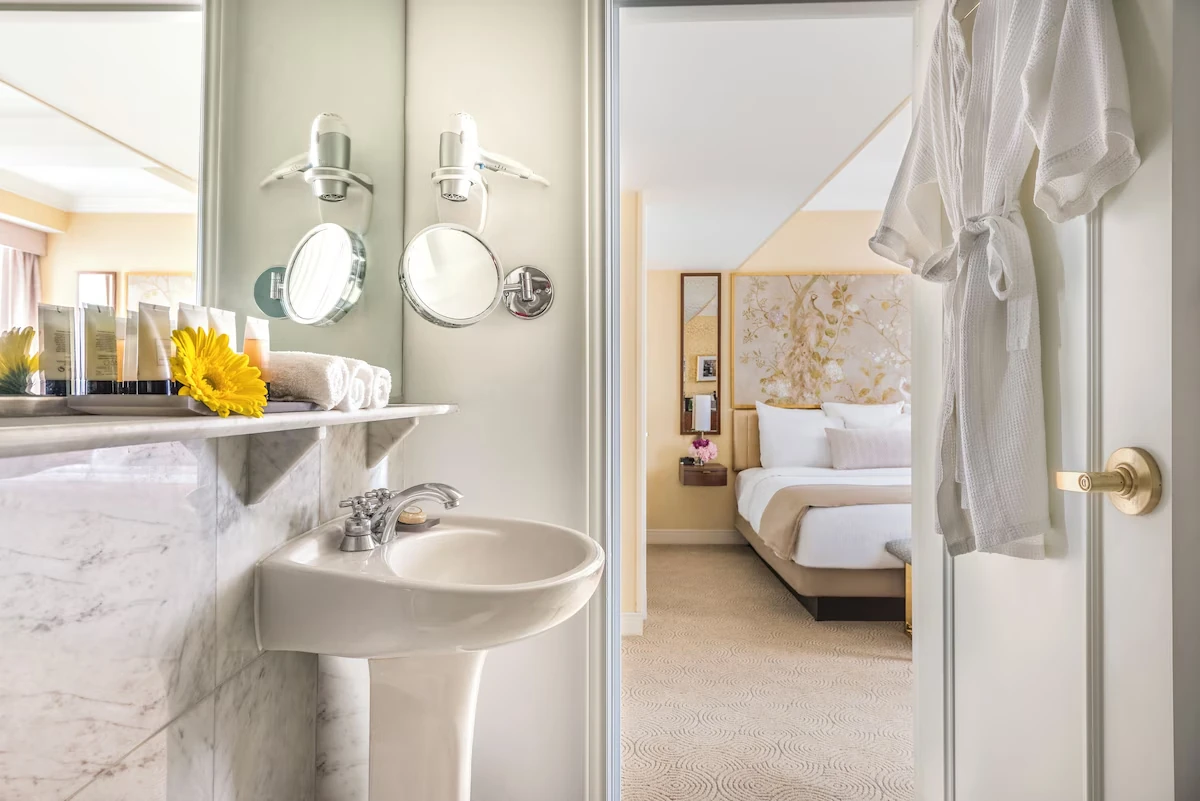


What guests are saying
What guests love
- A genuine 1924 landmark directly on the Magnificent Mile, amid the best shopping.
- The beloved Tip Top Tap sign and Jazz-Age character throughout.
- Walkable to the Water Tower, the river, and the lakefront.
What to keep in mind
- A 1920s building — rooms vary in size
- A busy Michigan Avenue location
Best for Travelers who want a genuine landmark address directly on the Magnificent Mile.
Summary of guest reviews. Sources: Warwick Allerton Hotel, Commission on Chicago Landmarks, Preservation Chicago. Photography courtesy of Warwick Allerton - Chicago, used with permission. Designation report: Allerton Hotel (L-45) at Chicago Landmark Reports. Details may change over time.
Why this building matters
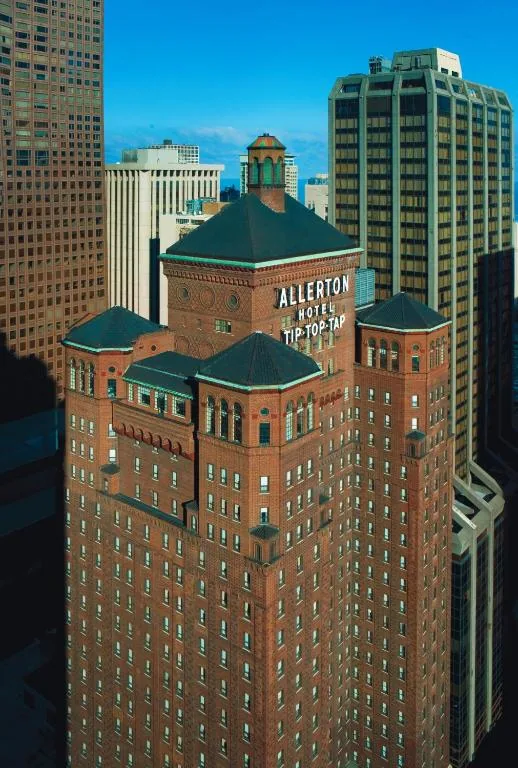
Opened in 1924 to the designs of Murgatroyd & Ogden with Fugard & Knapp, the Allerton was one of the first high-rises on North Michigan Avenue and an early example of the “club hotel” — residential-style living with hotel services. Its penthouse “Tip Top Tap” lounge was a 1940s and ’50s hot spot, and though the bar is long gone, its neon sign still glows over the avenue. The building was named a Chicago Landmark in 1998.
The building that taught Chicago to step back
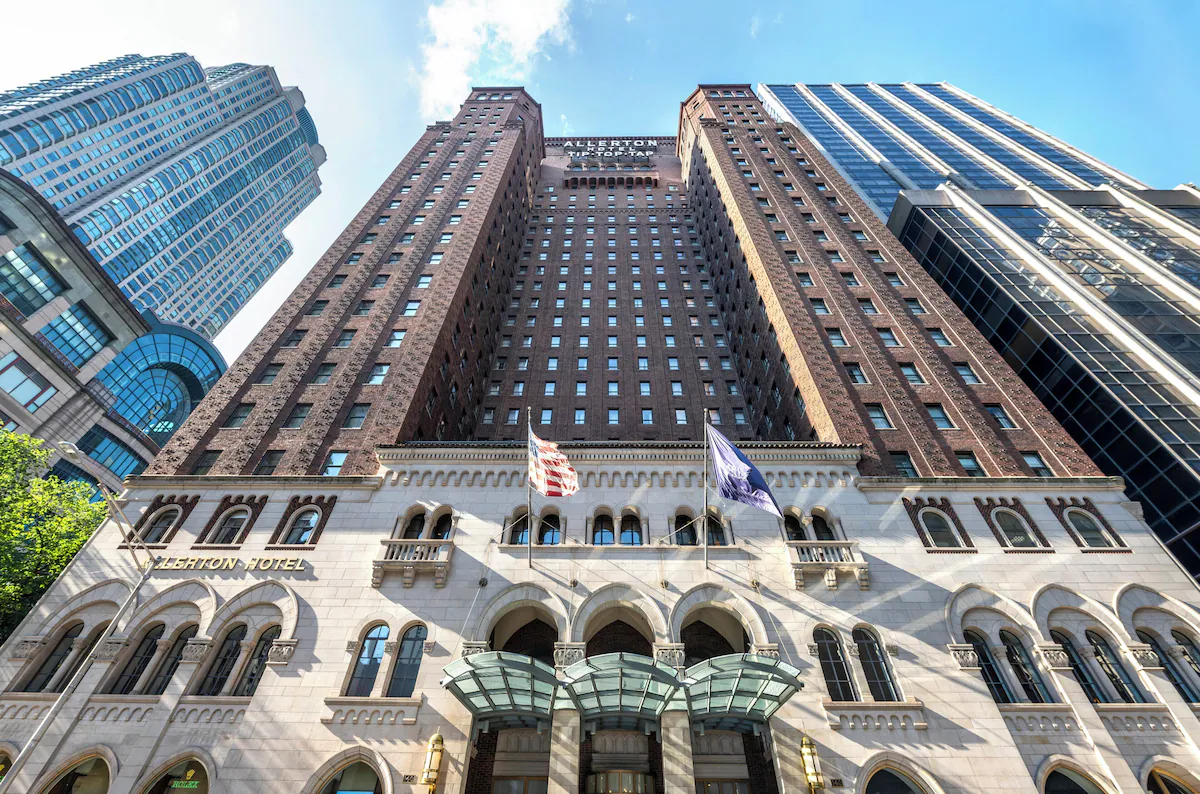
Look along Michigan Avenue at the Allerton and you are looking at an idea that every Chicago skyscraper of the following decade borrowed. This was the first building in Chicago built with a pronounced setback and towers — the stepped, sculptural profile that became the signature of the city’s late-1920s skyline. It was done here first.
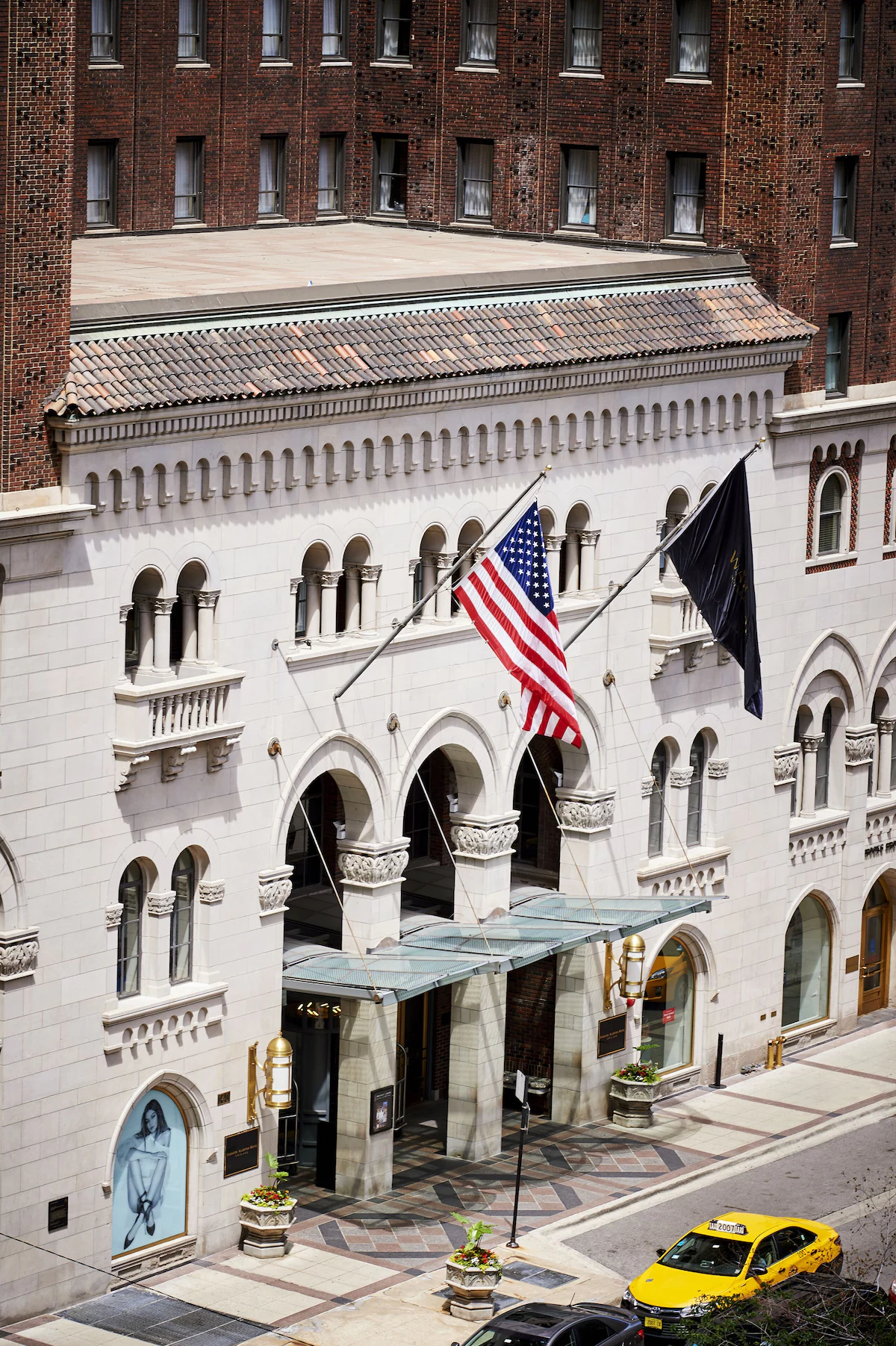
The rest of it is deliberately unlike its neighbors too. Where the avenue was going up in pale stone and terracotta, the Allerton is dark red brick, with round-arched windows and arcades, in a North Italian Renaissance manner that is rare anywhere in the city. The designation report makes the point that the warm brick and the three-story stone base gave it a domestic, welcoming character next to the harder lines of the office buildings around it — which was exactly right for what went on inside.
Michigan Avenue at that moment was being consciously built as Chicago’s Champs-Élysées, a boulevard for a city that had begun calling itself “Paris on the Lake” — a run of exclusive shops, clubs and hotels linking the Loop to the Gold Coast. The Allerton is one of very few buildings from that decade still standing on the street.
Chicago’s only club hotel
The Allerton was built as a club hotel, and the report is clear that it was the only one Chicago ever had.
The idea sat between three things. It offered the services of a hotel and the sociability of a private club, at the price of a small apartment — convenient, economical, and carrying rather more social cachet than simply renting a flat. For a young professional arriving in 1920s Chicago it solved several problems at once, and the building was planned around that: club rooms, shared spaces, and a great many small rooms above them.
The Depression ended the model. The hotel was forced into foreclosure in 1934 and taken over by the Harding Hotel Company, which also ran a chain of cafeterias.
The Tip Top Tap
By the late 1940s the hotel’s former club rooms, up on the 23rd floor, had become a cocktail lounge with a view over the whole skyline. The Tip Top Tap became one of the best-known rooms in Chicago, and it did so largely over the airwaves: the radio personality Don McNeil broadcast from the space, and the name traveled with the broadcasts.
Its sign traveled further. A 1950s photograph by Stephen Deutch of North Michigan Avenue at night has the rooftop lighting for the Tip Top Tap at the center of the frame — the designation report credits it with making the Allerton a focal point of Near North Side nightlife. A 1948 advertisement sold it plainly: “Where Chicago Relaxes After the Theatre — Tip Top Tap, atop the Allerton.”
Drawn from the building’s Chicago Landmark designation report. Read the report →
It opened as the Chicago Allerton House
The name on the door in 1924 was not the Allerton Hotel. The designation report gives the building’s original name as the Chicago Allerton House, and it cost four million dollars to build as a club hotel for men, on the northeast corner of Michigan and Huron.
It was sold by mail, to employers rather than to residents. The Allerton Company sent a letter and a brochure to selected Chicago companies, reminding them that “a man’s living environment largely determines the quality of his work,” and urging them to push their younger single employees toward the new building. The brochure made the offer plainly: “The ‘Allerton House’ realizes the ideal in modern quarters for business and professional men. It offers the wholesomeness of a home, the service of a hotel and the sociability of a club at modest rates.”
A second brochure, sent to Chicago businessmen while the building was going up, described the target more finely still: “An Allerton man is regarded as one who is particular in the choice of his residence, selective in the matter of his associates, appreciative of the better things of life.” Residents of the company’s New York houses were called “success men” — a phrase the report itself files as immodest.
The money behind it came from a mortgage bond issue underwritten by S. W. Strauss and Company, a Chicago investment bank that had financed an earlier Allerton house, and the City issued the building permit on January 15, 1923.
The men-only rule did not last the decade. By 1930 the hotel was taking women guests, with men and women assigned to separate floors, and the management had begun publishing the Allerton House Magazine for its residents.
Drawn from the building’s Chicago Landmark designation report. Read the report →