

















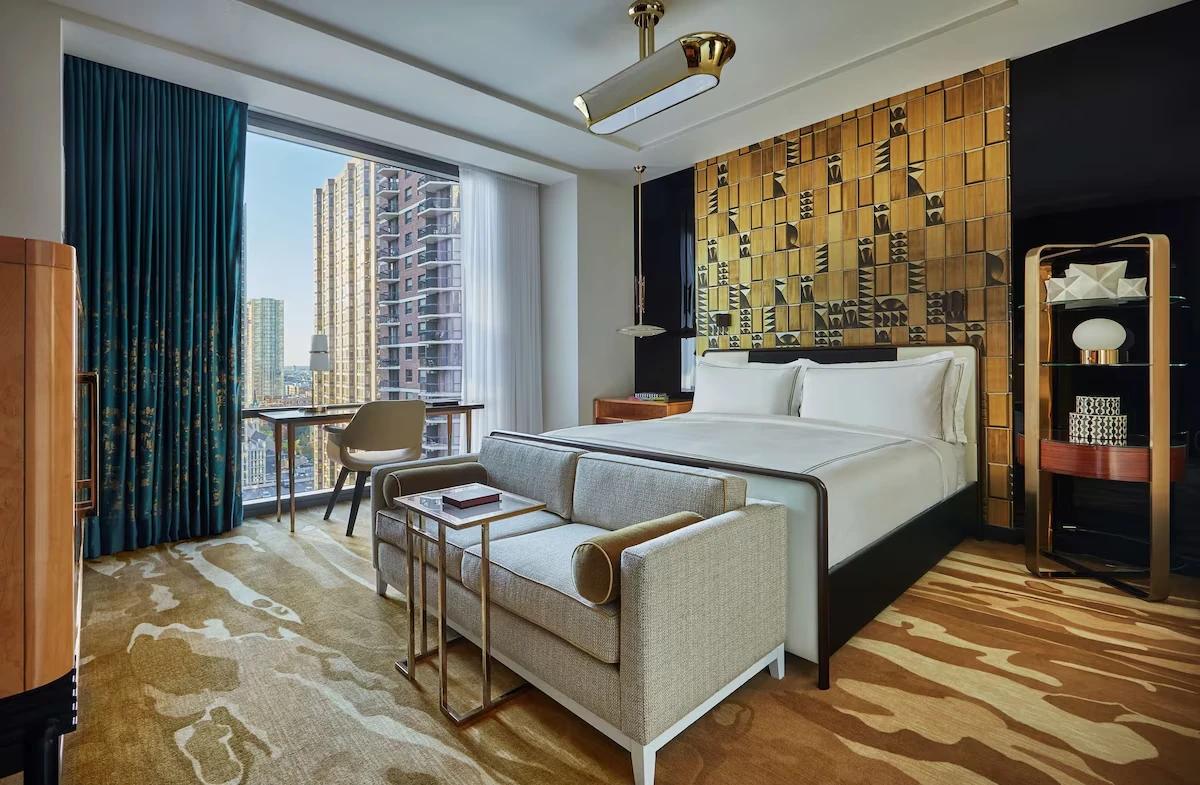




What guests are saying
What guests love
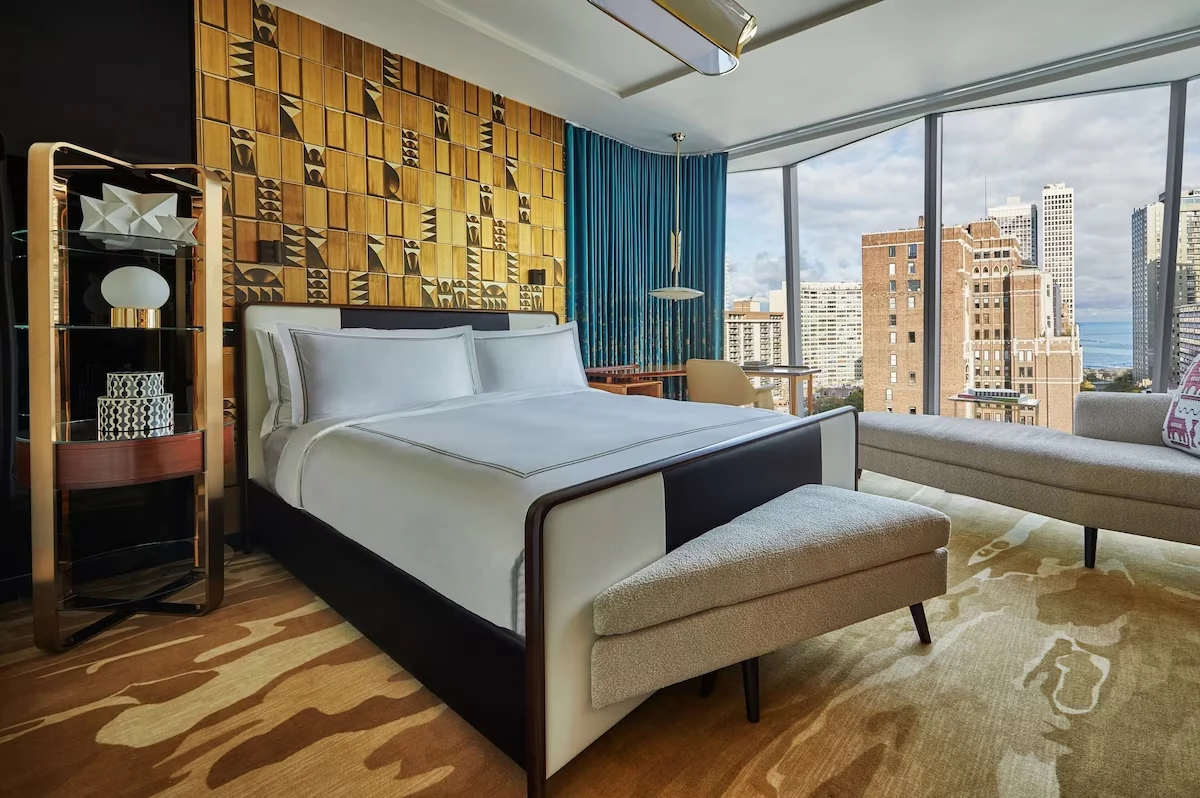
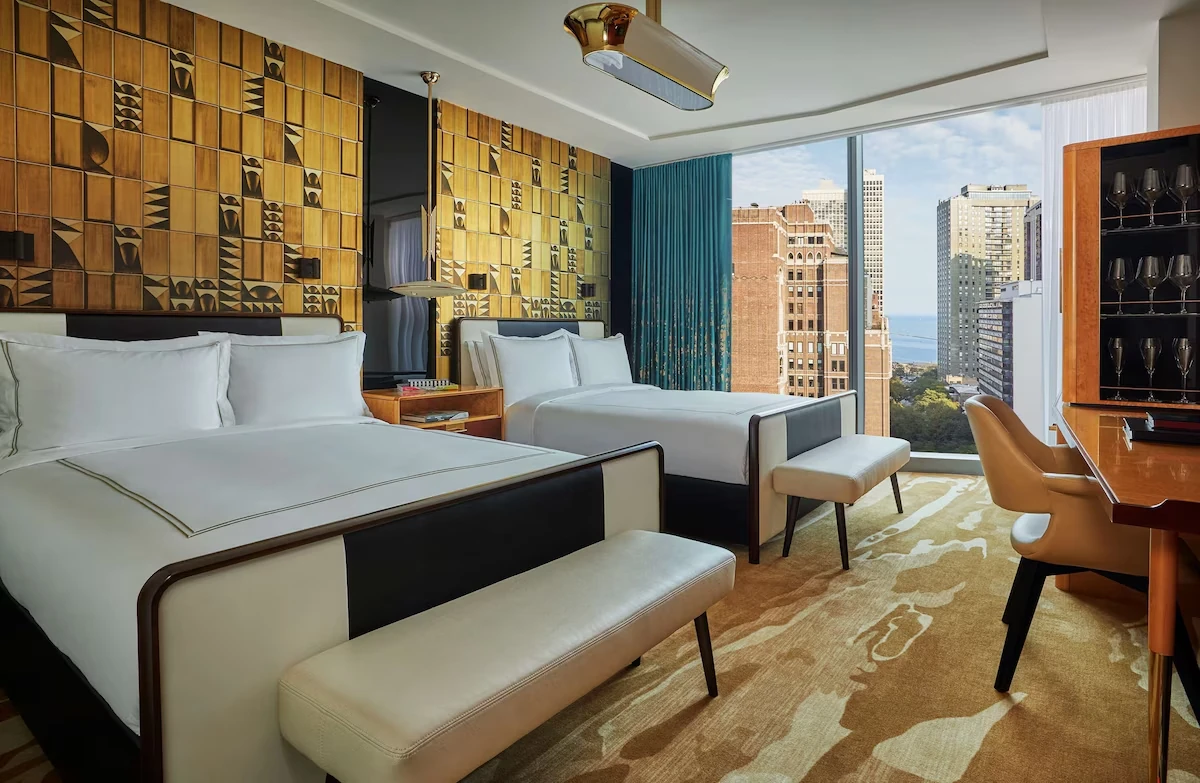
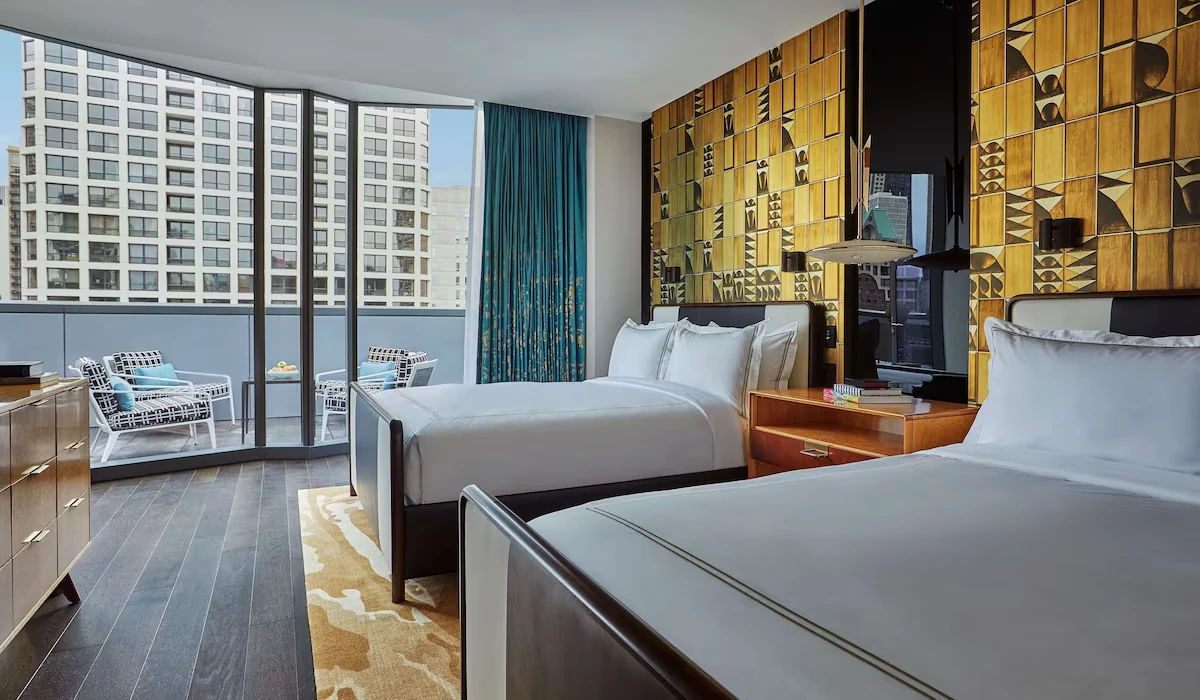
- A striking blend of a restored 1920s facade and a contemporary luxury tower.
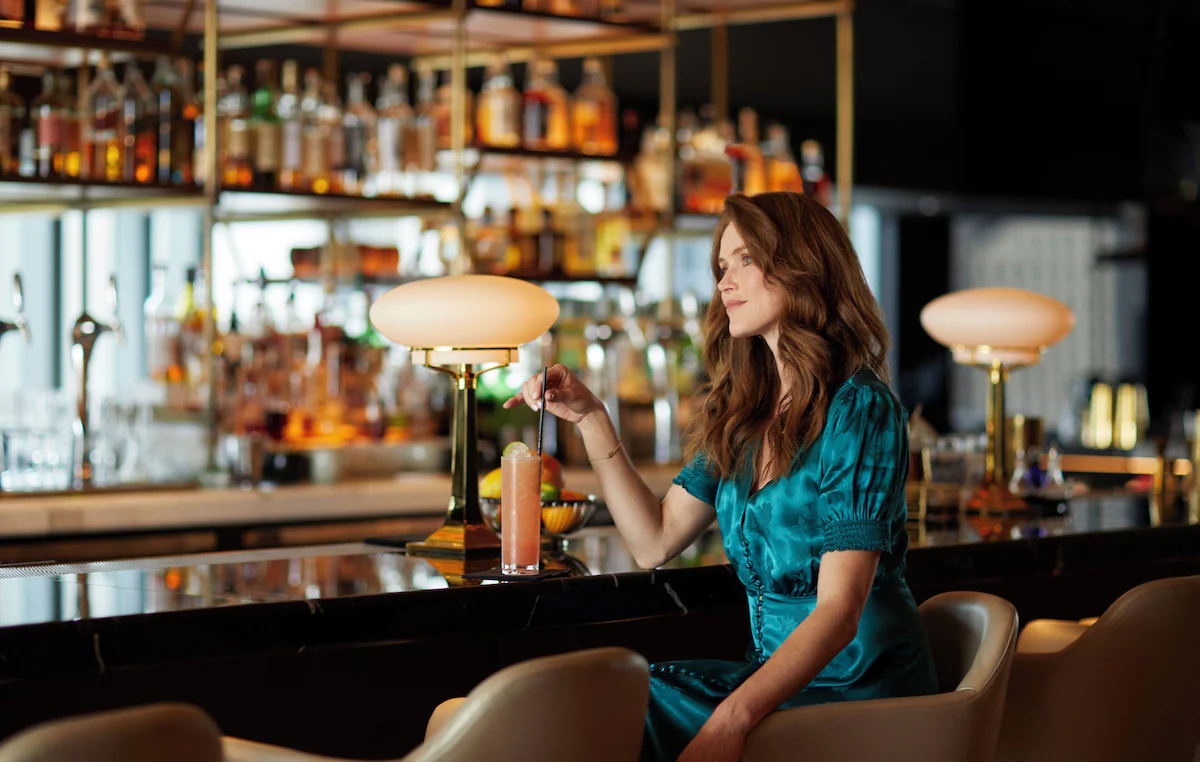
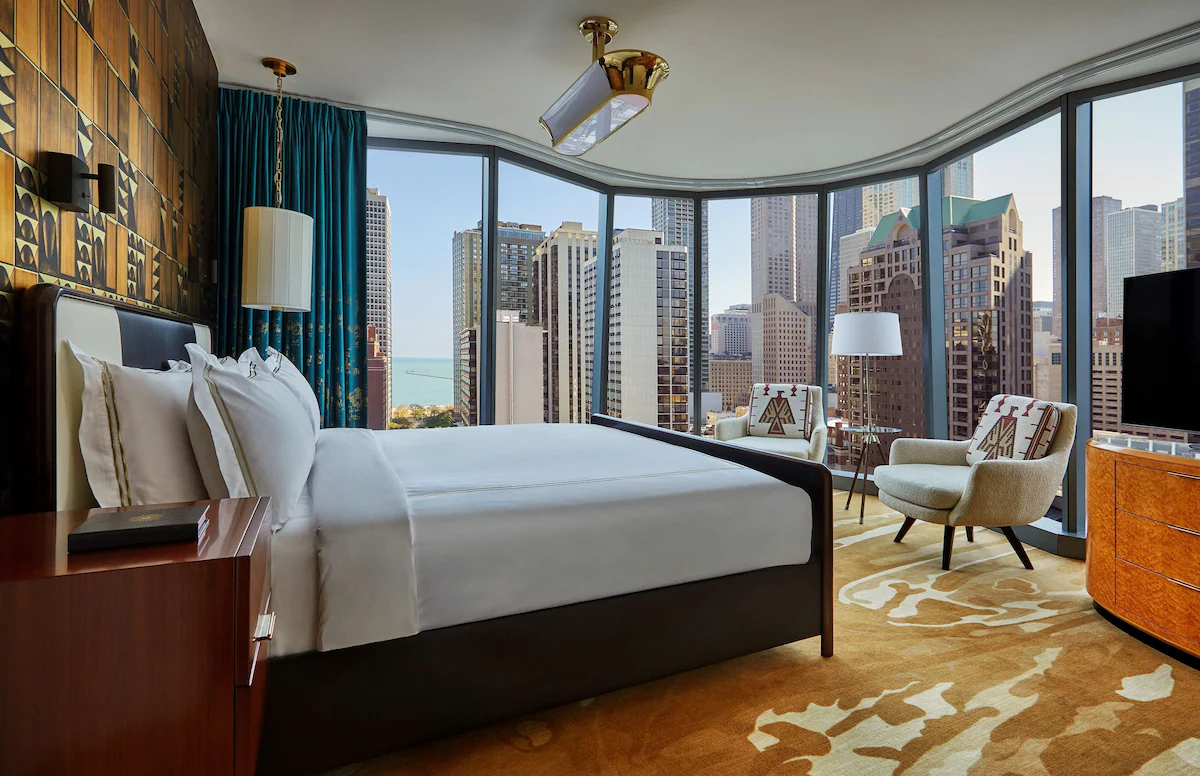
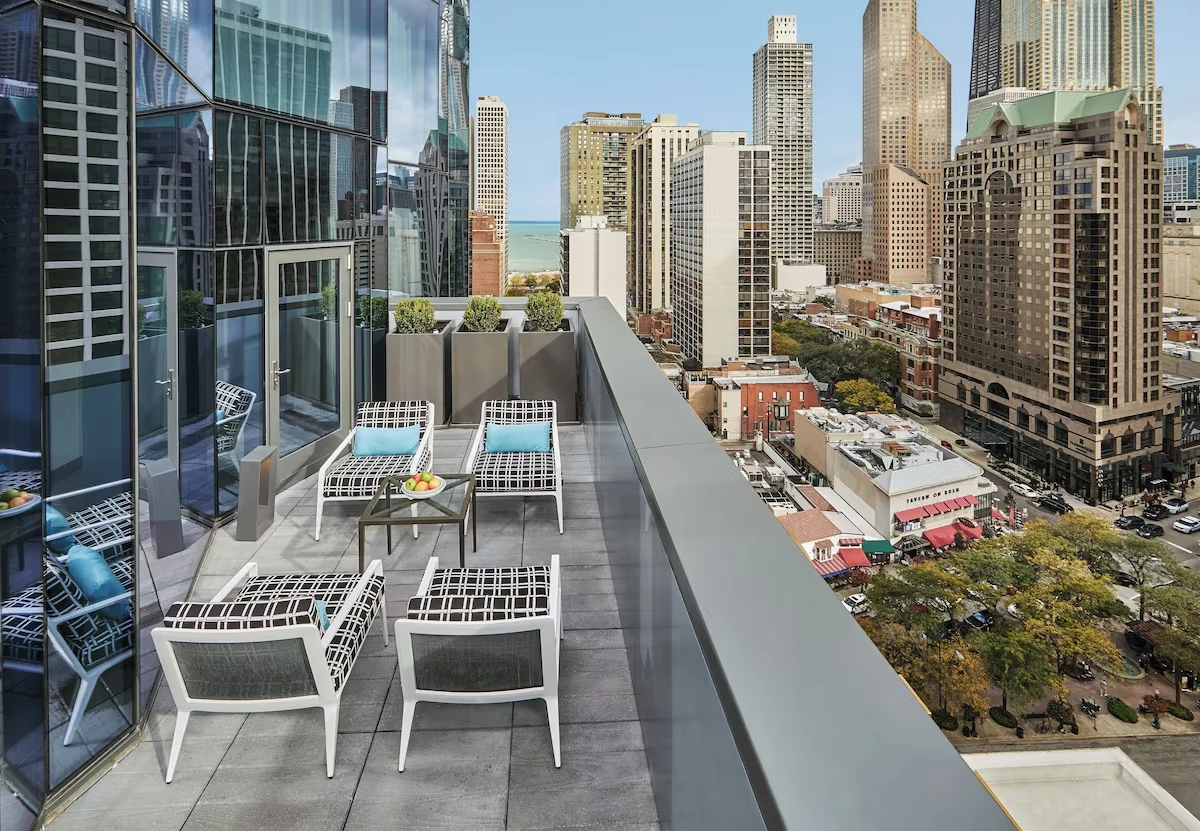
- A rooftop pool and lounge with skyline and lake views, plus acclaimed dining.
- A prime Gold Coast location steps from Rush Street and Oak Street, two blocks from the lake.
What to keep in mind
- A luxury tower behind a historic facade — an old-meets-new aesthetic
- Among the higher-priced Gold Coast stays
Best for Design-minded luxury travelers who appreciate creative preservation and a lively Gold Coast setting.
Summary of guest reviews. Sources: Viceroy Hotel, Commission on Chicago Landmarks, Preservation Chicago. Photography courtesy of Viceroy Chicago, used with permission. Details may change over time.
Why this building matters
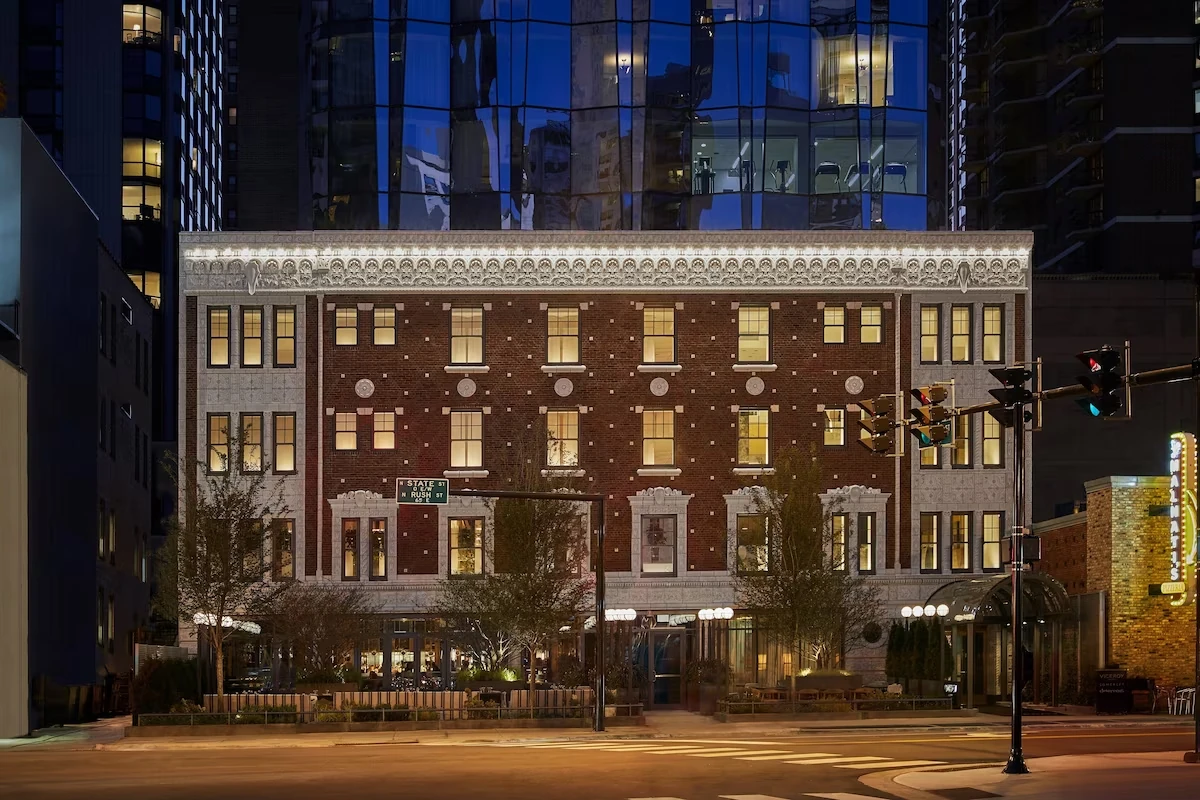
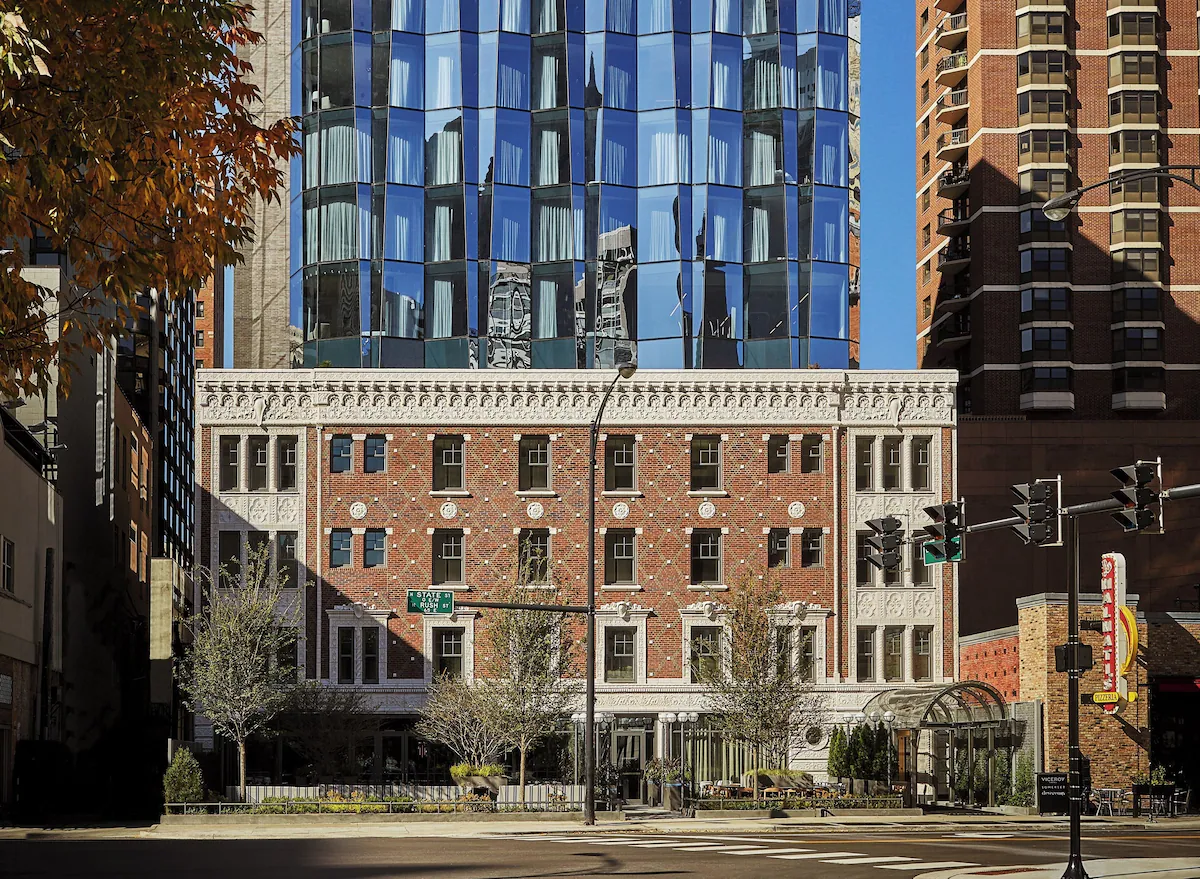
When the historic Cedar Hotel — a 1920s neo-classical, brick-and-terra-cotta building — was redeveloped, its four-story facade was carefully removed, cataloged, stored, restored, and rebuilt onto the base of a new 18-story tower, which steps far back to minimize its visual impact. The result, opened in 2017 as the Viceroy Chicago, is a widely praised example of how adaptive reuse can honor historic fabric while adding something new.
Read more on Preservation Chicago's coverage of this building's history →
How the facade came down and went back up
Preservation Chicago was in the room for this one, and its account of the project is the source for what follows. The Cedar Hotel stood at the corner of Cedar and State, an anchor of the Gold Coast’s Rush Street District, and Preservation Chicago’s account of the project describes it as an orange-rated building in the Chicago Historic Resources Survey — the City’s rating for a building potentially significant in the context of its community.
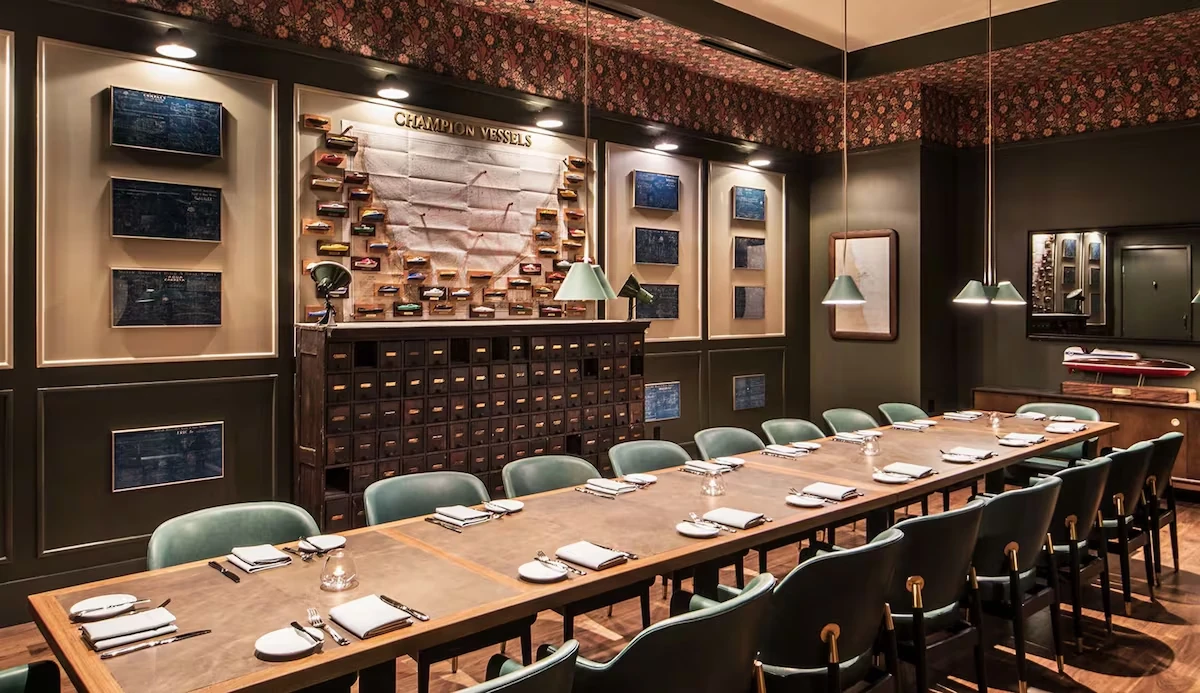
What happened to it is unusual enough to be worth stating in order. The original four-story brick-and-terra-cotta front was carefully removed, catalogued, stored, restored, and rebuilt onto the base of the new building. Not replicated, not evoked — the same material, taken down piece by piece and put back. That base is now the hotel’s main entrance, its three-story lobby and its restaurant.
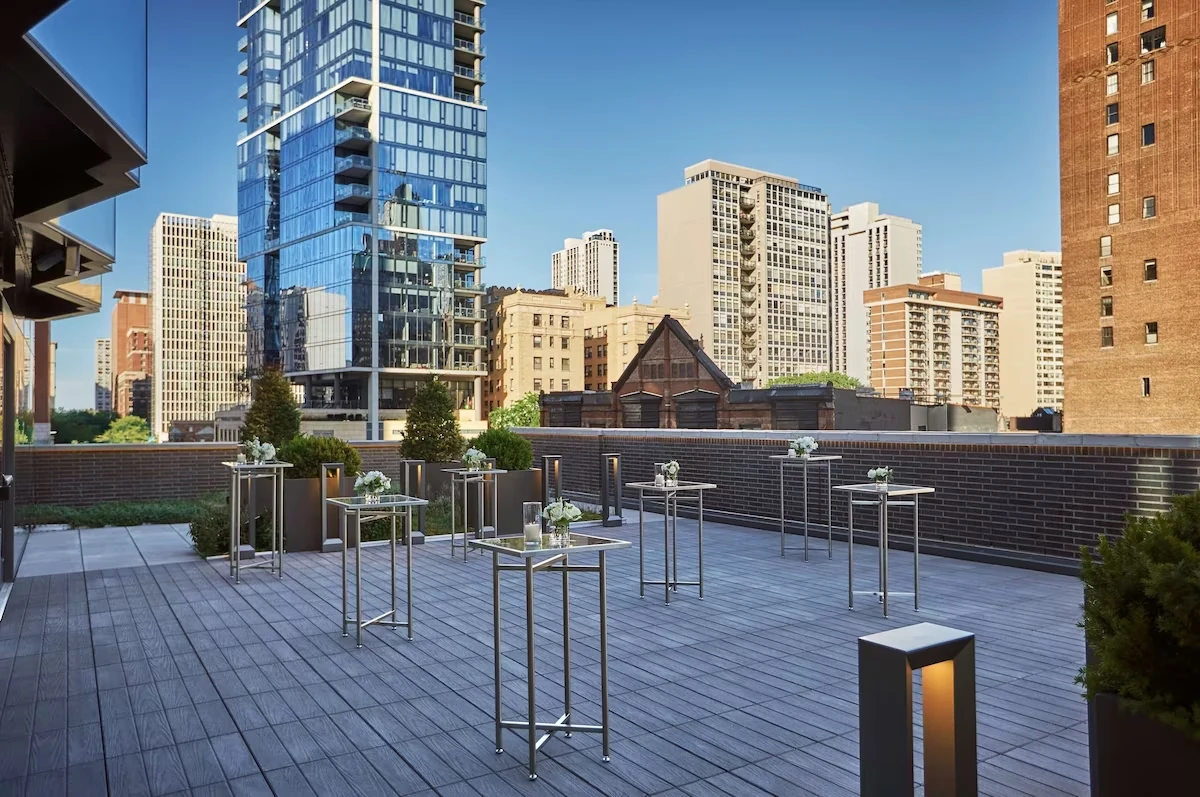
The eighteen-story tower behind it is set deeply back from the old facade, which is what keeps the street reading as it did. Convexity Properties developed the project and Goettsch Partners designed it; it reopened in the fall of 2017. A ballroom, a conference room and a large outdoor roof terrace sit on top of the historic building, looking down State Street.
One detail repays a second look after dark. Lighting is embedded in the historic terra-cotta cornice, so the 1920s facade is lit from within its own ornament rather than washed by a floodlight across the street.
Drawn from Preservation Chicago’s own account of the project. Read it →
The firm that built three hotels on this site
The Cedar Hotel was designed by Rissman & Hirschfield, and the evidence for that comes from a City designation report about a different neighborhood entirely. The Surf–Pine Grove District report names them twice: once as the architects of “the Cedar Hotel on N. State St.”, and once as a firm “known for other beautifully detailed apartment hotel buildings in Chicago.”
They are on this site three times over. The Cedar Hotel of 1925 is now the Viceroy. The Surfway Apartment Hotel of 1924, in Lakeview, is now the Willows. And the 1927 building on Walton Place is now the Millennium Knickerbocker. Three apartment hotels by one firm, all still taking guests.
Explore more like this
more 1920s & Jazz Age hotels · Chicago hotels with rooftop bars