




















What guests are saying
What guests love
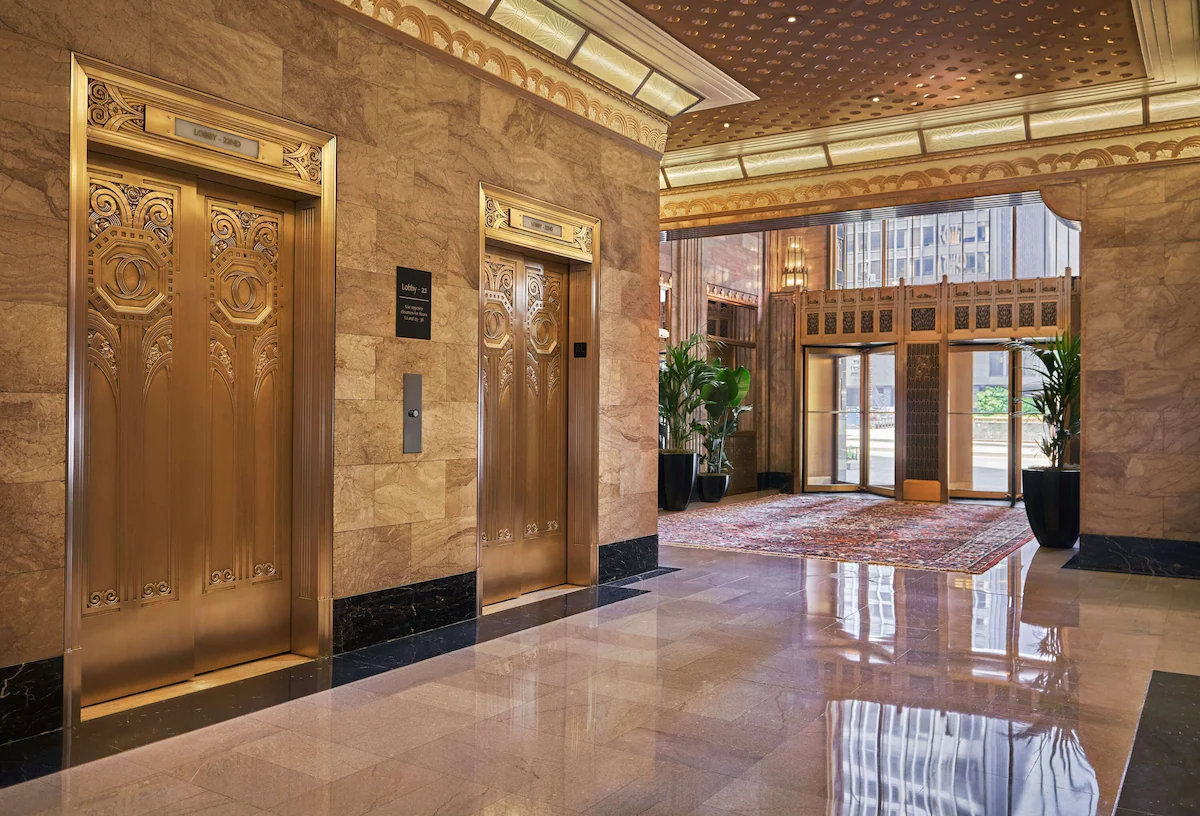
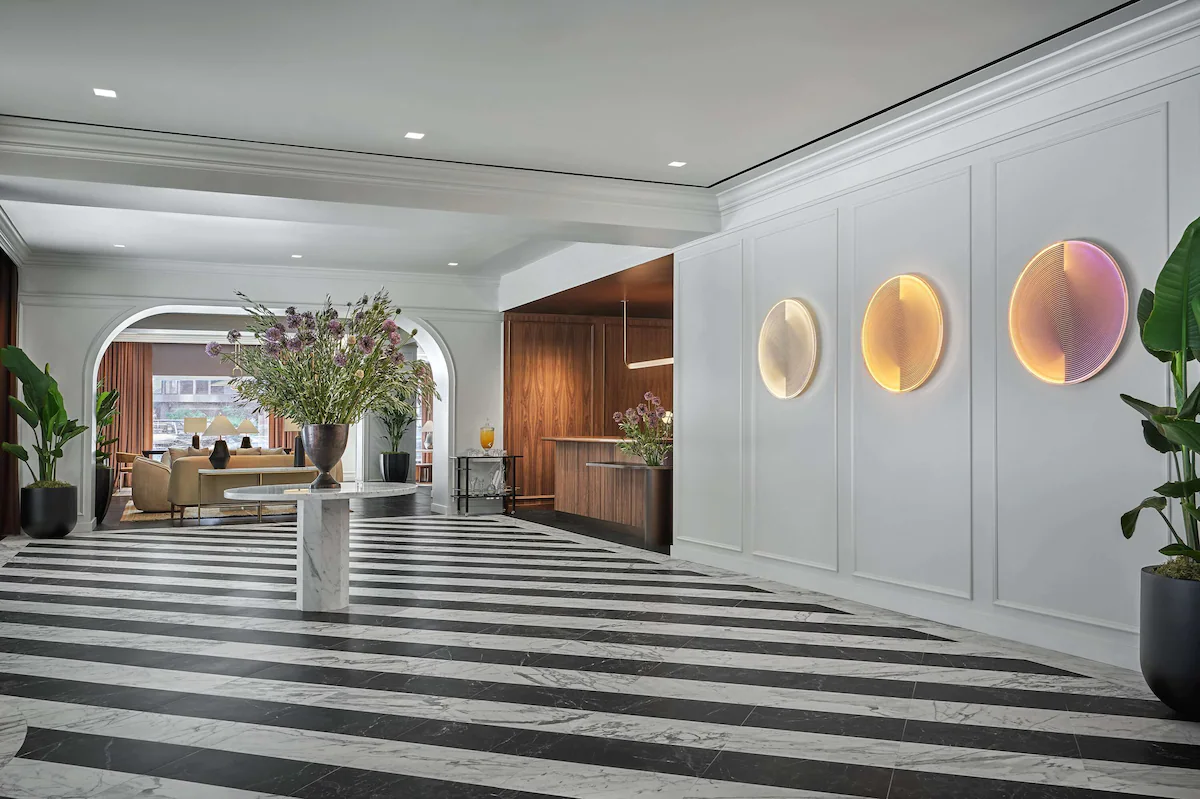
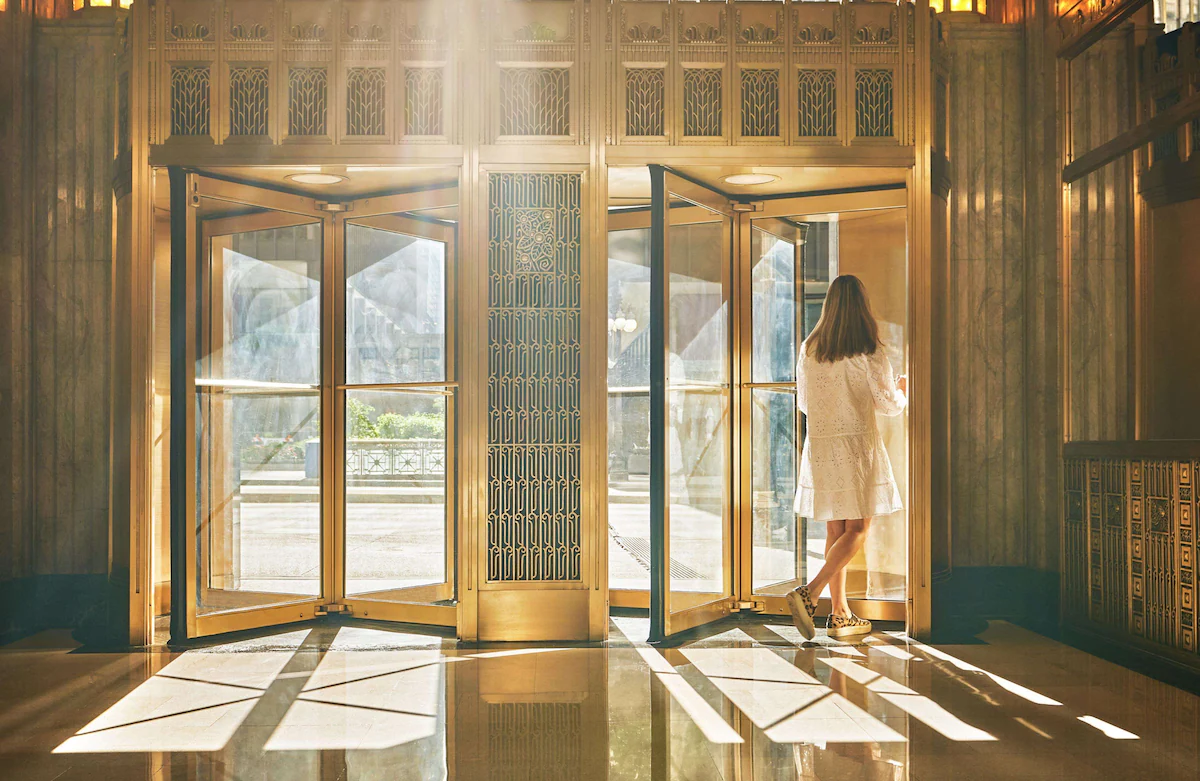
- The building is a visual masterpiece, and guests feel it from arrival — the restored marble-and-bronze lobby, the Art Deco detailing, and welcoming touches like a glass of champagne or fresh oysters that set a celebratory tone.
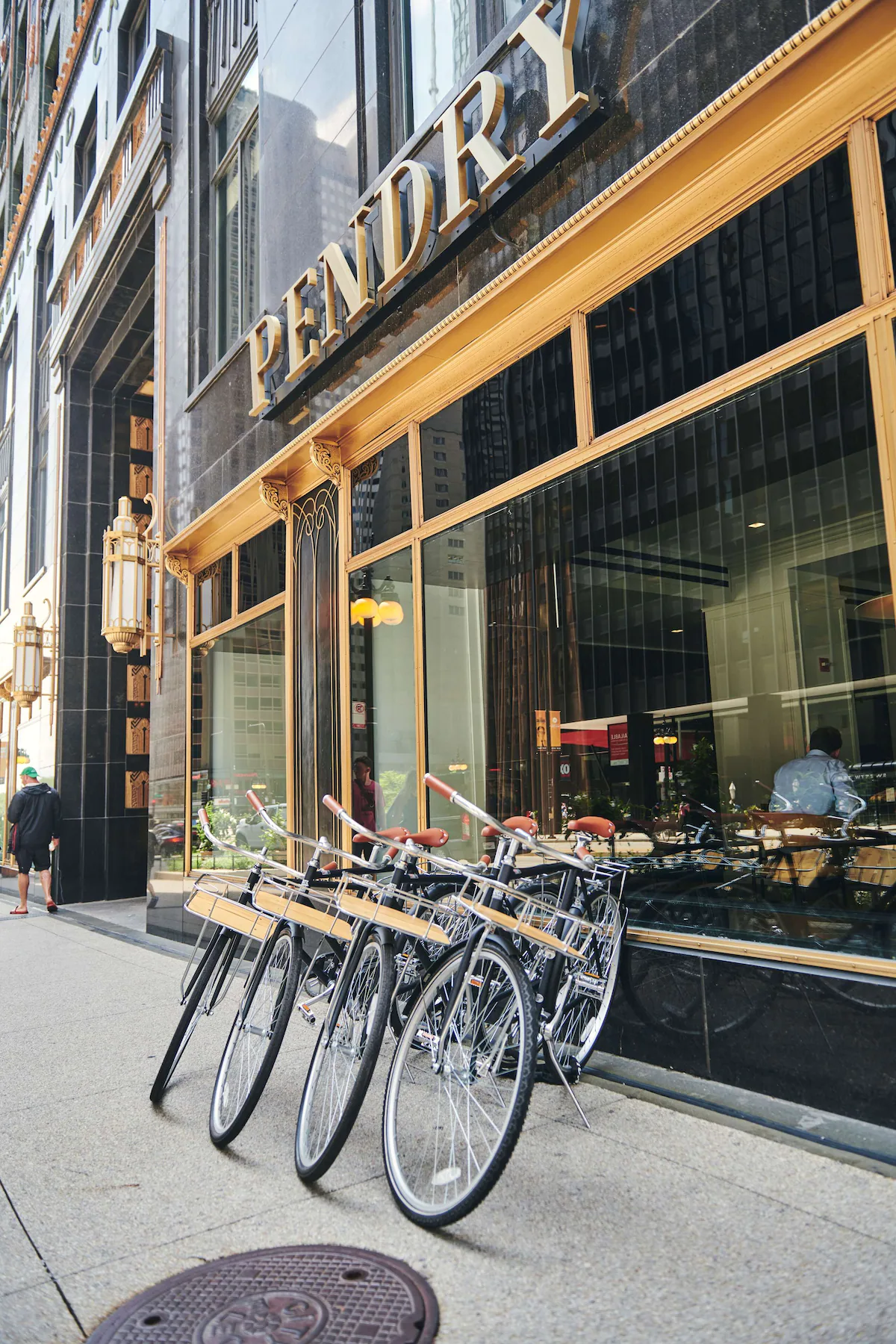
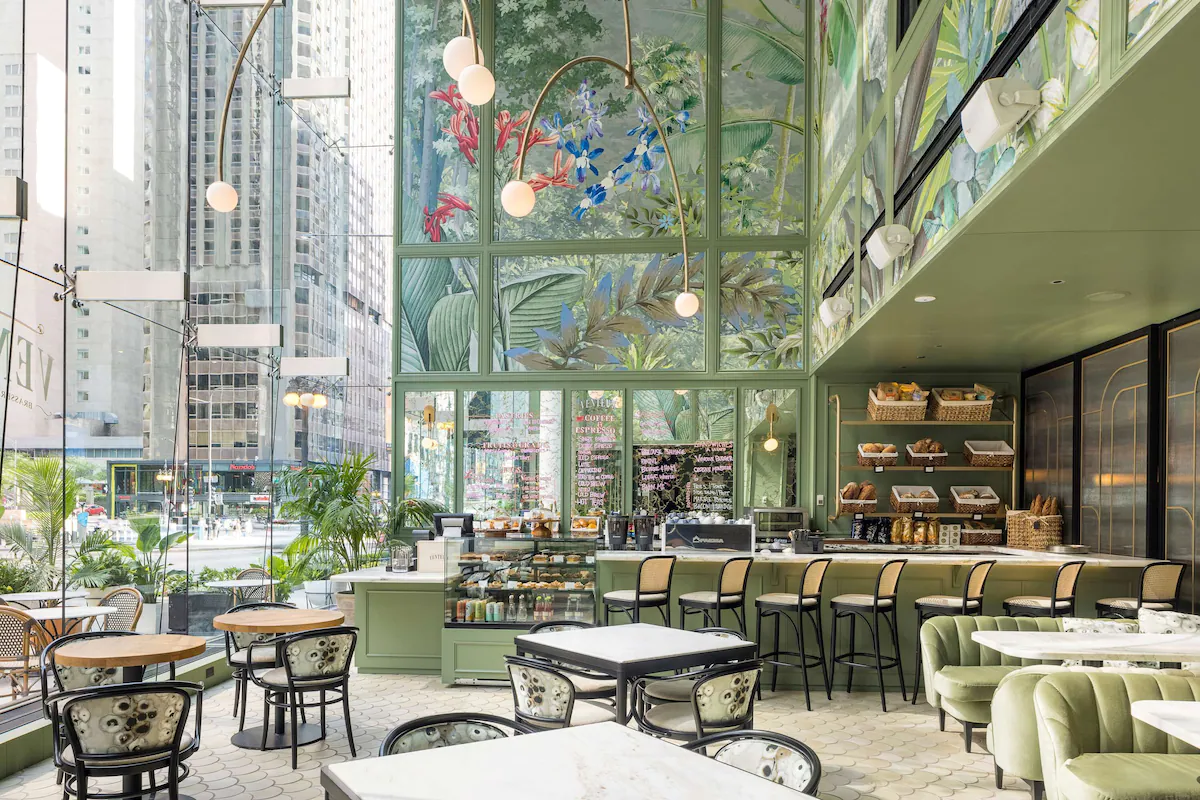
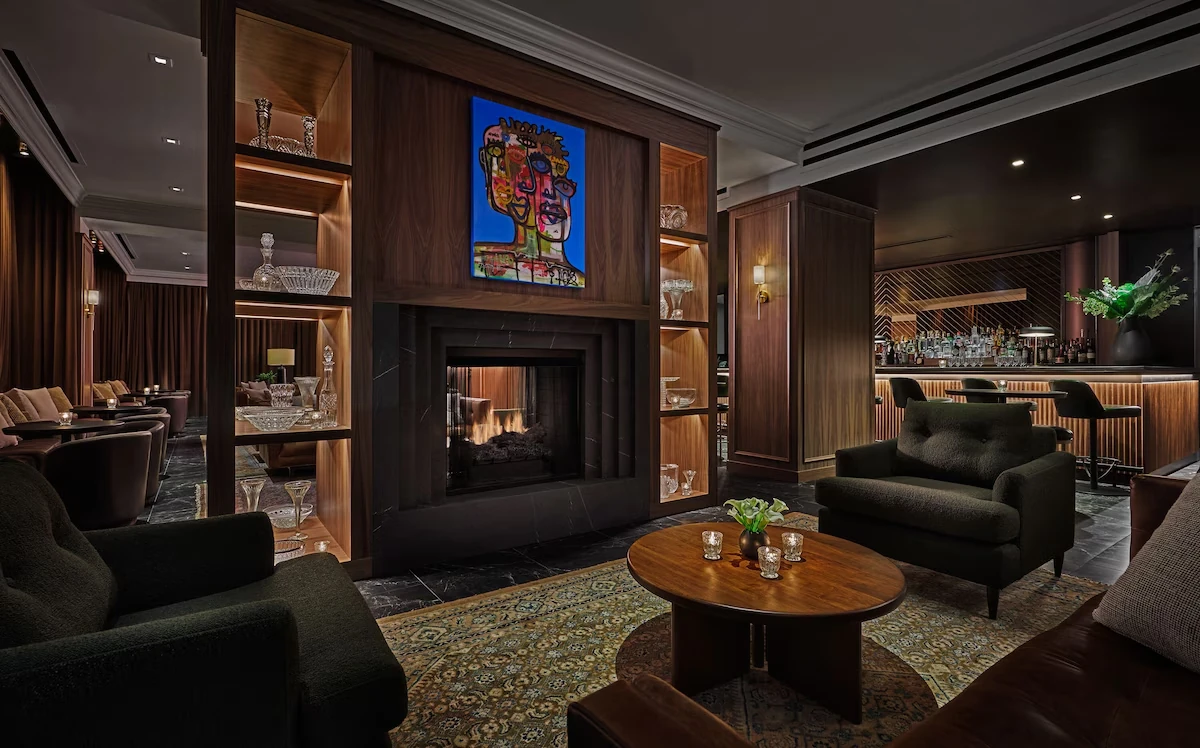
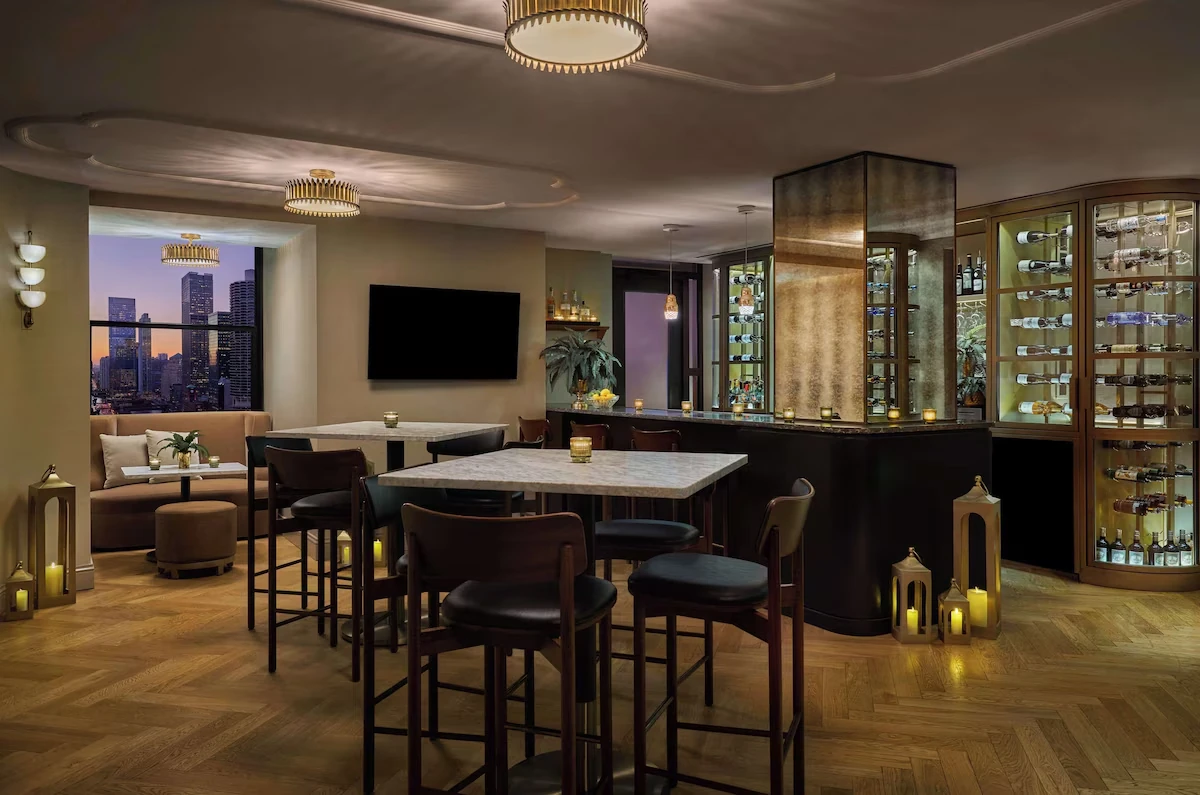
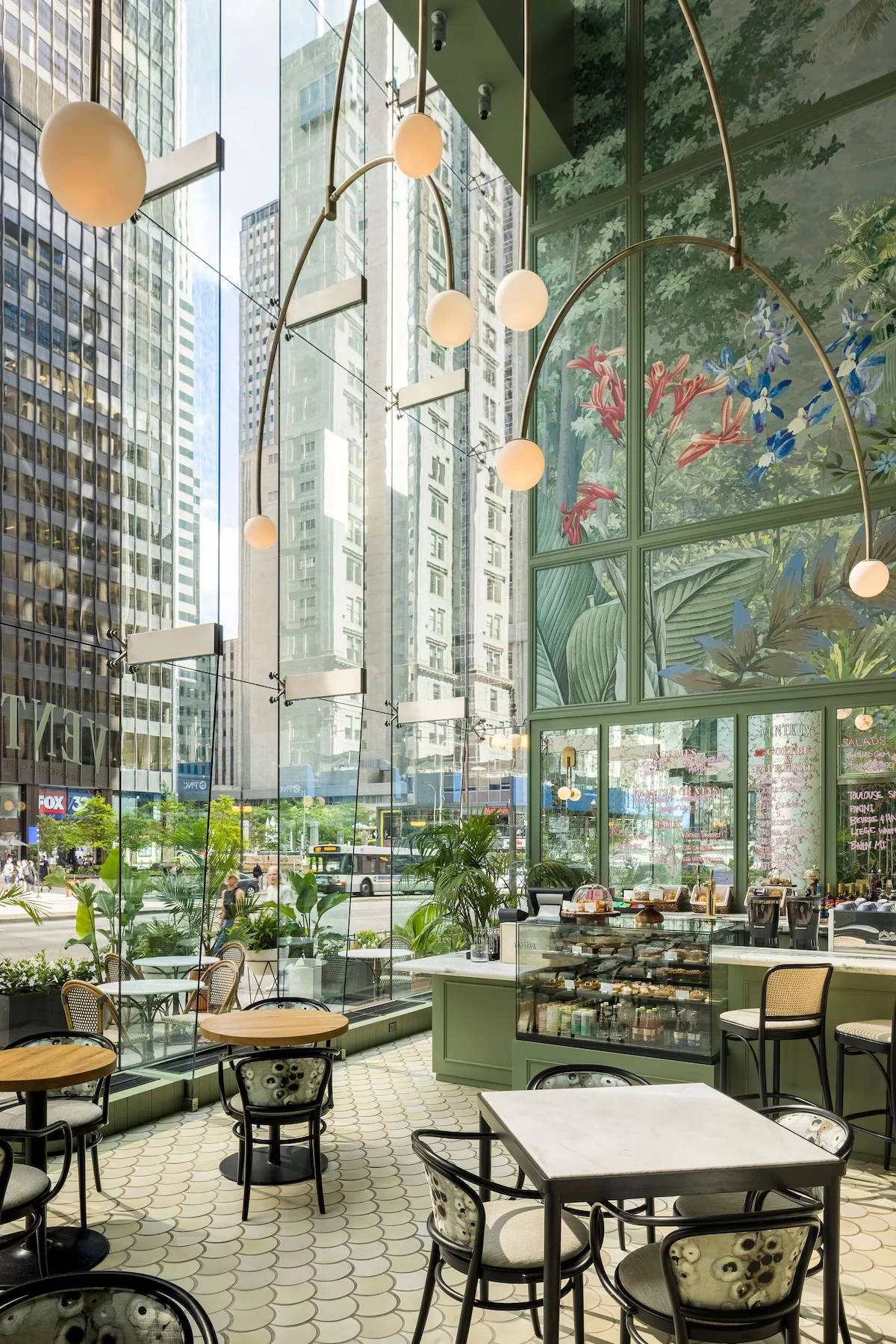
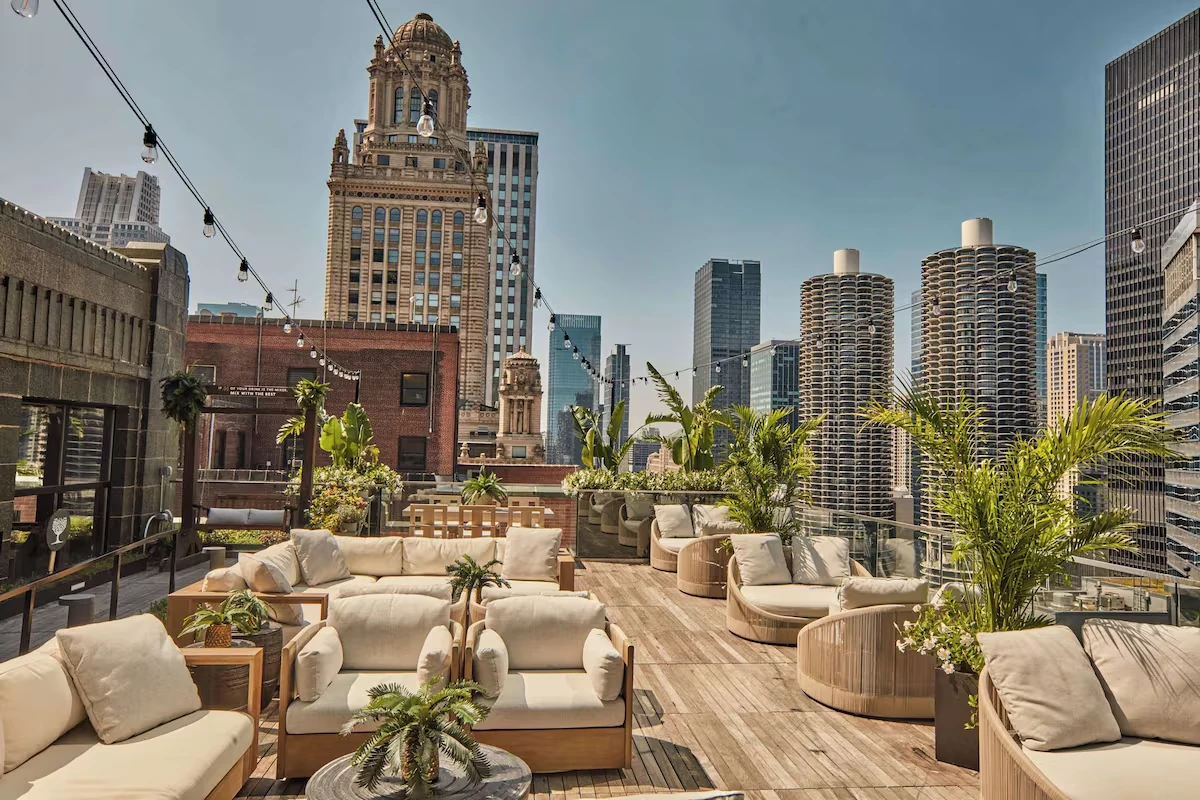
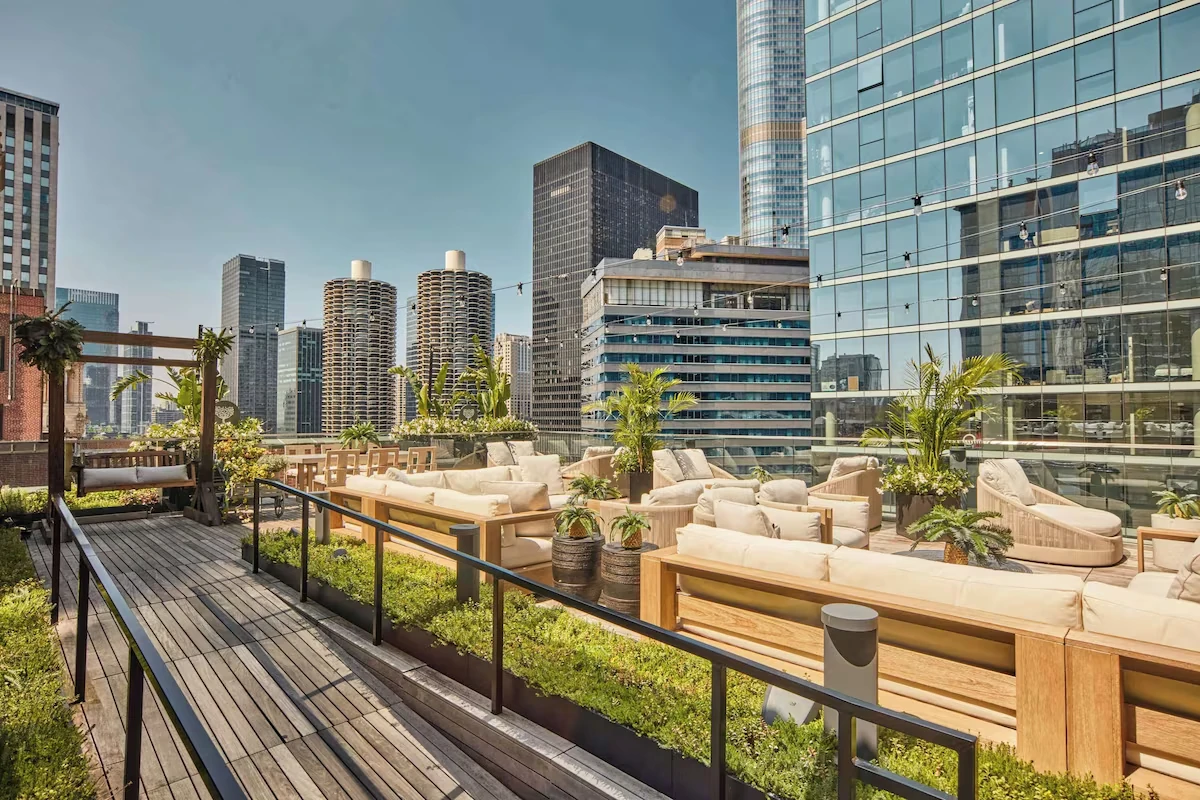
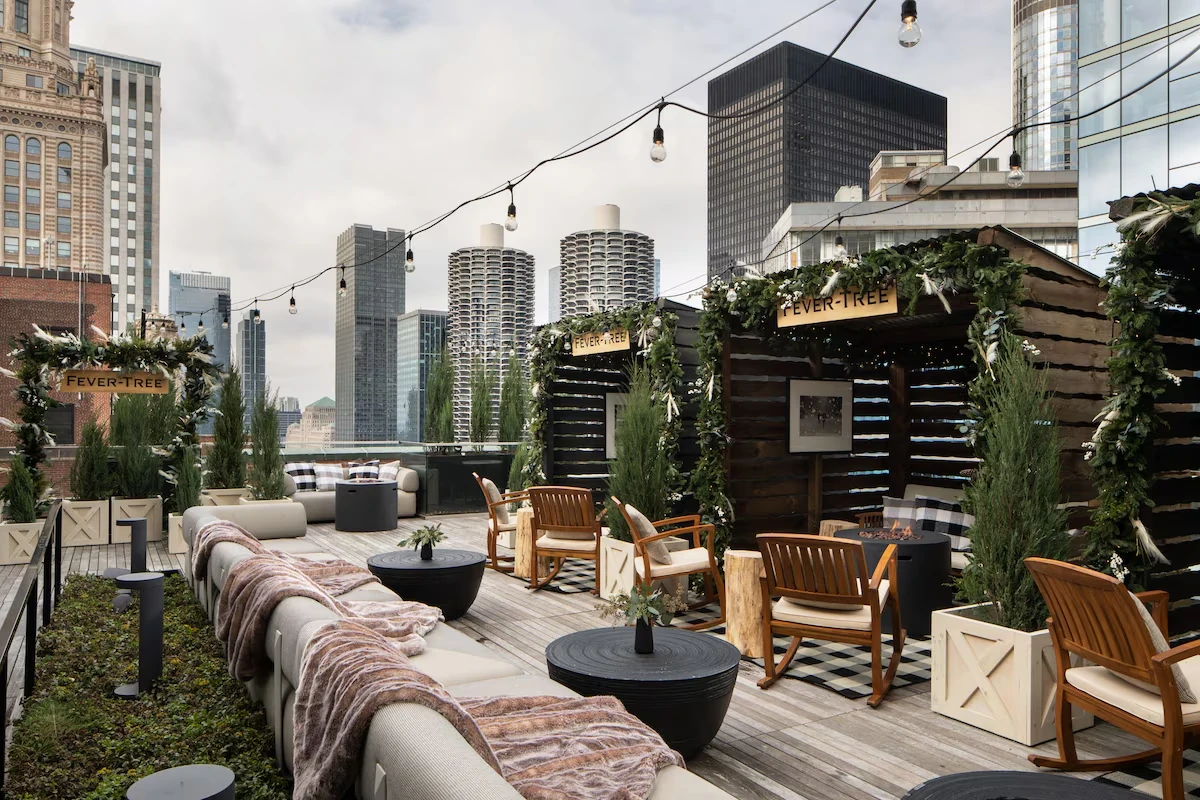
- The dining and drinking are a highlight in their own right: Venteux, a Parisian-style brasserie and oyster bar with a sunny greenhouse room; the lobby's Bar Pendry; and Château Carbide, the rooftop lounge with live music and sweeping views over the river and Marina City. Many guests come for these alone.
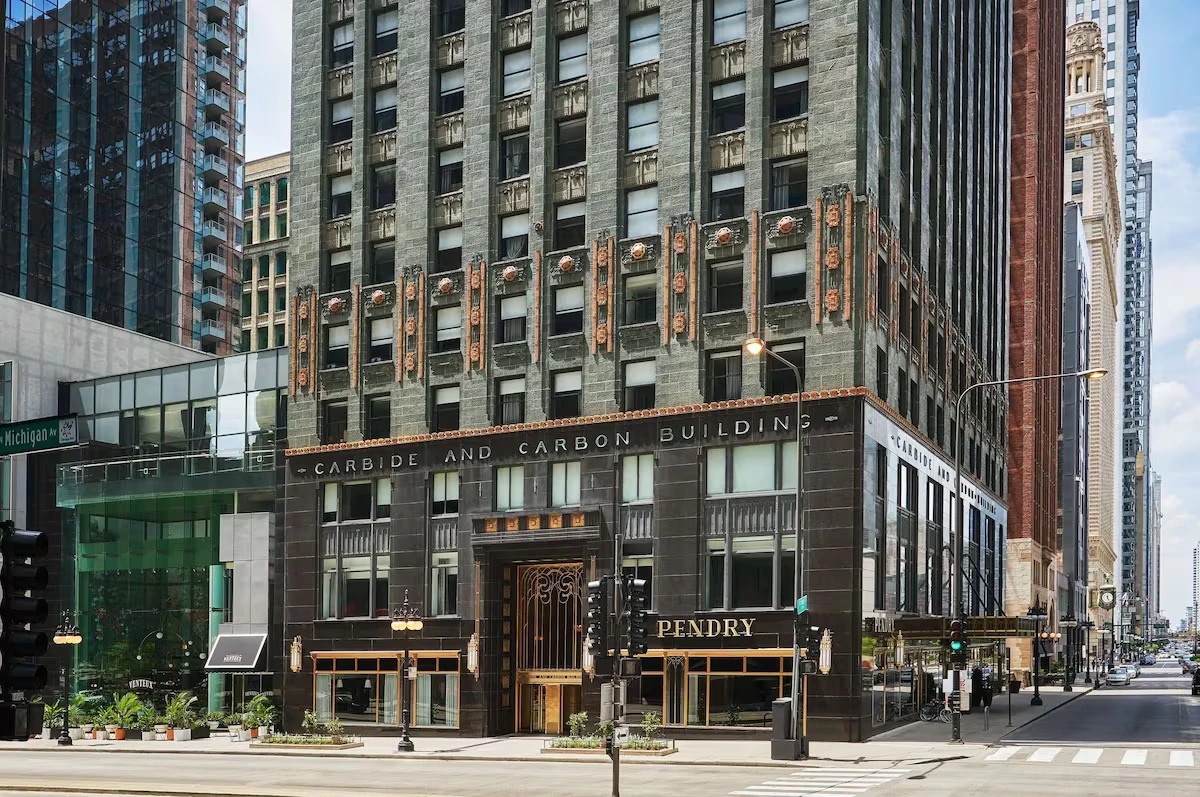
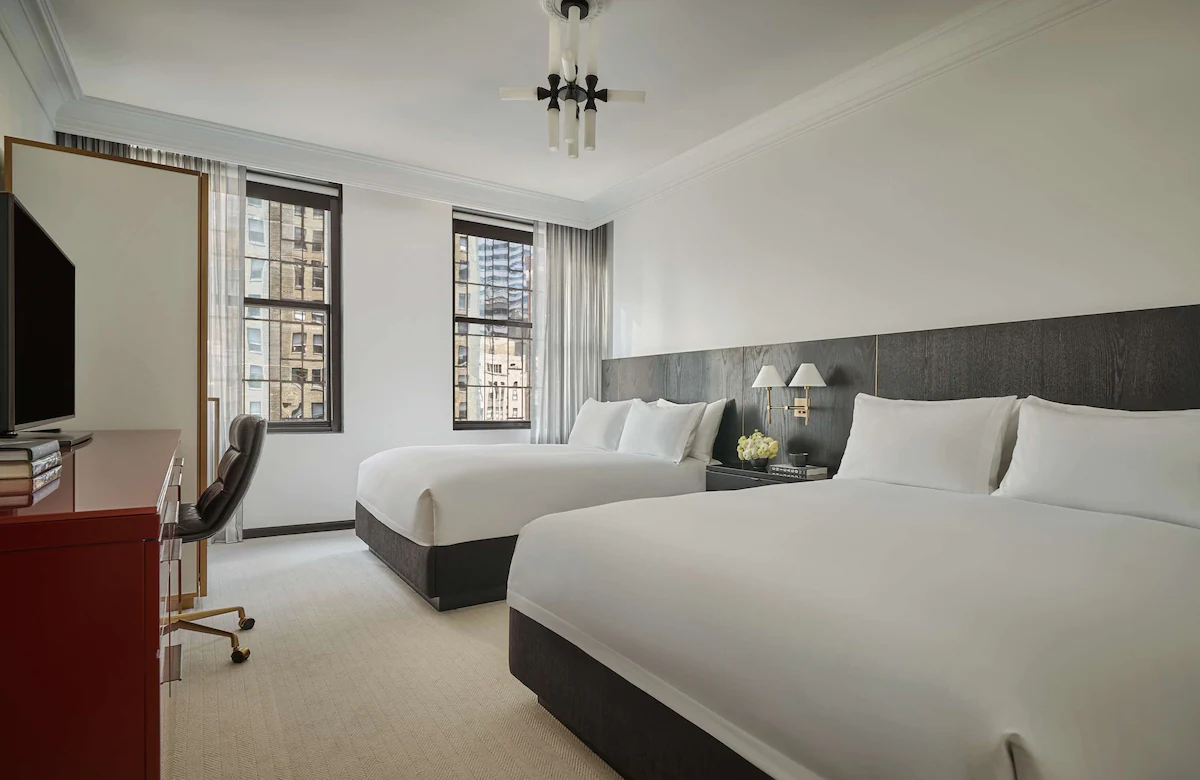
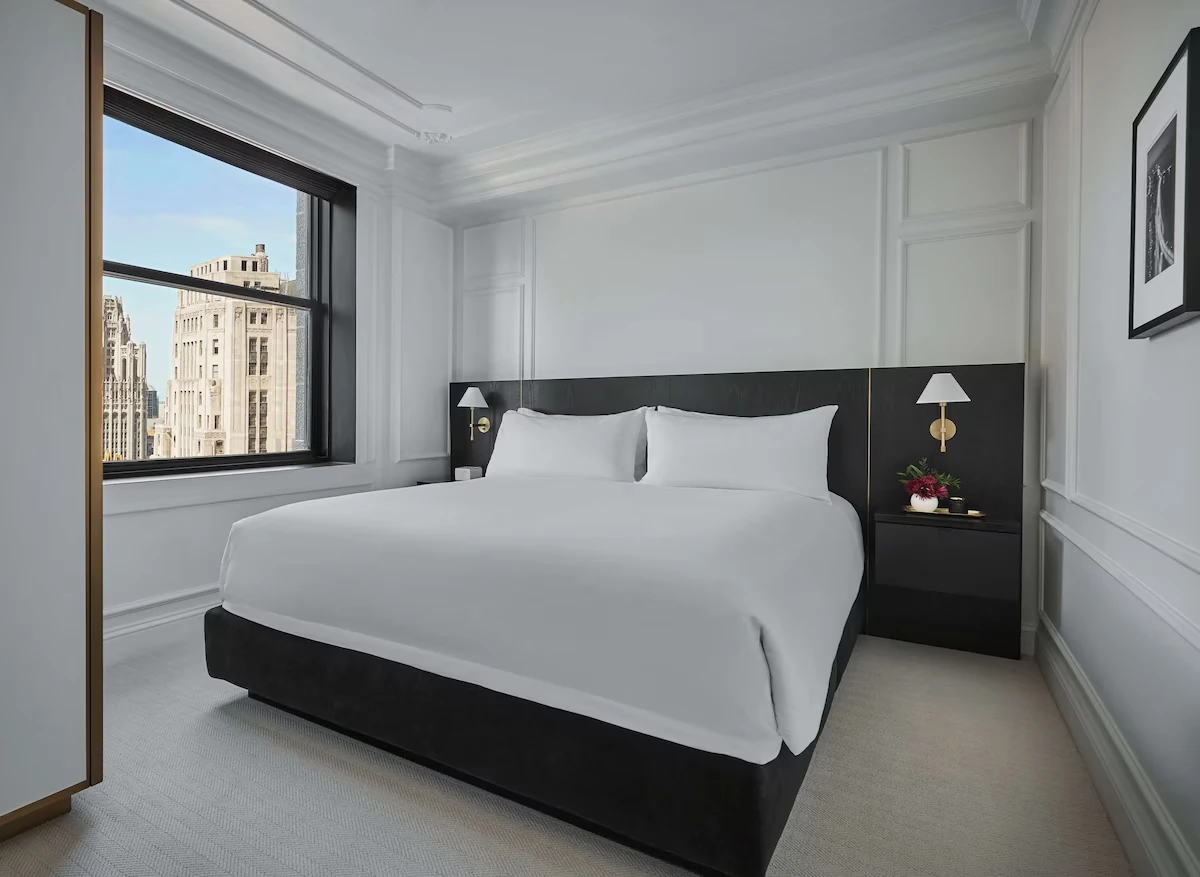
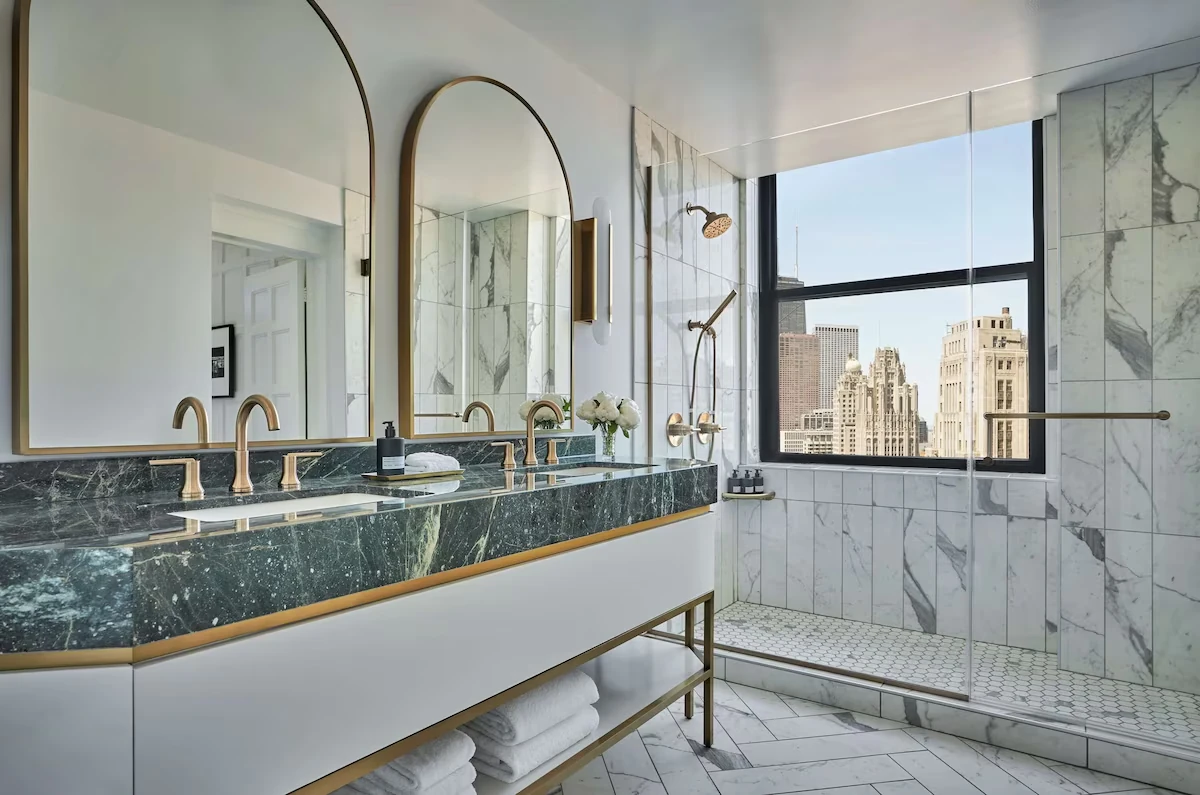
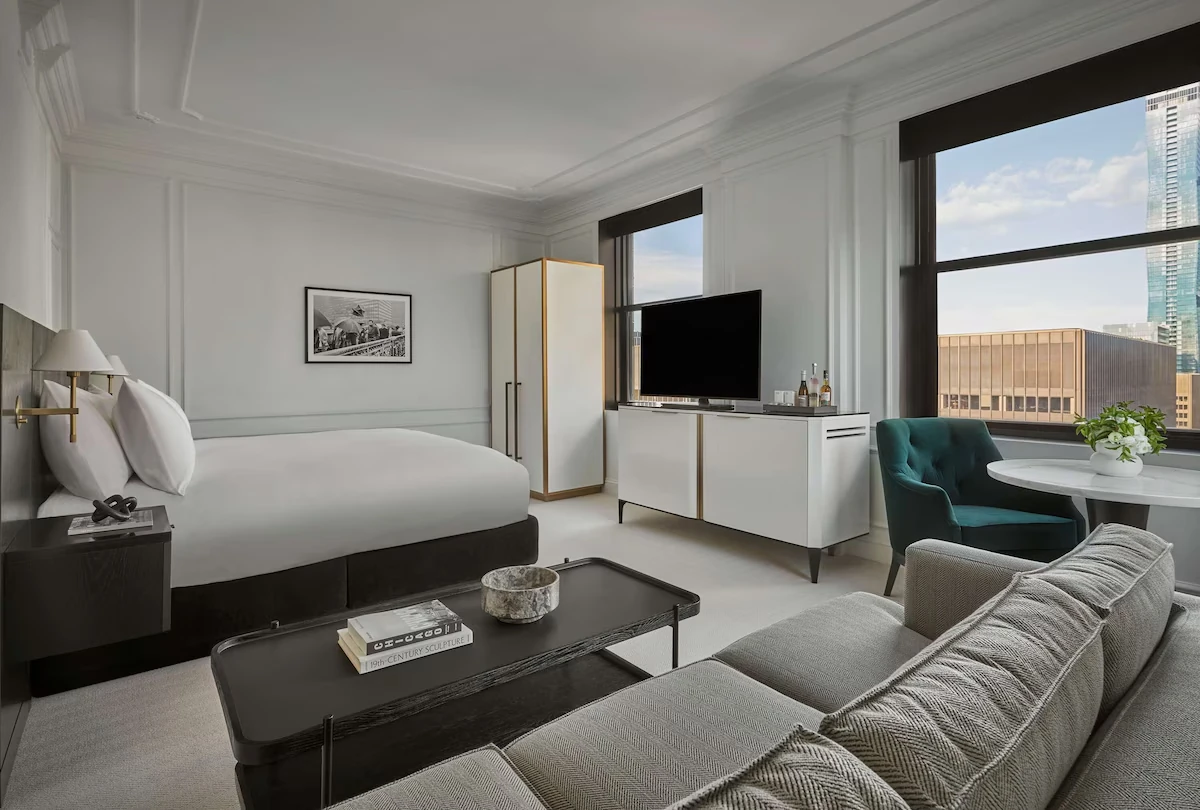
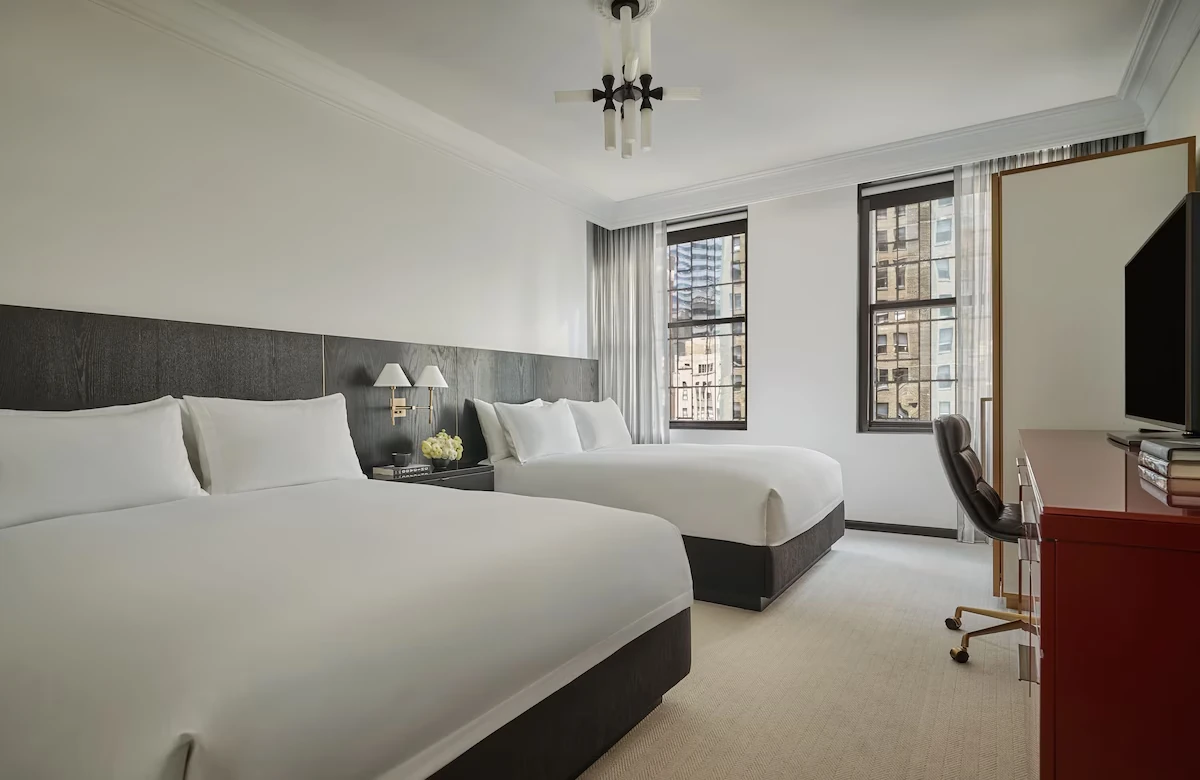
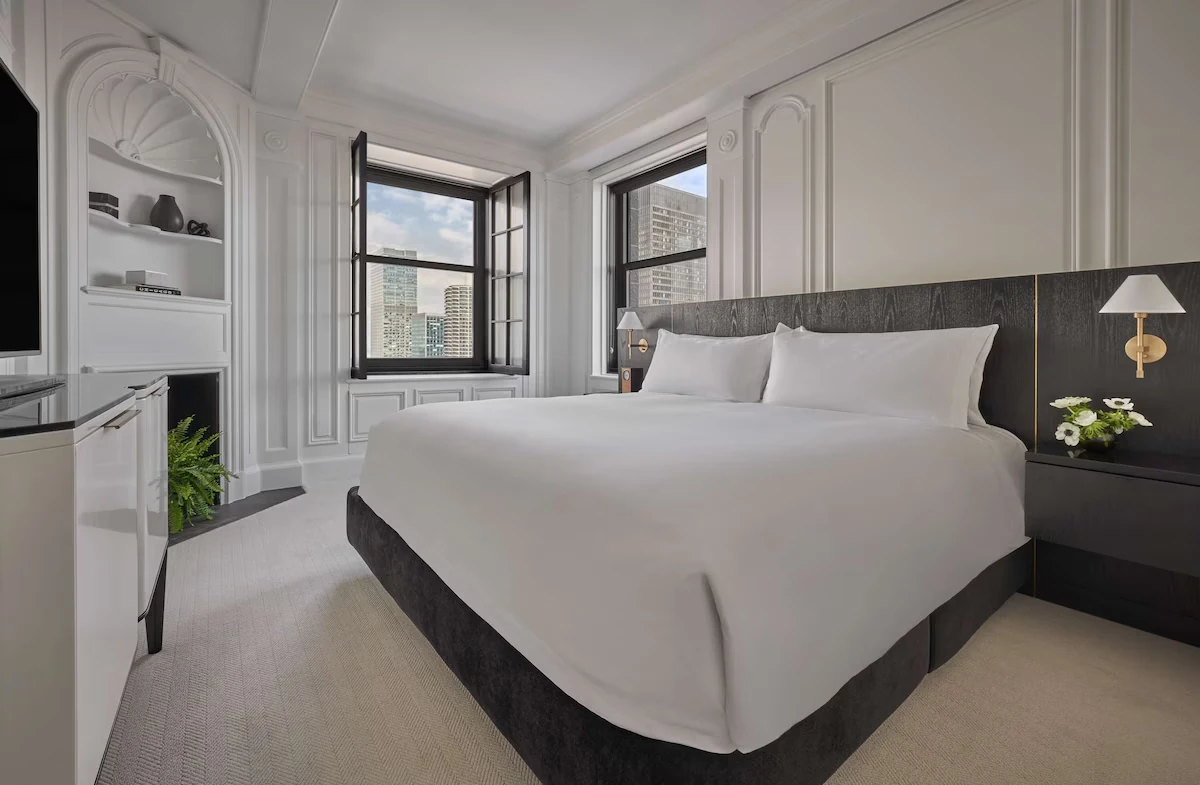
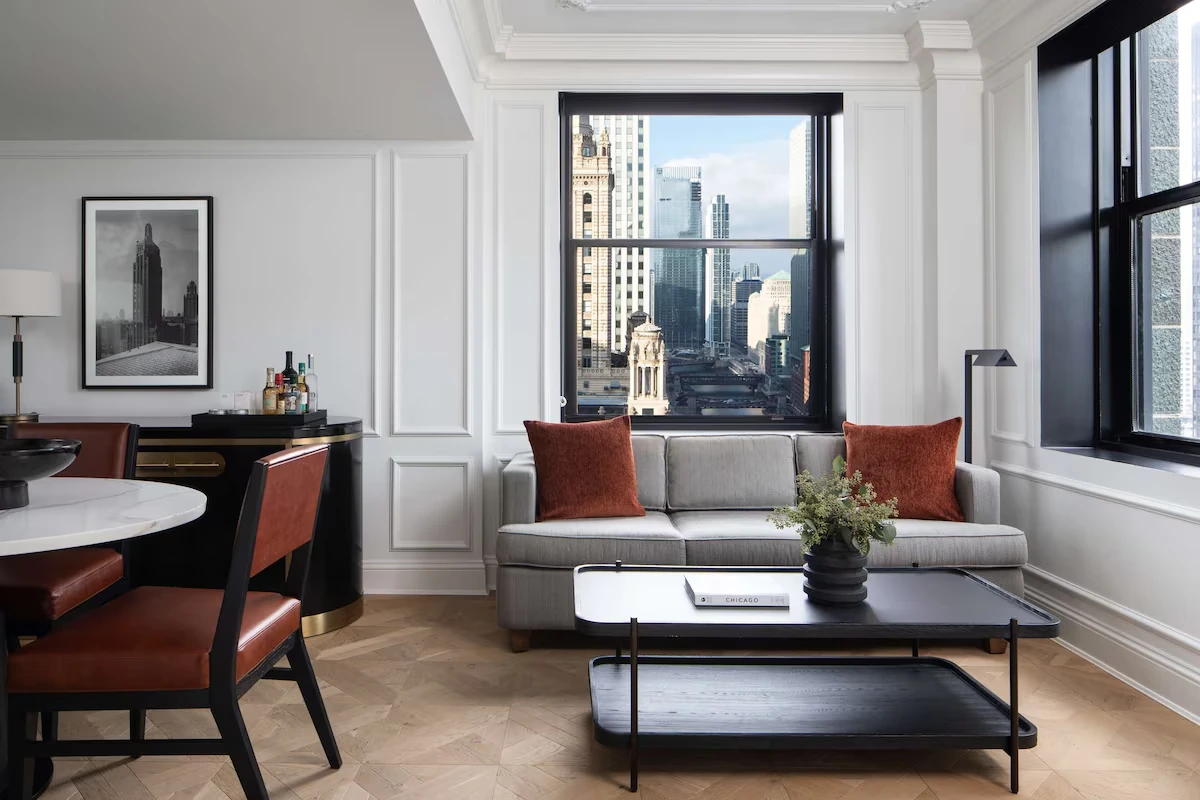
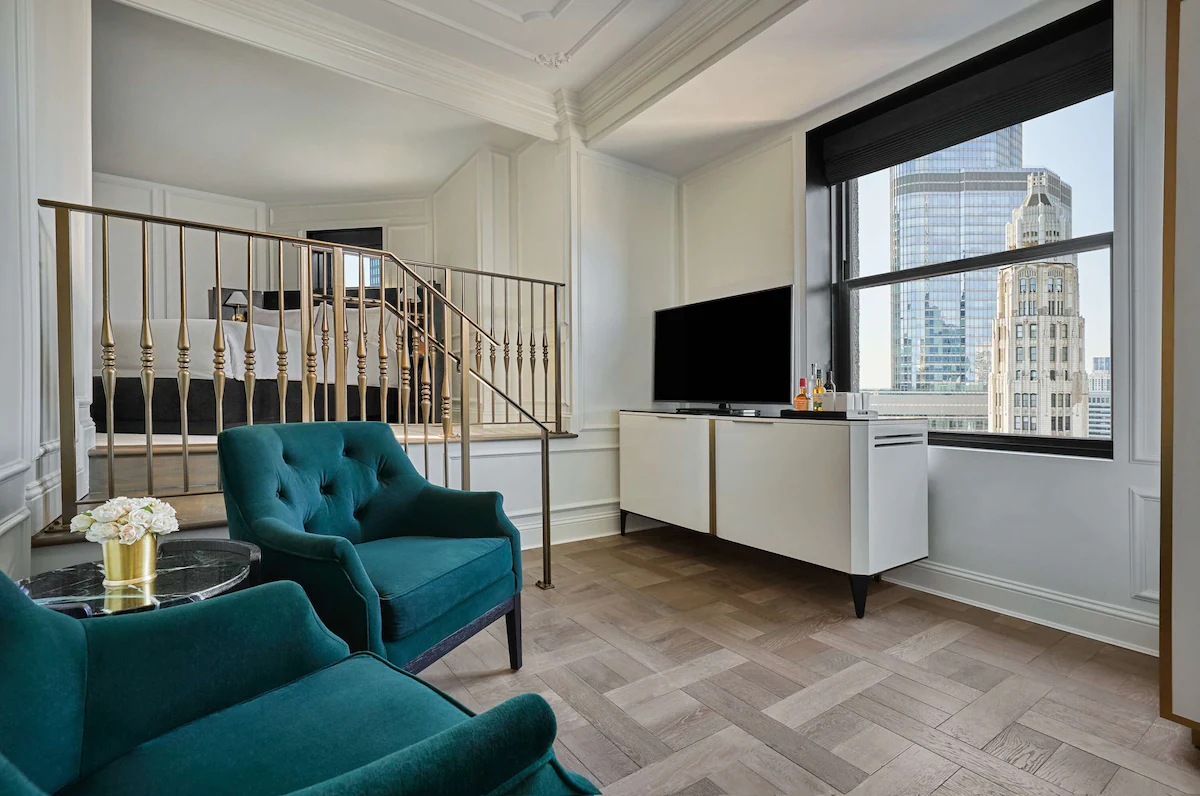
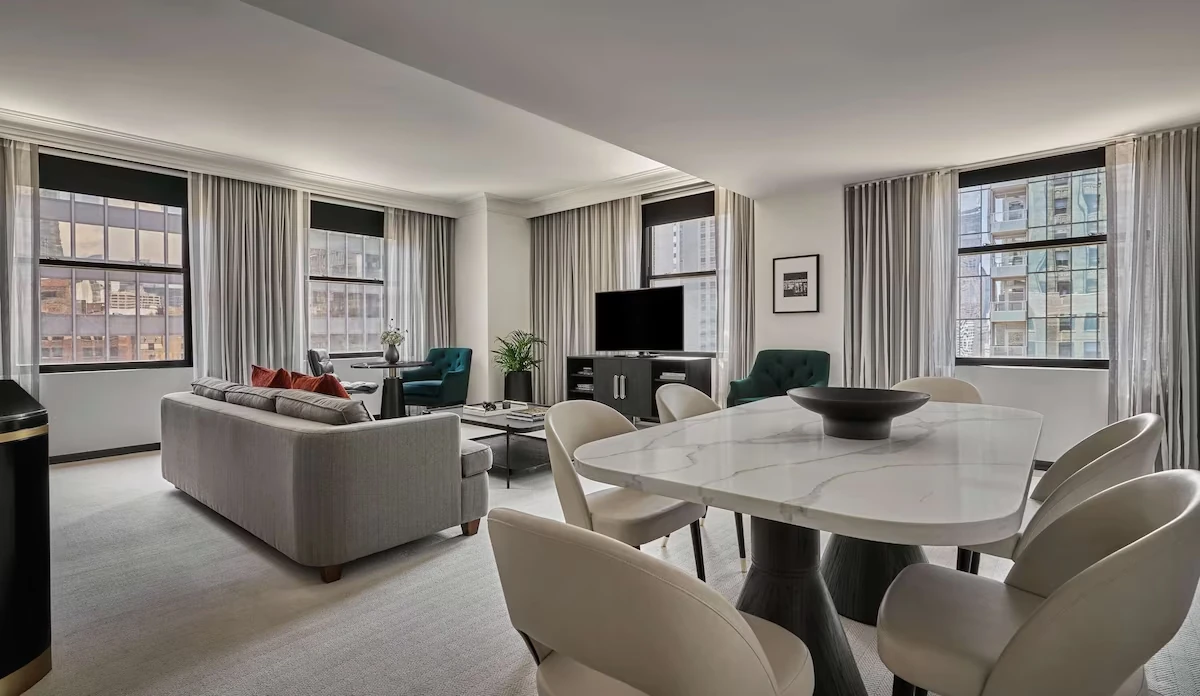
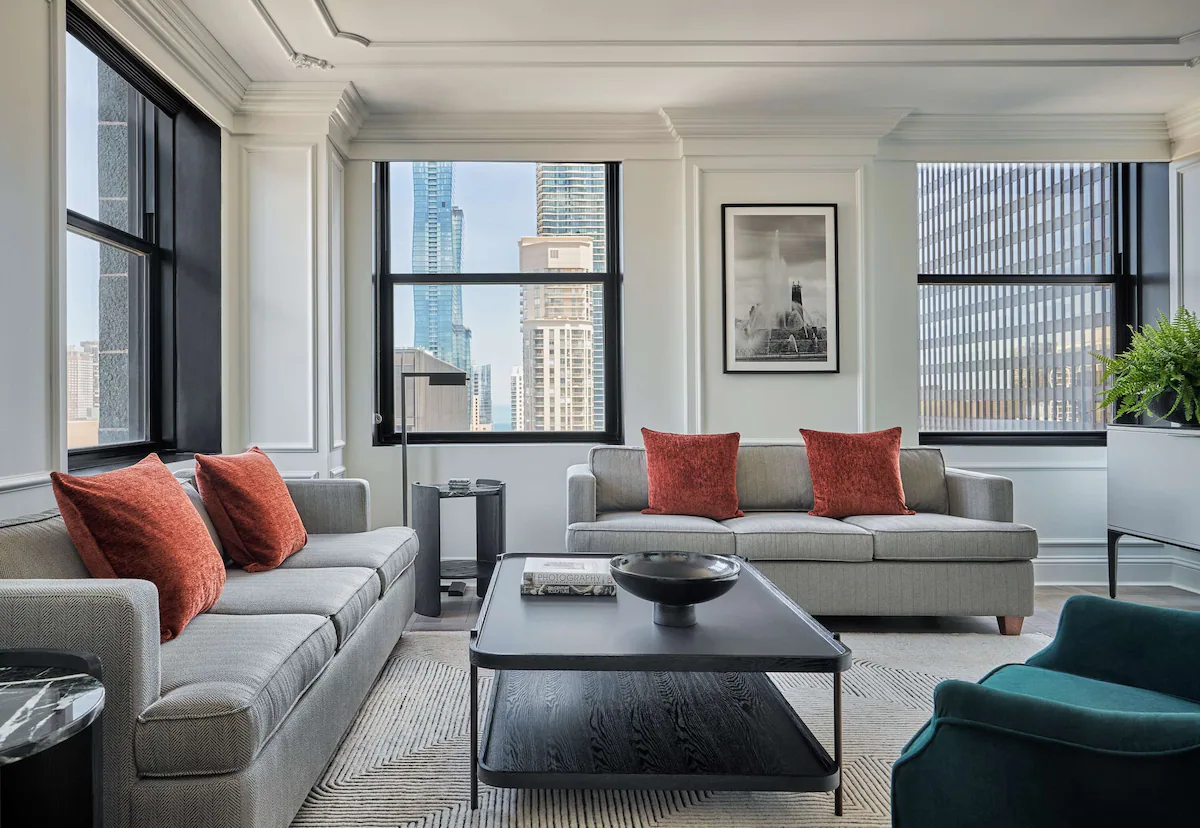
- Rooms are spacious, polished, and quiet, with elevated linens, marble baths, and in-room espresso machines, and the service earns consistent praise as attentive and gracious. The Michigan Avenue location — on the Cultural Mile, steps from the river, a block from Millennium Park, and the Loop — puts the best of the city within an easy walk.
What to keep in mind
- Street noise on lower floors — request higher
- Premium-priced; valet parking runs high
Best for Ideal for design-minded and luxury travelers who want a refined, special-occasion stay inside a genuine architectural landmark — couples, discerning business travelers, and anyone drawn to great rooms and a standout rooftop. Request a higher floor if you're sensitive to street noise, and plan an evening around the rooftop's hours.
Summary of guest reviews. Sources: Pendry Chicago, Commission on Chicago Landmarks, Preservation Chicago. Photography courtesy of Pendry Chicago, used with permission. Designation report: Carbide and Carbon Building (L-62) at Chicago Landmark Reports. Details may change over time.
Why this building matters
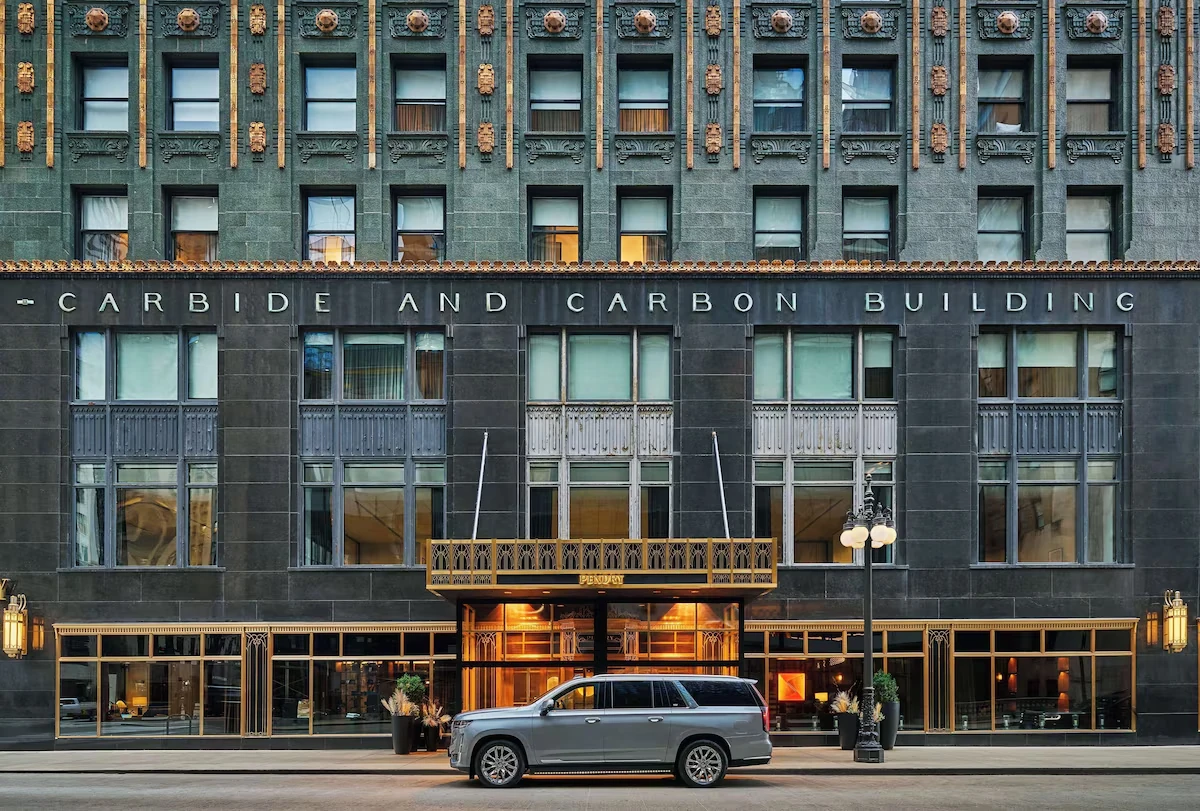
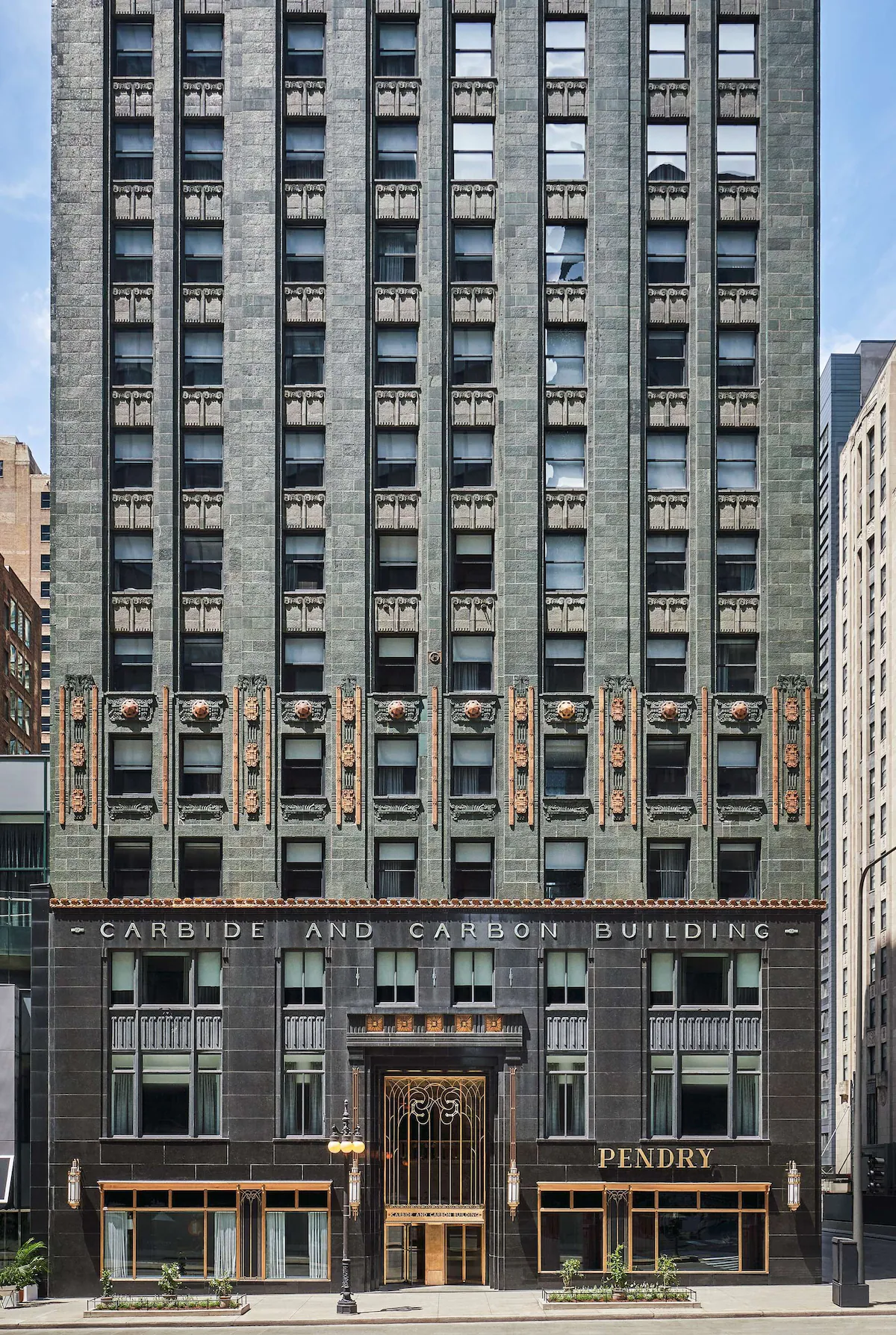
Designed by the Burnham Brothers in 1929, the Carbide & Carbon Building is one of Chicago's defining Art Deco landmarks — a dark-green terra-cotta tower crowned in 24-karat gold leaf, said to evoke a champagne bottle. After decades as offices, a meticulous restoration reopened it as Pendry Chicago, preserving the dazzling lobby, bronze detailing, and gilded crown while bringing the interiors to contemporary luxury.
“A distinctive and perpetual advertisement”
This building was designed to be looked at from a distance, and its owners said so out loud. A company brochure from 1932 put it plainly: “Visible by day from most parts of mid-town Chicago and flood lighted at night, the Carbide and Carbon tower serves as a distinctive and perpetual advertisement for its occupants.”
That was the logic of the whole decade. The designation report devotes a section to it — architecture as advertising — quoting the historian John Stamper on how images of buildings came to fill the newspapers and magazines of the 1920s, lending “weight and credence” to whoever built them. Architecture, as he puts it, became a consumer good. Calvin Coolidge had summarised the mood in 1925: the business of America is business.
The tenant doing the advertising was the New York–based Union Carbide and Carbon Corporation, one of the industrial giants of the era — ninety-eight plants across the United States, Canada and Norway, gathered from twenty-four separate companies. Several of them moved into this tower, and the roll call is pure period: the Linde Air Products Company, Haynes Stellite, National Carbon, the Prest-O-Lite Company, the Electro Metallurgical Sales Corporation. The building itself was owned and run by another of them, the Oxweld Acetylene Company.
Union Carbide was choosing a side of town as much as a site. Along with Wrigley, the Tribune, Colgate-Palmolive, the London Guarantee company and the Drake, it was betting on the new North Michigan Avenue that the 1920 bridge had made possible — and, in doing so, helping to prove the bet.
The champagne bottle, and what is actually known
Everyone tells the story: the green and gold came from a champagne bottle, chosen at an office party. The designation report includes it and is careful about how — “popular legend says” the colors were picked by the client and their architects at a holiday party, inspired by green glass and gold foil. It is a lovely story and it is not documented as fact. We repeat it the way the report does, with the hedge attached.
What is certain is the effect. Forty stories of dark polished granite at the base rising into deep green terracotta, with real gold leaf at the crown — polychrome on a scale almost nothing else in Chicago attempts.
Art Deco took its name from the Exposition Internationale des Arts Décoratifs et Industriels Modernes, held in Paris in 1925, and the report traces the tangle of sources behind it: Charles Rennie Mackintosh and the Glasgow school, the Vienna Secession and Josef Hoffmann’s Wiener Werkstätte, the color of German Expressionism, Frank Lloyd Wright’s geometric ornament, and borrowings from Aztec and Egyptian art. The motifs to look for here are the standard vocabulary — chevrons, zigzags, fluting and reeding — kept deliberately in very low relief against flat wall planes.
The architects were Daniel Burnham Jr. and Hubert Burnham, sons of Daniel Burnham. Their work holds three hotels in this guide: this one, the Bankers Building of two years earlier, and — by their father — the bank block on LaSalle.
Drawn from the building’s Chicago Landmark designation report. Read the report →
Explore more like this
more 1920s & Jazz Age hotels · Chicago hotels in historic buildings · rooftop bar hotels in Chicago · more historic hotels near Millennium Park