

















What guests are saying
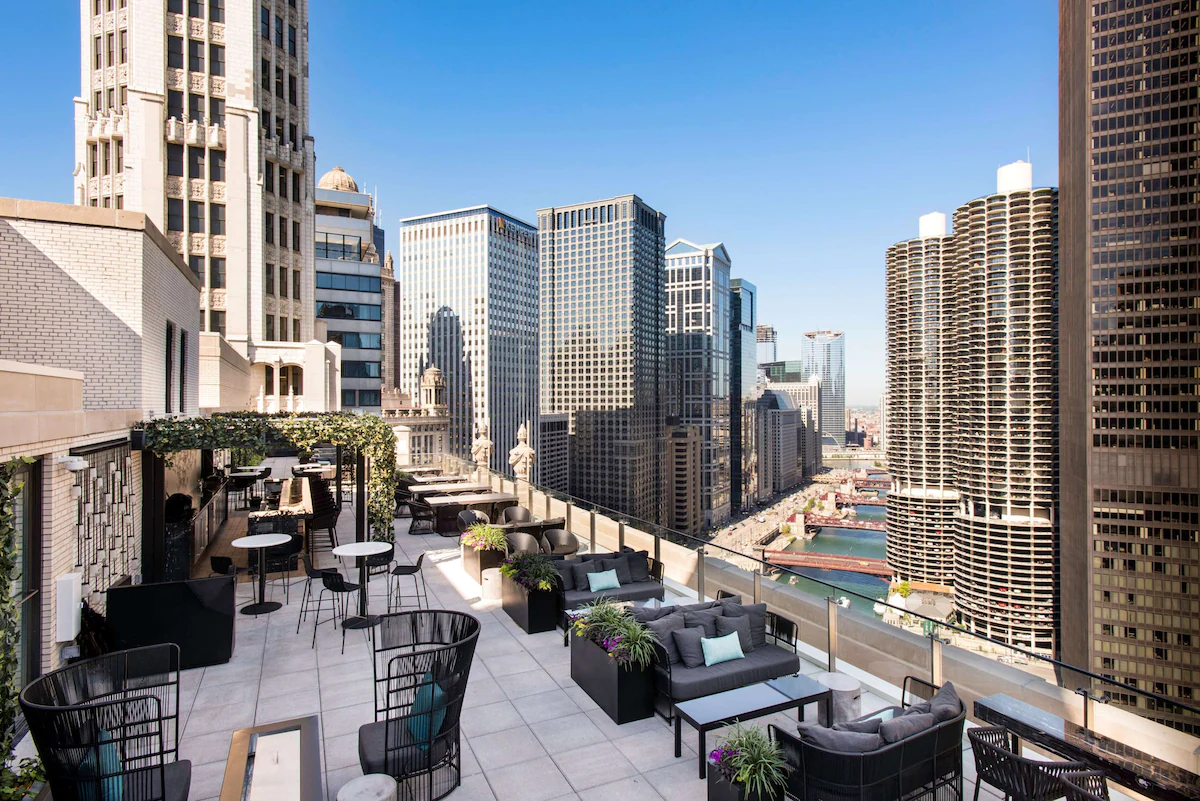
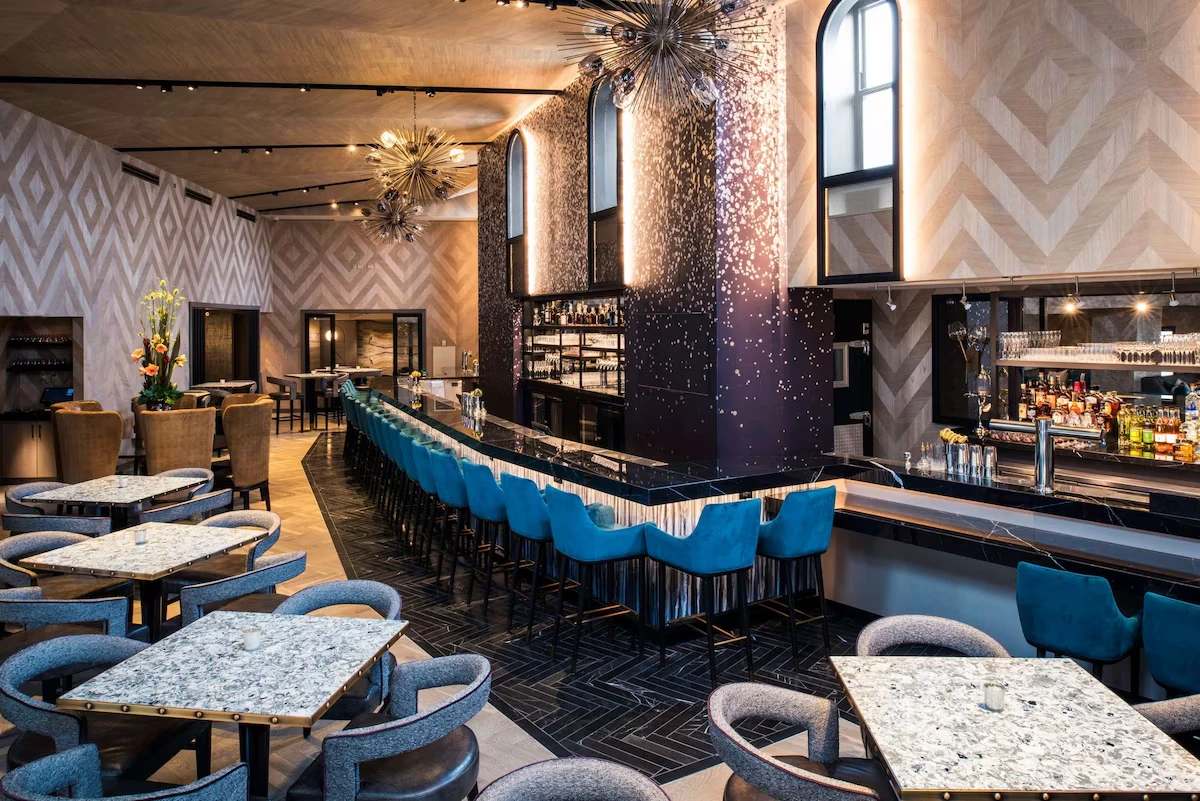
Named for the legendary jazz club that once lived here, LondonHouse pairs a landmark riverfront address with one of the city's most celebrated rooftops. Guests give it strong marks for location, views, and service.
What guests love
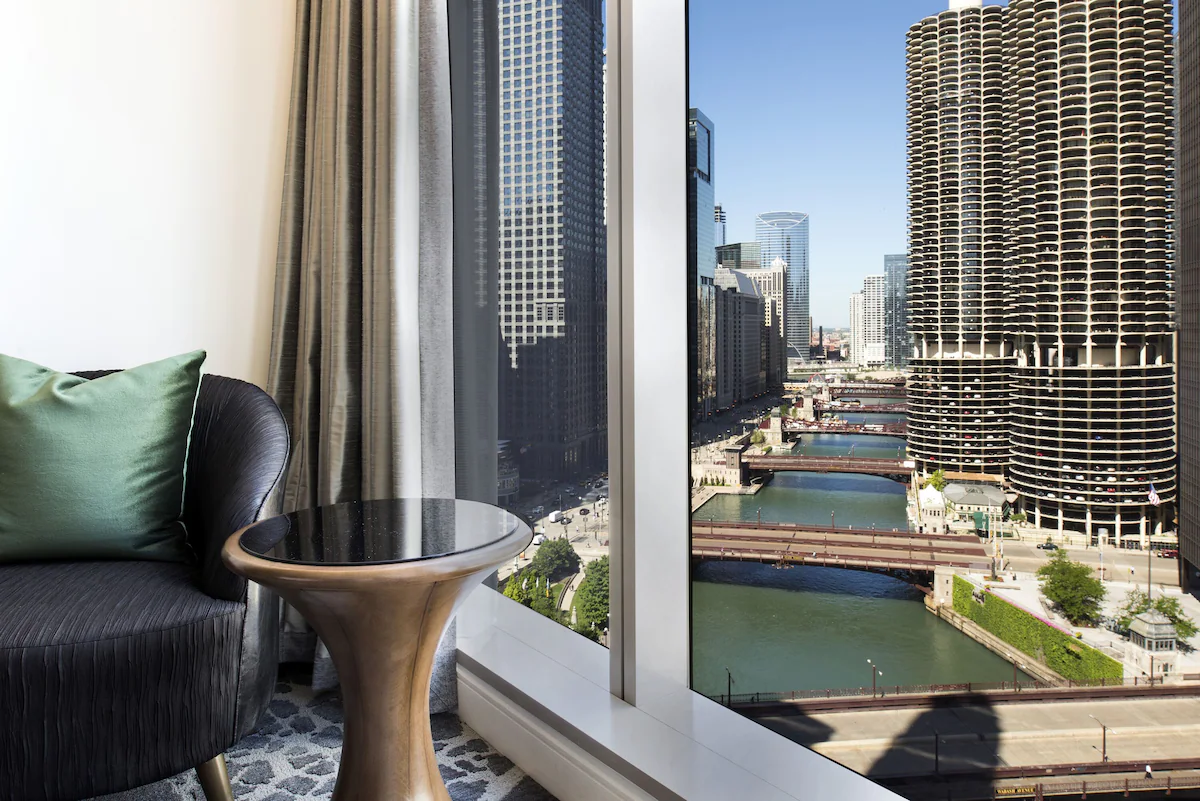
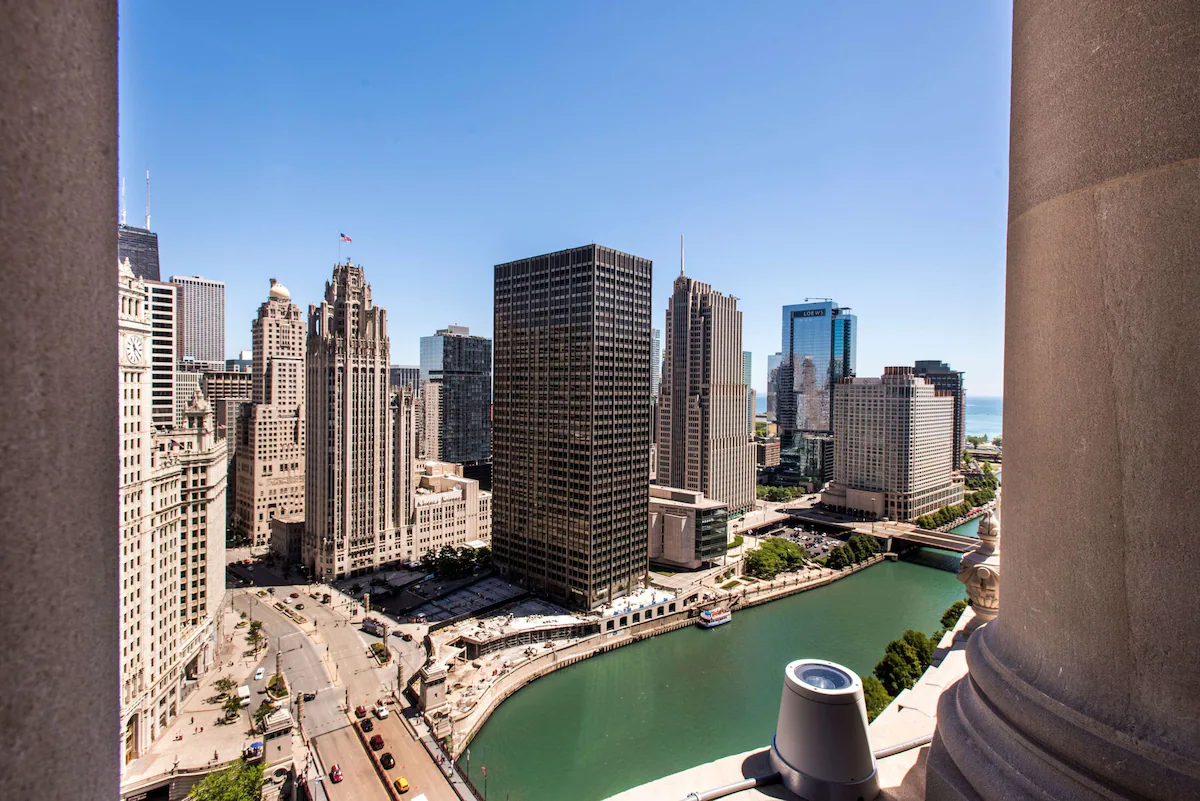
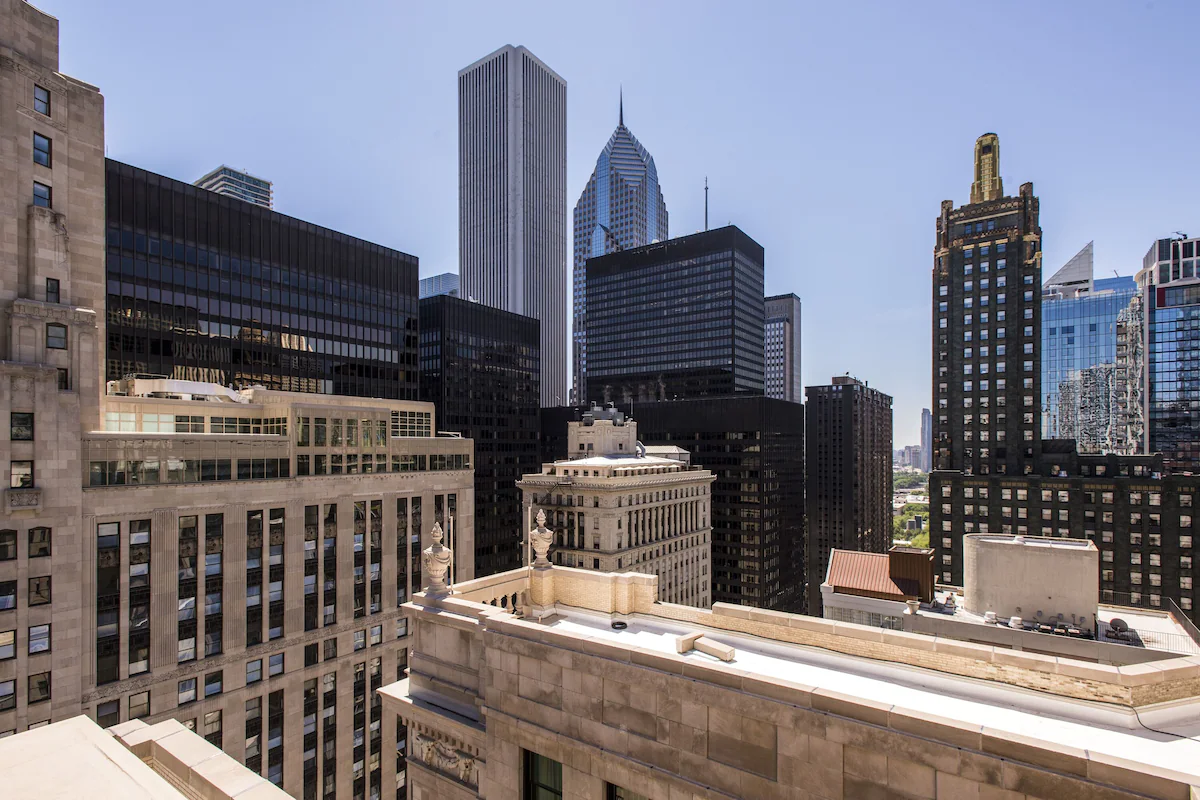
- The riverfront location and sweeping skyline views at Michigan & Wacker.
- The three-level LH Rooftop, repeatedly ranked among the country's best.
- Warm, attentive service that reviewers single out by name.
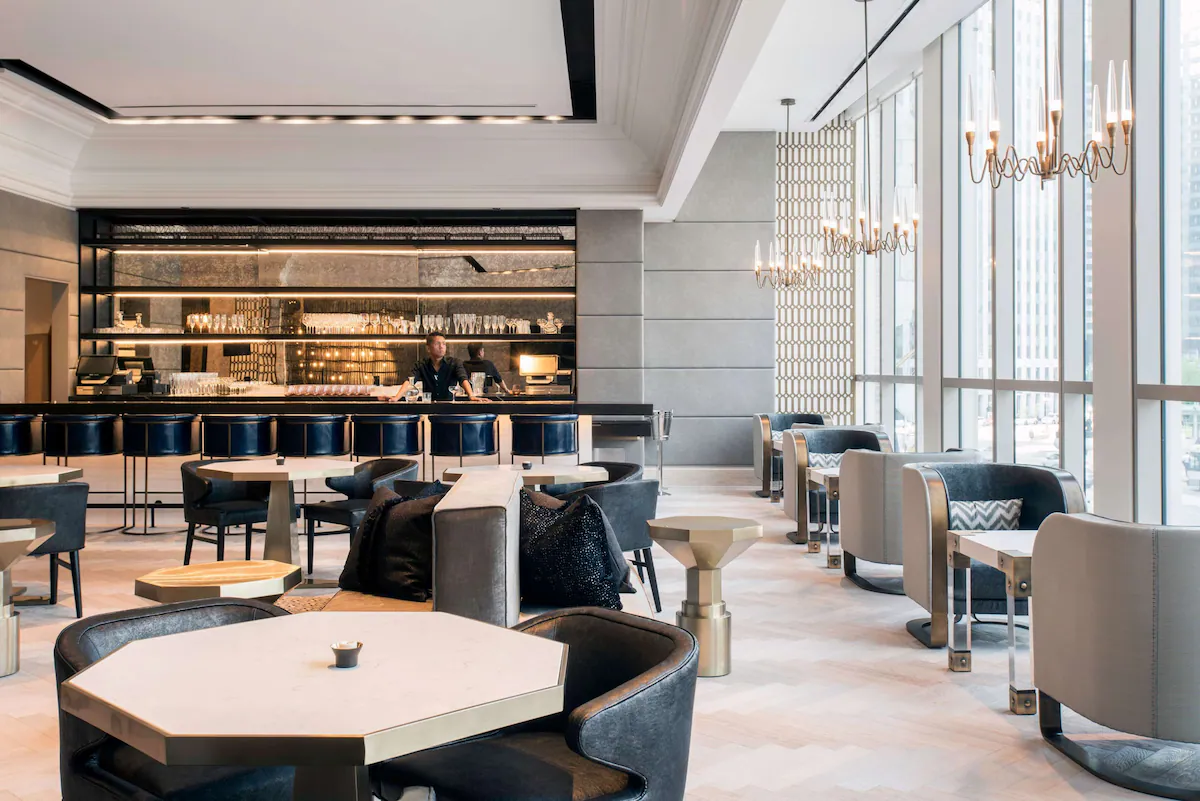
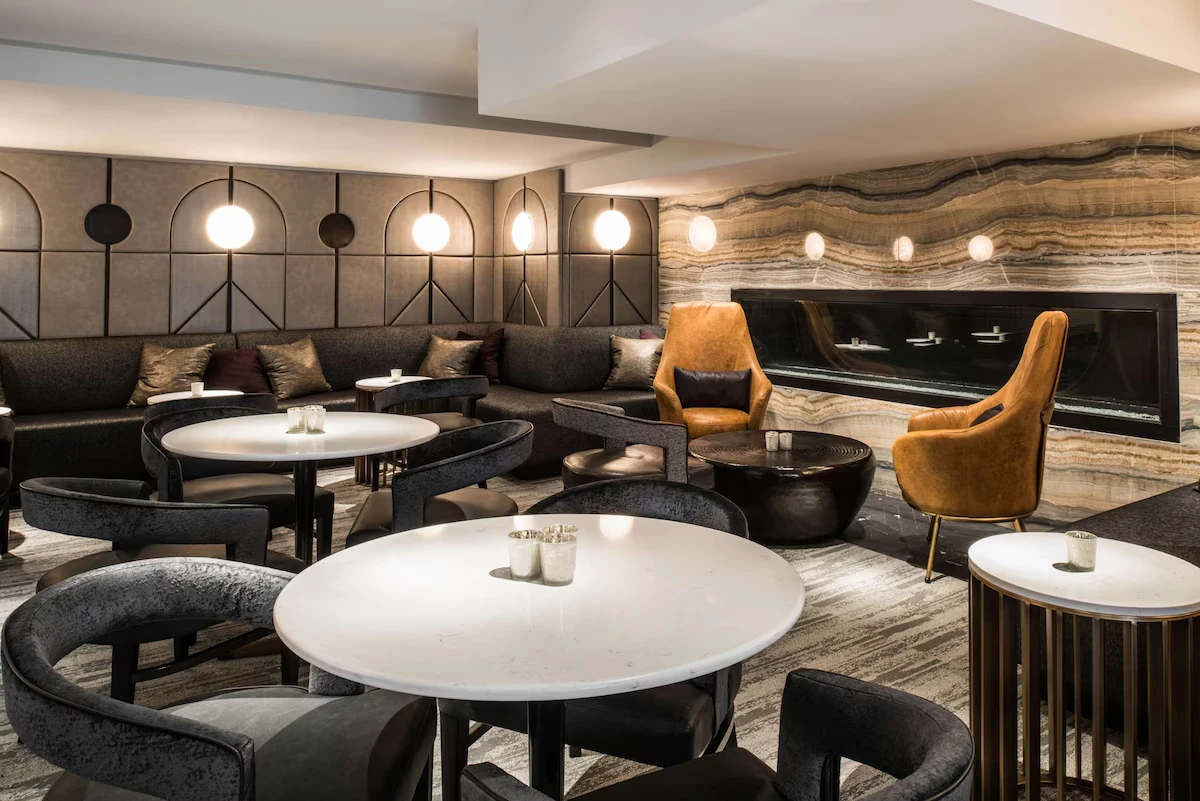
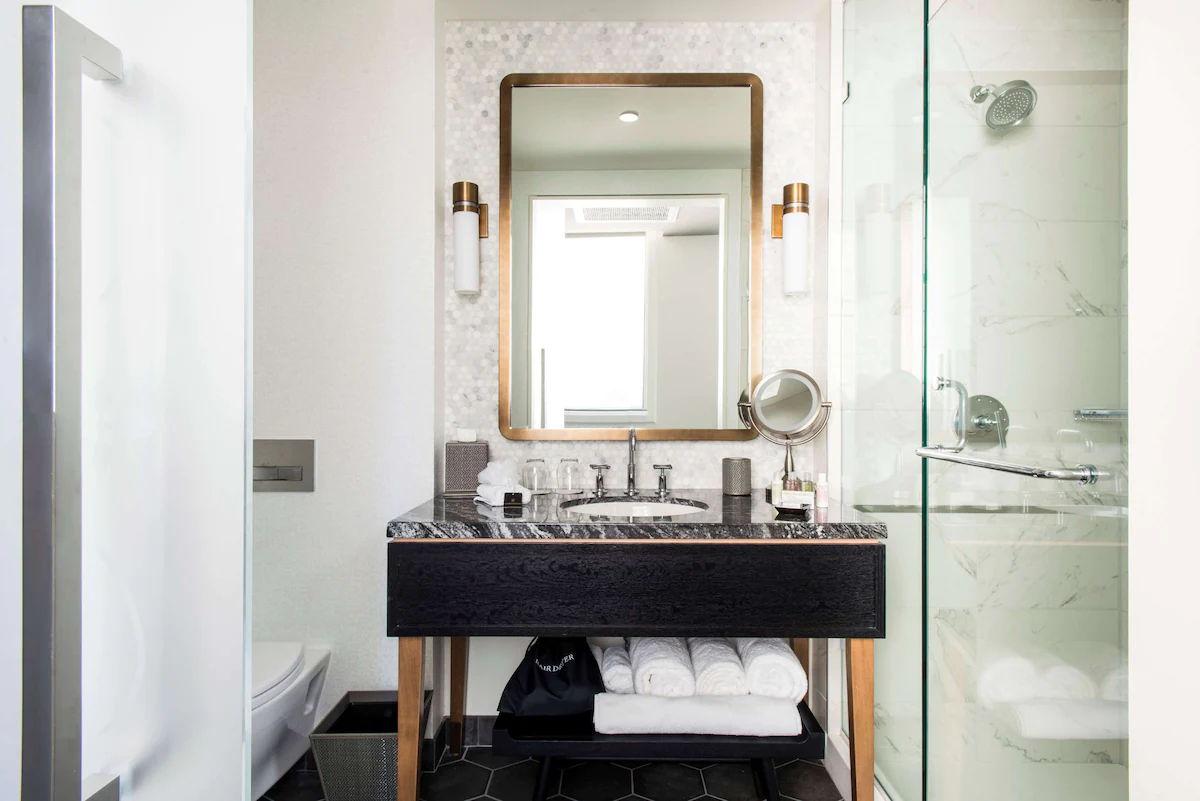
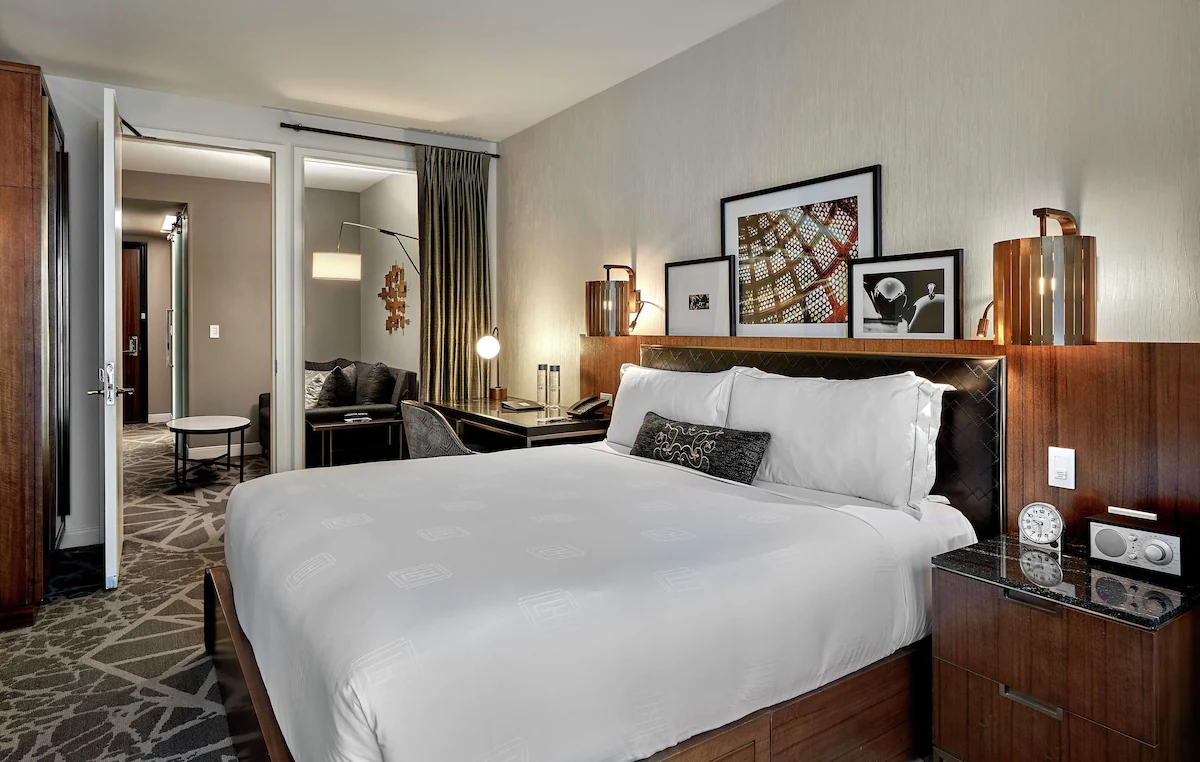
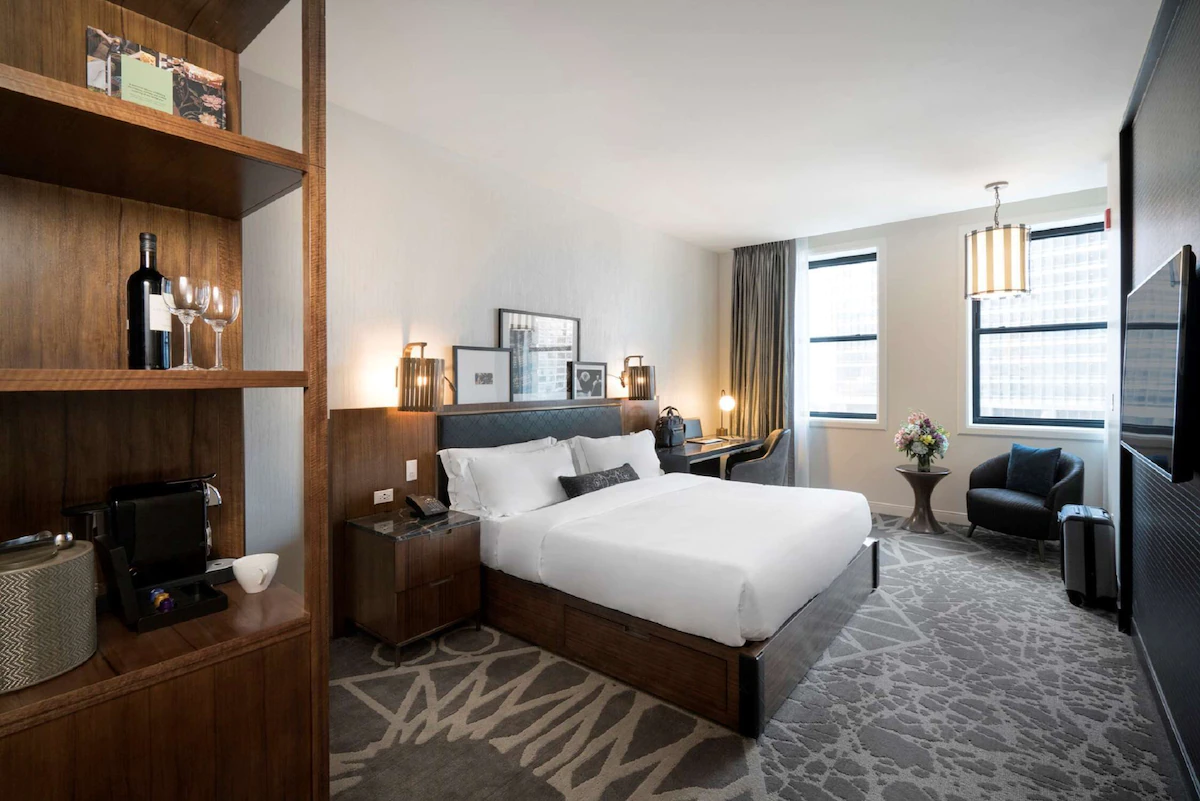
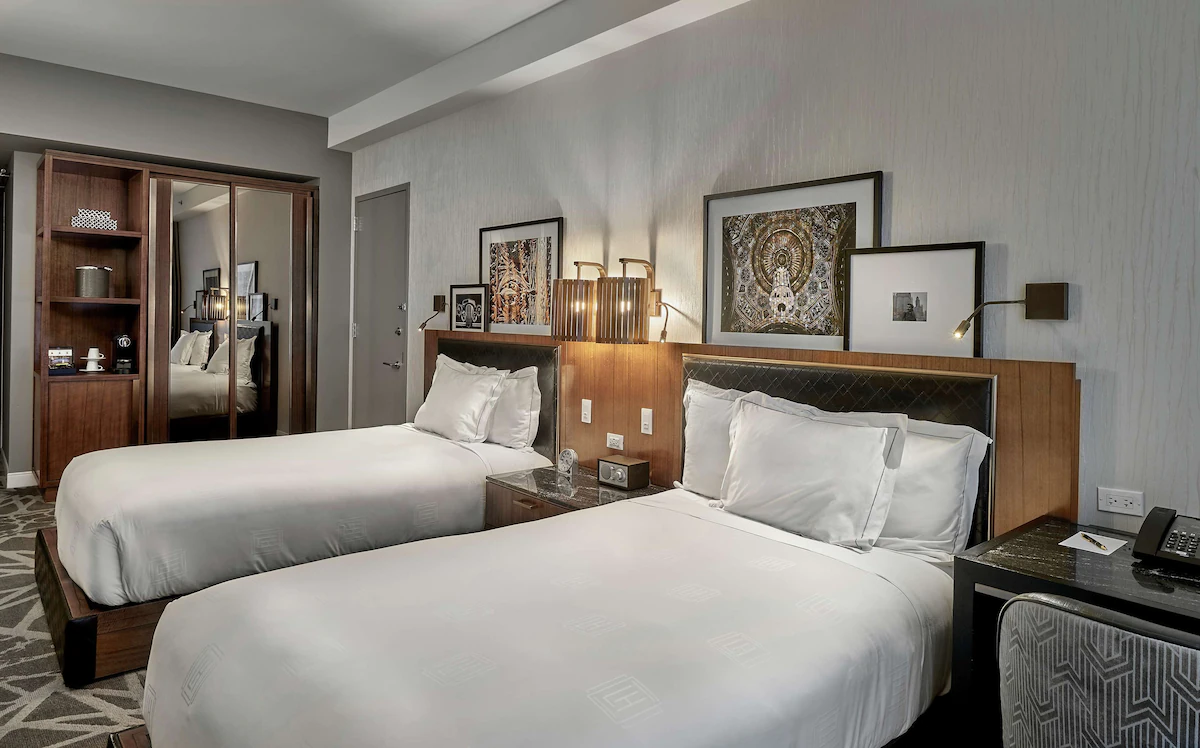
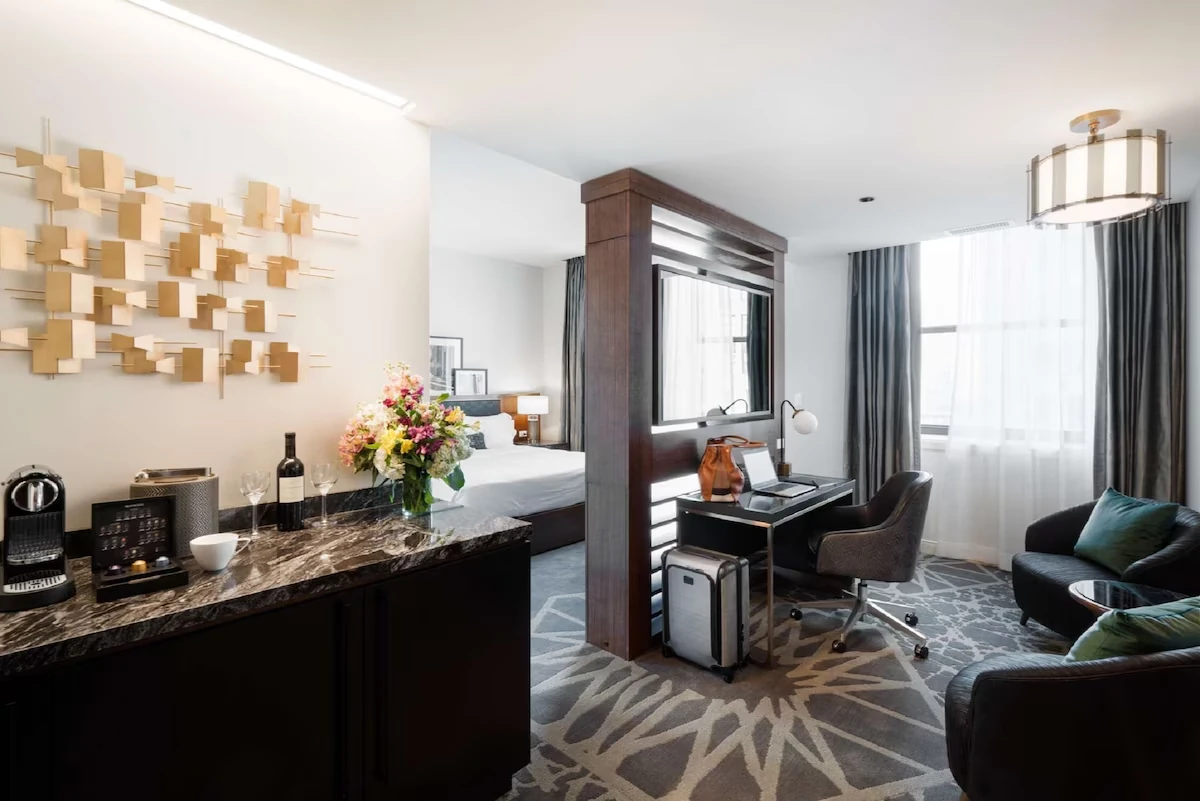
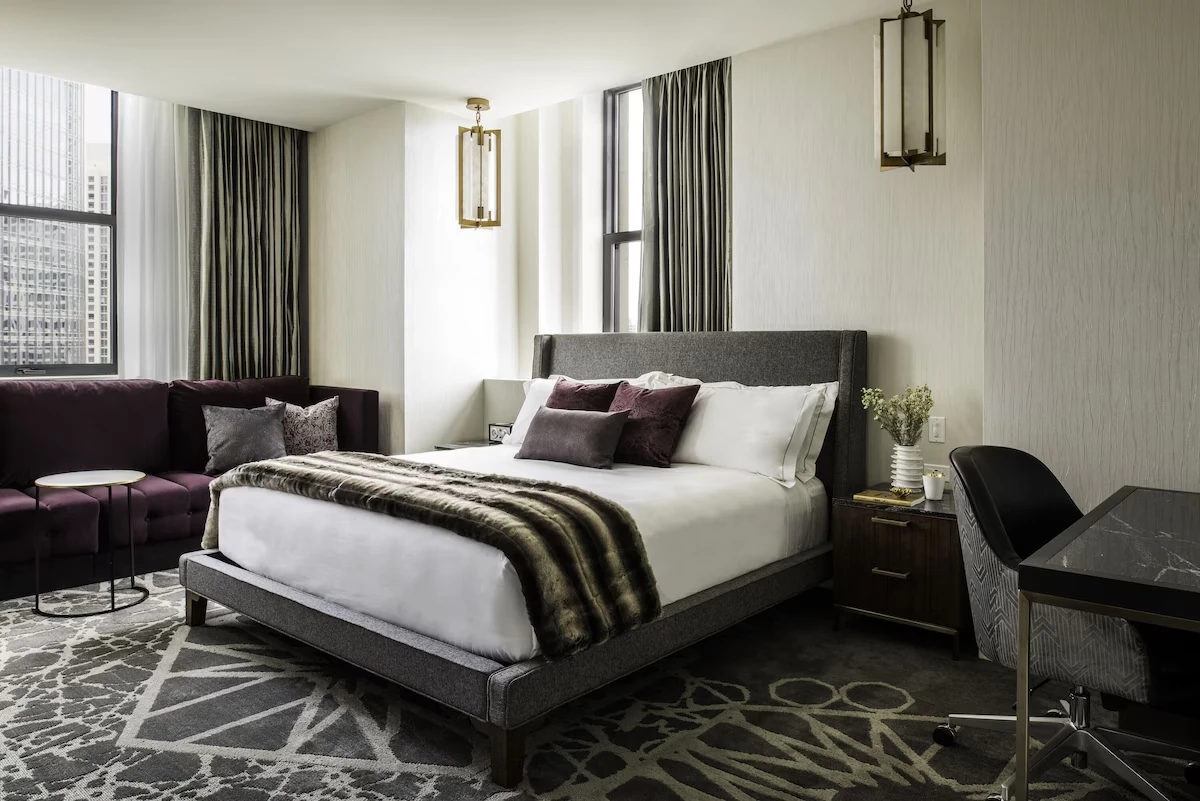
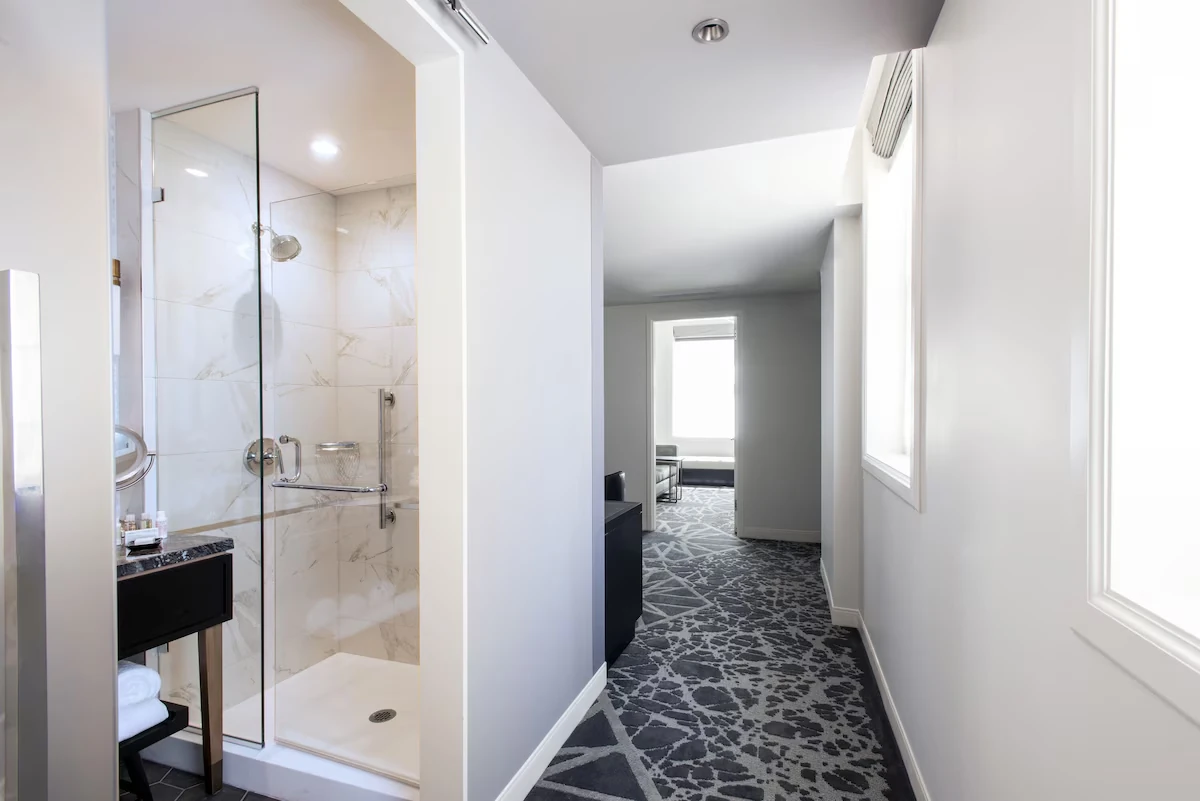
- Elegant, modern rooms with marble showers and jazz-age touches.
What to keep in mind
- Rooms can run compact, with a few notes on minor upkeep.
- Slow, secured elevators are a recurring frustration.
- Some incidental charges and no pool; the rooftop books up — reserve ahead.
Best for couples and special-occasion travelers who want a landmark riverfront address and a world-class rooftop. Bottom line: a knockout location and legendary rooftop backed by standout service — book a higher room category and a rooftop reservation, and the views alone can carry the stay.
Summary of guest reviews. Sources: LondonHouse / Hilton, Commission on Chicago Landmarks, Preservation Chicago. Photography courtesy of LondonHouse Chicago, Curio Collection by Hilton, used with permission. Designation report: London Guarantee Building (L-134) at Chicago Landmark Reports. Details may change over time.
Why this building matters
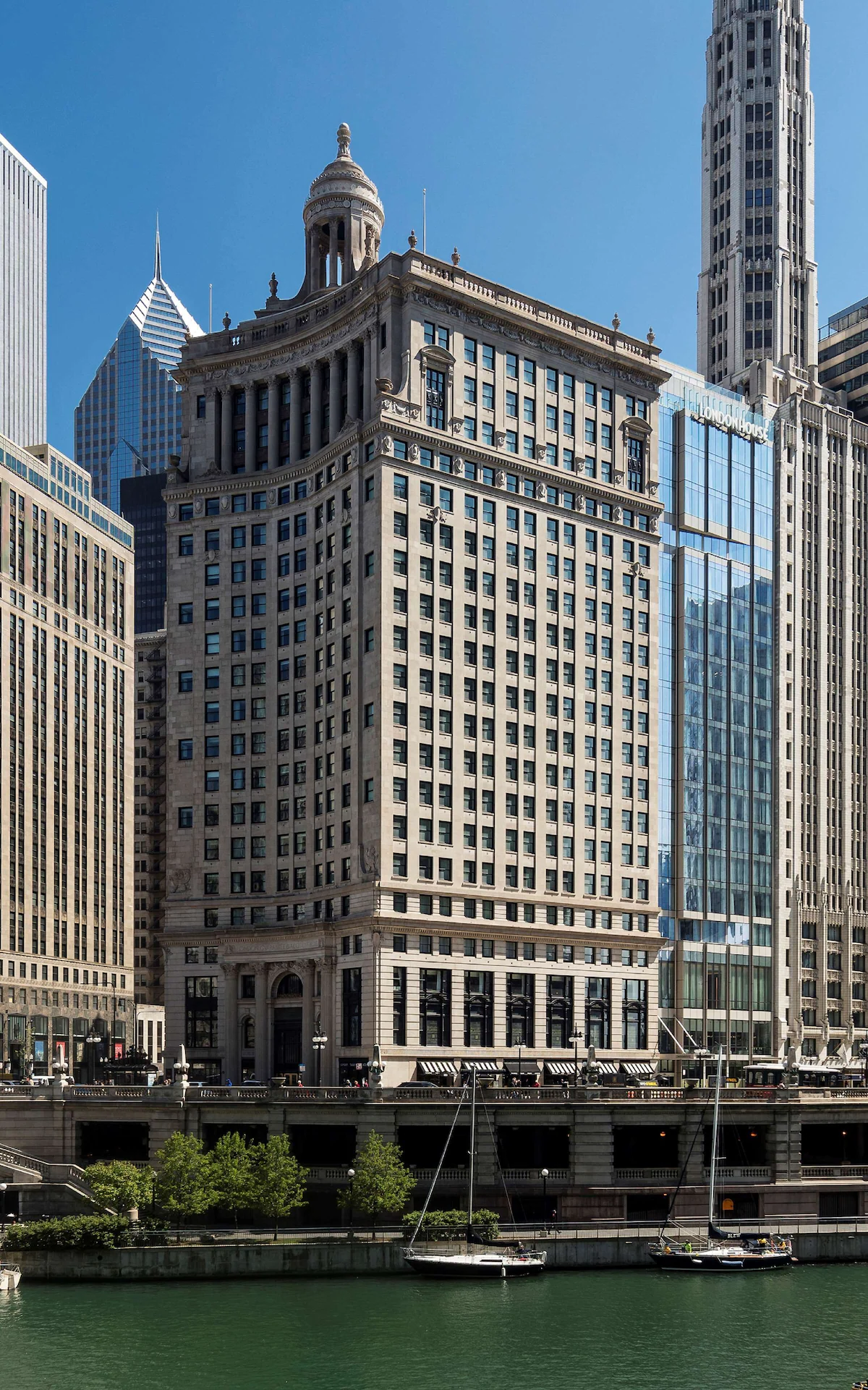
Designed by Alfred S. Alschuler and completed in 1923, the London Guarantee Building is one of the four monumental structures that frame the Michigan Avenue bridge — its curved limestone facade and Greek temple-topped cupola a defining piece of the riverfront. Named a Chicago Landmark in 1996, it once housed the famed London House jazz club. A restoration by Oxford Capital Group with Goettsch Partners reopened it in 2016 as LondonHouse, a Curio Collection hotel.
Fifty-five soldiers at the cornerstone
This hotel stands on part of the ground the United States government used, more than a century before the building went up, for Fort Dearborn — the log frontier outpost established in 1803 under President Jefferson and named for his Secretary of War, General Henry Dearborn. The fort was destroyed in 1812 and rebuilt four years later.
Whoever planned the cornerstone ceremony on December 3, 1922 understood what that meant. Officials of the Army, the State, the City, the insurance company and the Chicago Historical Society all attended — and the military escort was drawn from Fort Sheridan and numbered fifty-five men, exactly the number of soldiers who had evacuated Fort Dearborn in 1812.
The architect, Alfred S. Alschuler, marked the site in the fabric of the building too, with a bronze relief panel of Fort Dearborn set over the central entrance doors. It is no longer there: a later remodeling of the entrance removed it, and it was given to the Chicago Historical Society.
The building itself went up in 1922–23 as the London Guarantee and Accident Building, a Beaux-Arts skyscraper, and spent later years known as the Stone Container Building. It is one of the four 1920s towers that frame the Michigan Avenue Bridge, and the only one of them you can sleep in.
Drawn from the building’s Chicago Landmark designation report. Read the report →
The plaque is still on the corner
The bronze relief over the doors is gone, but the building did not stop marking the site. A small plaque identifying the ground as the location of Fort Dearborn, and the date the fort was established, is fixed to the northeast corner. It takes about a minute to walk out and find it.
The designation report also names the company the building keeps. In the eight years after the Michigan Avenue Bridge opened in 1920, four buildings went up around it — the Wrigley Building, Tribune Tower, 333 North Michigan Avenue, and this one — and between them they turned North Michigan Avenue into one of the city’s major thoroughfares.
Twenty-one stories, and an answer to the Wrigley
The report calls the Beaux-Arts influence very strong in this twenty-one-story building, with the top and the bottom treated monumentally and the floors between them handled as a straightforward office tower. Rusticated masonry sets off the lower five stories. The entranceway is framed by four engaged fluted Corinthian columns and a classical entablature, rising through four stories; a colonnade of smooth Corinthian columns marks the top three.
Above a balustrade sits the cupola — a ringed colonnade with a domed top. The report is explicit about why it is so elaborate: the treatment of the top “served as a counterpoint to the Wrigley Building tower across the river.” The two were meant to be read together.
Walk in from Wacker Drive, which is where the main entrance has always been, and look down. The vestibule floor is cut from large pieces of white, brown and black marble in geometric shapes, culminating in a large double star at the center of the room.
Why the report says 360 N. Michigan
The designation report names this building at 360 North Michigan Avenue; the hotel’s address is 85 E. Wacker Drive. The report explains the difference itself: the building fronts Michigan Avenue, but “the main entrance to the building, beginning with the vestibule, faces Wacker Drive.”
One building, two streets, and an address taken from the door you actually walk through.
Explore more like this
Chicago’s Art Deco hotels · hotels in historic Chicago buildings · Chicago hotels with rooftop bars · historic hotels near Millennium Park