


What guests are saying
What guests love
- Sleeping inside a rescued landmark with a remarkable past — the nation’s first blood bank began here.
- Dr. Murphy’s Food Hall, a lively hall of largely BIPOC-owned vendors, plus a museum to the building’s story.
- Spacious rooms (many with kitchens) ideal for medical-district visits or longer stays; near Rush, UIC, and the United Center.
What to keep in mind
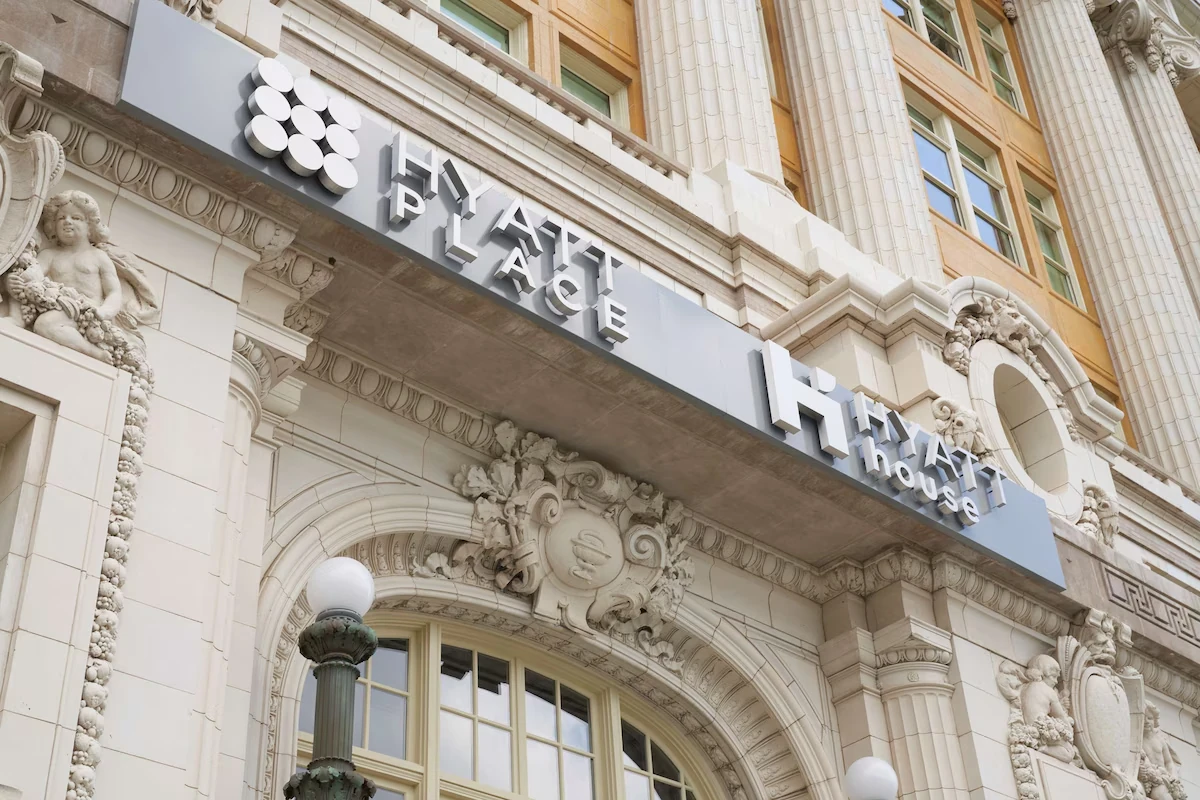
- Two brands share the building: Hyatt Place (the main hotel) and Hyatt House (extended-stay suites with kitchens)
- Near West Side / Medical District — a ride from downtown sights
Best for History and architecture lovers, anyone visiting the Illinois Medical District, UIC, or the United Center, and family who need an extended-stay suite near Rush or UI Health during a longer hospital stay.
Summary of guest reviews. Sources: Hyatt House/Place Chicago - Medical/University District, Commission on Chicago Landmarks, Preservation Chicago. Photography courtesy of Hyatt Place / Hyatt House Chicago Medical/University District, used with permission. Designation report: Cook County Hospital Administration Building (L-351) at Chicago Landmark Reports. Details may change over time.
Why this building matters
This is among the most significant adaptive-reuse stories in the city. Completed in 1914 to the designs of Chicago architect Paul Gerhardt (also behind Lane Tech High School), the old Cook County Hospital is a monumental building whose heavily ornamented Classical Revival facade combines granite, white glazed terra cotta, cream-colored brick, and massive columns. Once the largest hospital in the nation, it treated patients of every background — earning the name “Chicago’s Ellis Island” — and it pioneered the nation’s first blood bank, opened in 1937 by Dr. Bernard Fantus, who coined the term. Doctors here also identified the cause of sickle-cell anemia and developed modern medical internship programs. It loosely inspired the TV series ER and appeared in The Fugitive . After a new hospital opened in 2002 the building sat vacant for some 15 years under the threat of demolition, until a long preservation campaign prevailed; a roughly $130 million restoration reopened it with two Hyatt hotels, medical offices, a museum to its legacy, and Dr. Murphy’s Food Hall.
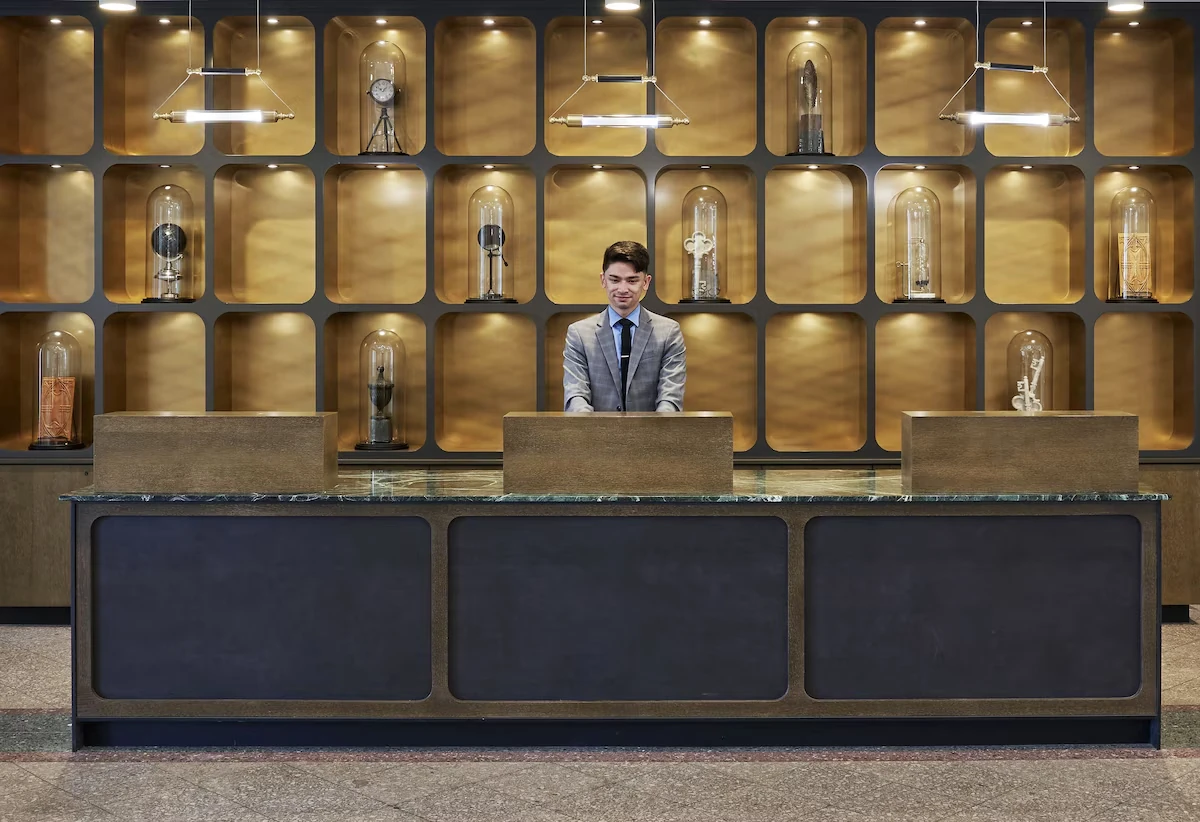
Two Hyatt brands share the restored building, and it's worth knowing the difference before you book. Hyatt Place is the main hotel — front desk, breakfast, and bar — and it's the listing this page books through. Hyatt House shares the same building and amenities but is a separate extended-stay brand, with full-kitchen suites built for longer visits. Because the hotel sits inside the Illinois Medical District, immediately next to Rush University Medical Center and UI Health, that extended-stay option is a genuinely useful one for family staying nearby during a longer hospital stay.
“Chicago’s Statue of Liberty”
For close to ninety years this building was where you went in Cook County if you could not pay. That was the whole point of it: the county had been obliged to care for its indigent residents since 1831, and by the 1850s, after cholera swept the city twice, farming that duty out had plainly stopped working.
What arrived through these doors was, for a long stretch, the city itself. When construction began in 1912, 73 percent of the hospital’s 48,223 patients were immigrants — so many that the place was nicknamed Chicago’s Statue of Liberty. After the quotas of the 1920s that share fell to 17 percent, and as it fell the Great Migration arrived. Cook County was one of the very few Chicago hospitals that did not turn patients away by race, and it stayed that way until the civil-rights era. One number carries it: 60 percent of all African American babies born in Cook County were delivered here.
The wards recorded whatever the city was doing. Hundreds of poisonings from bootleg alcohol during Prohibition. Rising gunshot wounds through the gang wars of the late 1920s. In the month of the 1929 crash the hospital was handling 2,069 patients a day; by 1935 it was 2,661, and by 1940 more than three thousand.
It tried to be more than a ward, too. A day nursery opened in 1915 so that children had somewhere to go while a parent visited. There was a schoolroom for long-stay children, occupational therapy from 1917, summer concerts on the grounds, and from 1921 the hospital had its own branch of the Chicago Public Library.
The first blood bank in America
On March 15, 1937, Dr. Bernard Fantus opened a blood storage facility here where donors could give blood to be kept and used later. Others had solved pieces of the problem; Fantus put it together — and, just as importantly, gave it a name. He called it a blood bank, because it worked like one: doctors deposited blood and drew on it when they needed a particular type in a hurry. The metaphor did the work of a marketing campaign.
Before the bank, Cook County performed about 70 transfusions a month. Within three years it was doing 700, and supplying other Chicago hospitals besides. Within those same three years as many as fifty large American hospitals had set up blood banks of their own. Patients had previously died waiting for a matching donor to be found and bled.
There is a second Fantus legacy right outside the window. He is believed to have been the first person to propose a medical district for the West Side — a “medical park” clustering the public and private institutions already there. He died in 1940, a year before the Illinois legislature created the Illinois Medical District. The hotel stands inside the district he imagined.
A long list of firsts
The first modern medical internship program in the United States began here in 1866, when Dr. Nils I. Quales became the hospital’s first intern. Cook County was the first institution to insist its interns be medical-school graduates. They were not paid, but they got room and board — partly so they could never be far away.
Two firsts came much later, and both were women. In 1973 Dr. Rowine Hayes Brown became the hospital’s medical director, the first woman in the United States to hold that post at a major hospital; she was a lawyer as well as a pediatrician, known for her work with abused children. Four years after that, Dr. Olga Jonasson became head of surgery — the first woman to run surgery at any major American hospital.
Others are scattered through the century. Dr. John Nuzum developed a polio serum in 1917, then an influenza vaccine during the 1918 pandemic that was given to every member of staff here and sent on to hospitals around the country. In 1937 two Cook County surgeons worked out how to stabilize a fractured hip with steel pins, which let elderly patients get up on crutches instead of dying of the pneumonia that so often followed weeks of lying still. And the hospital’s pathology conferences became famous enough that in 1937 alone more than 900 doctors, American and foreign, came to attend them.
The identification of sickle-cell anemia is often counted here too, and the connection deserves stating precisely. Dr. James B. Herrick, on the Cook County staff, identified sickle-shaped cells in 1904 in a dental student from the Caribbean named Walter Clement Noel, and published with his intern in 1910. The designation report is careful to note that Herrick actually treated Noel at the neighboring Presbyterian Hospital, and that it is his close association with Cook County that has attached the discovery to the public hospital.
Drawn from the building’s Chicago Landmark designation report. Read the report →