























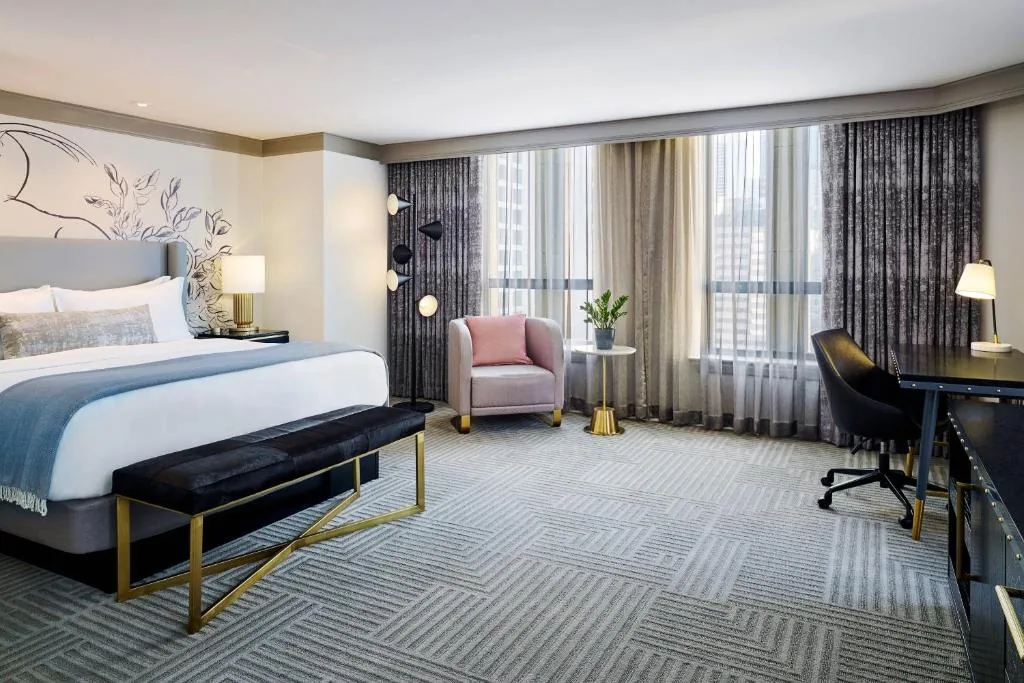
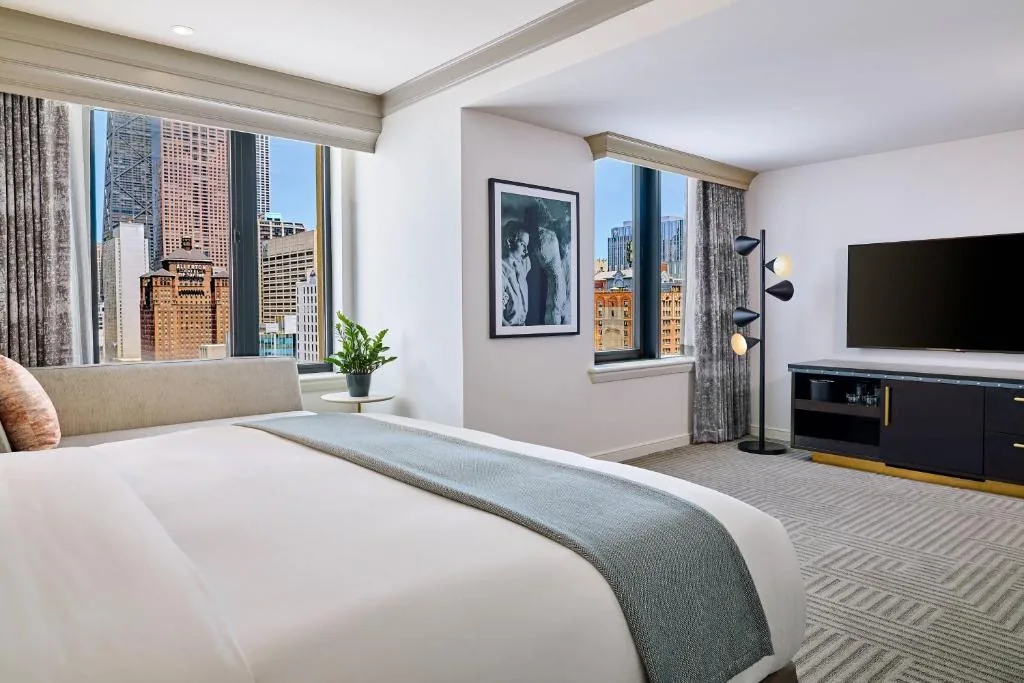

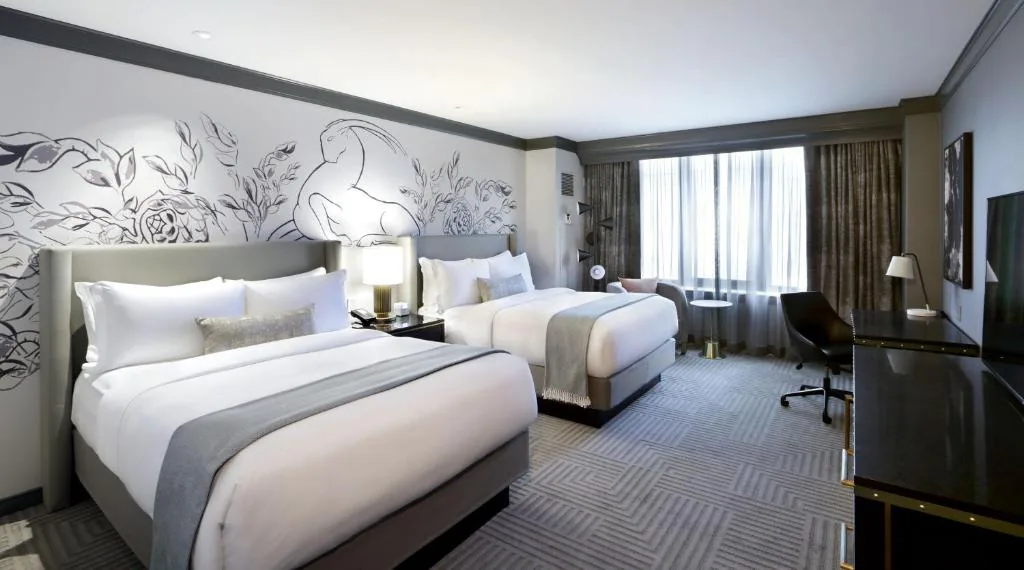

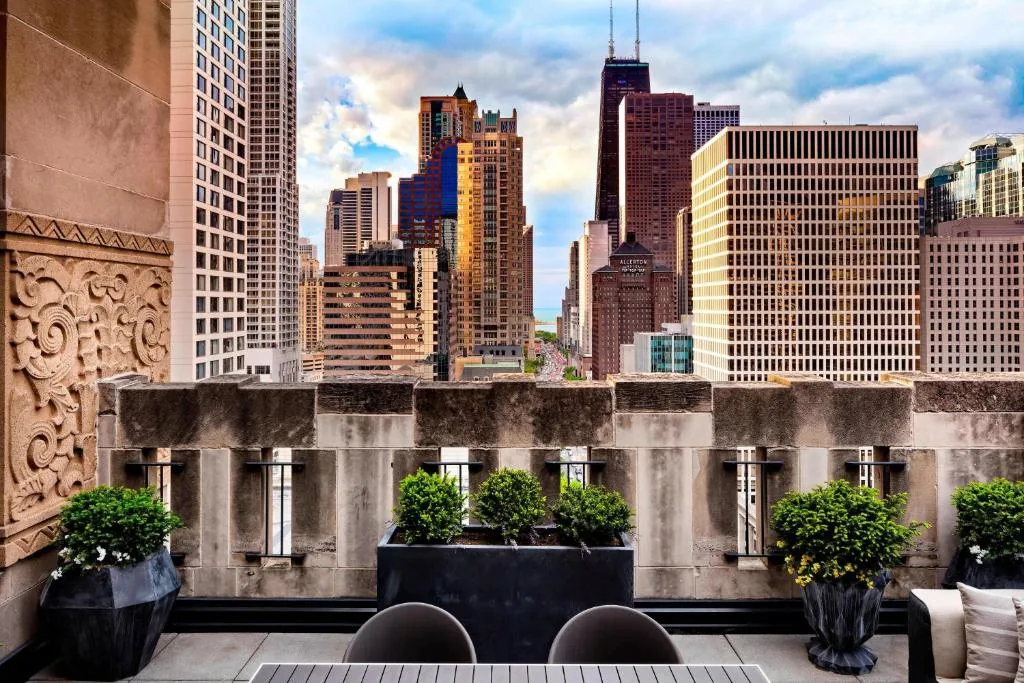


What guests are saying
What guests love
- Genuine Art Deco artistry — the Gwen Lux facade reliefs are a highlight.
- A coveted address half a block off Michigan Avenue, amid the Mag Mile’s best shopping.
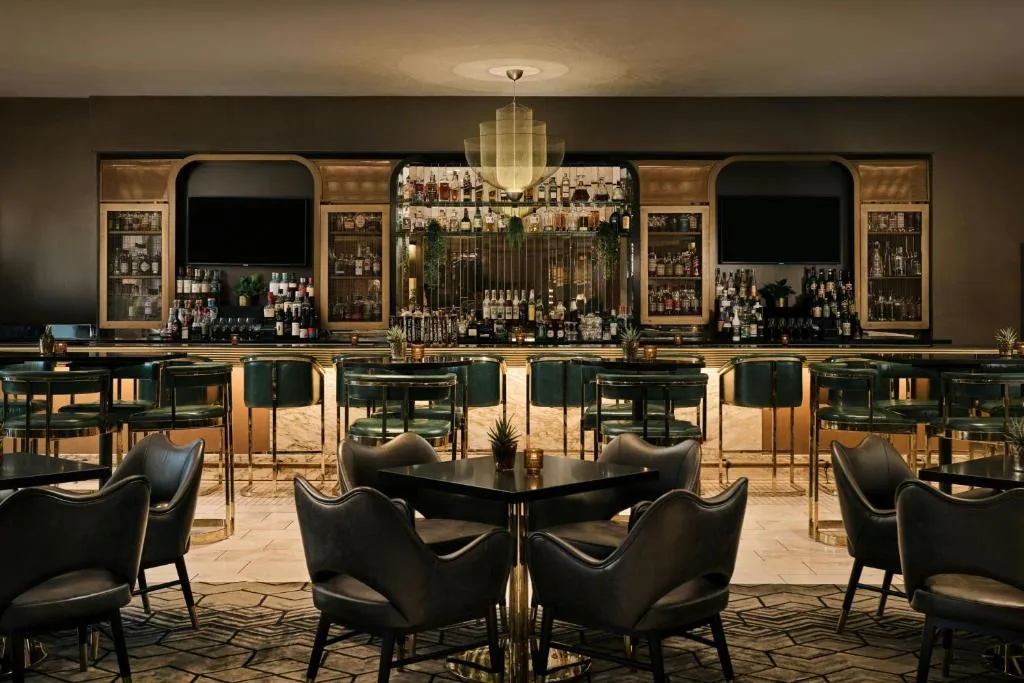
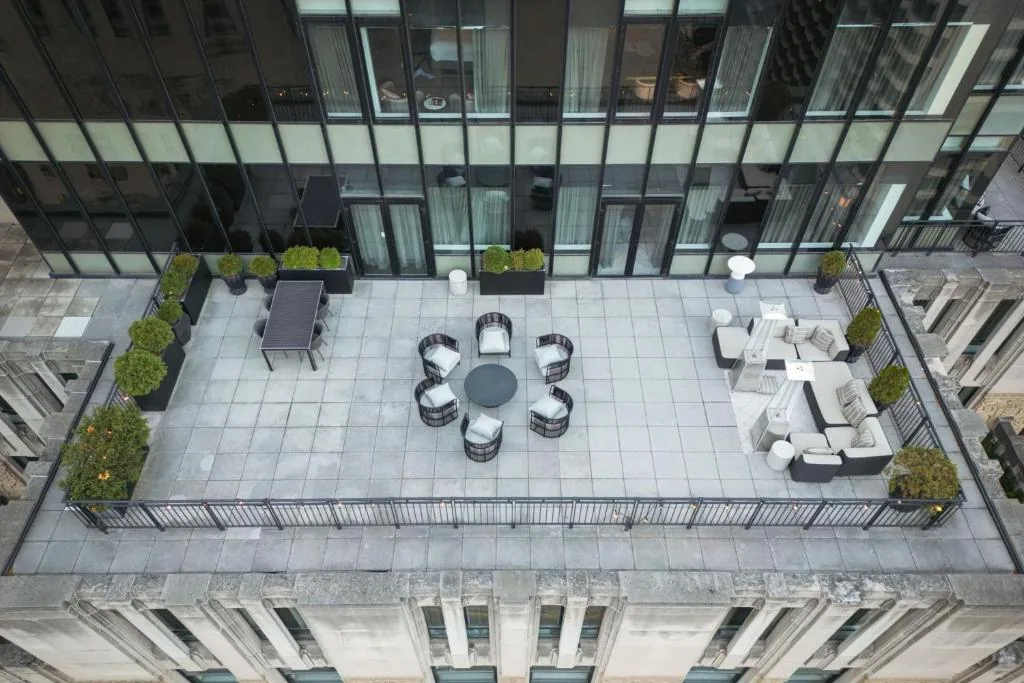
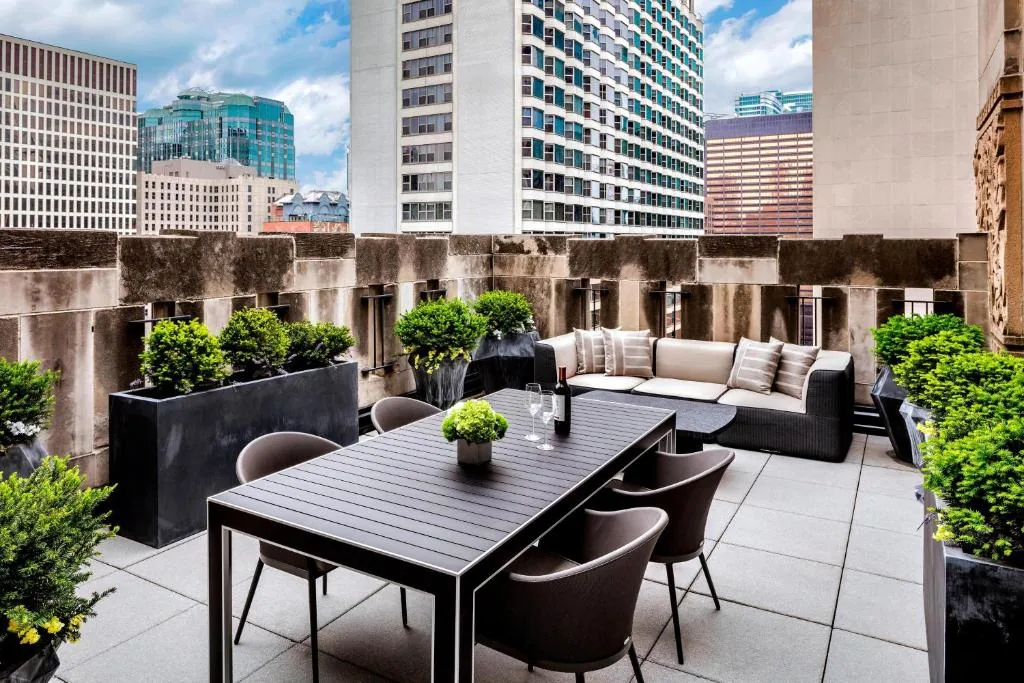
- A stylish rooftop and refined, full-service luxury.
What to keep in mind
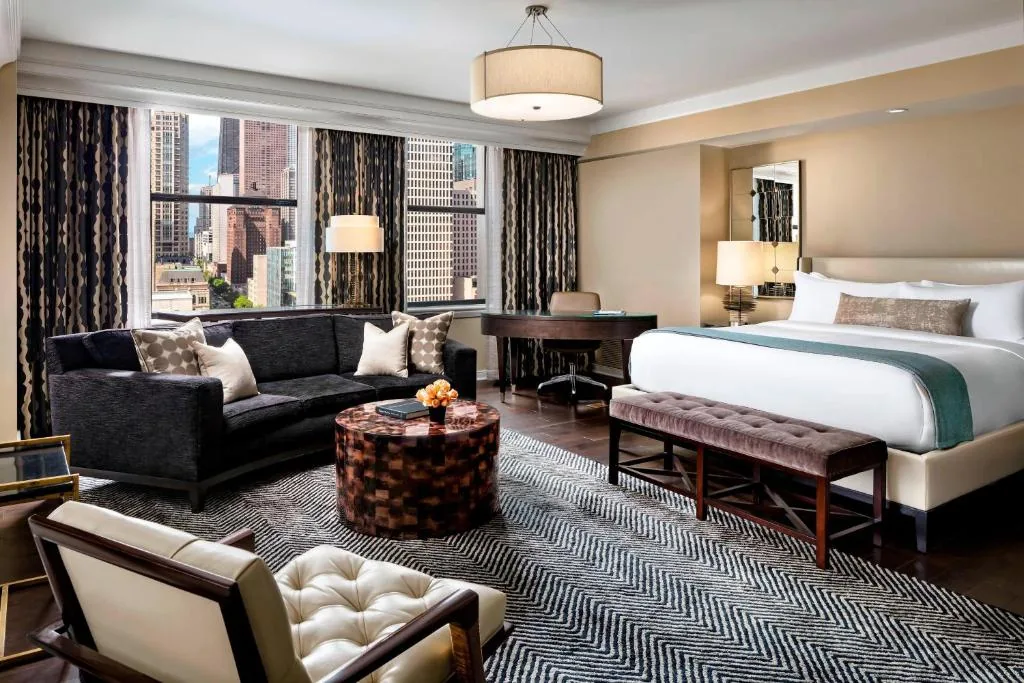
- A historic tower — rooms vary
- Among the higher-priced Mag Mile stays
Best for Design lovers who want Art Deco character and full-service luxury steps from Michigan Avenue.
Summary of guest reviews. Sources: The Gwen Hotel, Commission on Chicago Landmarks, Preservation Chicago. Photography courtesy of The Gwen, a Luxury Collection Hotel, Michigan Avenue Chicago, used with permission. Designation report: McGraw-Hill Building (L-144) at Chicago Landmark Reports. Details may change over time.
Why this building matters
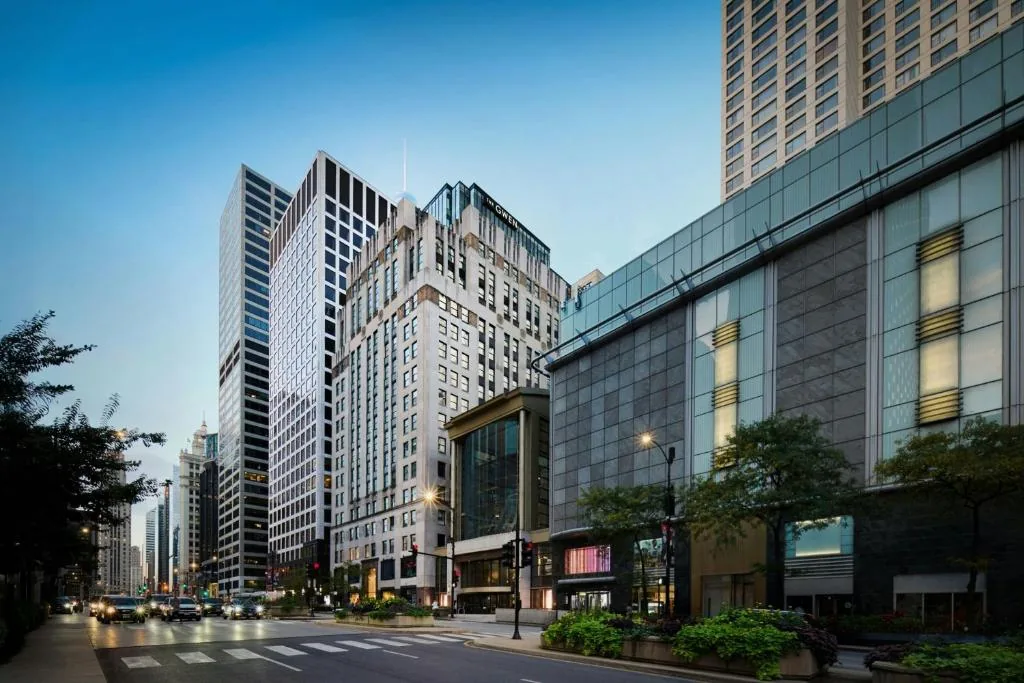
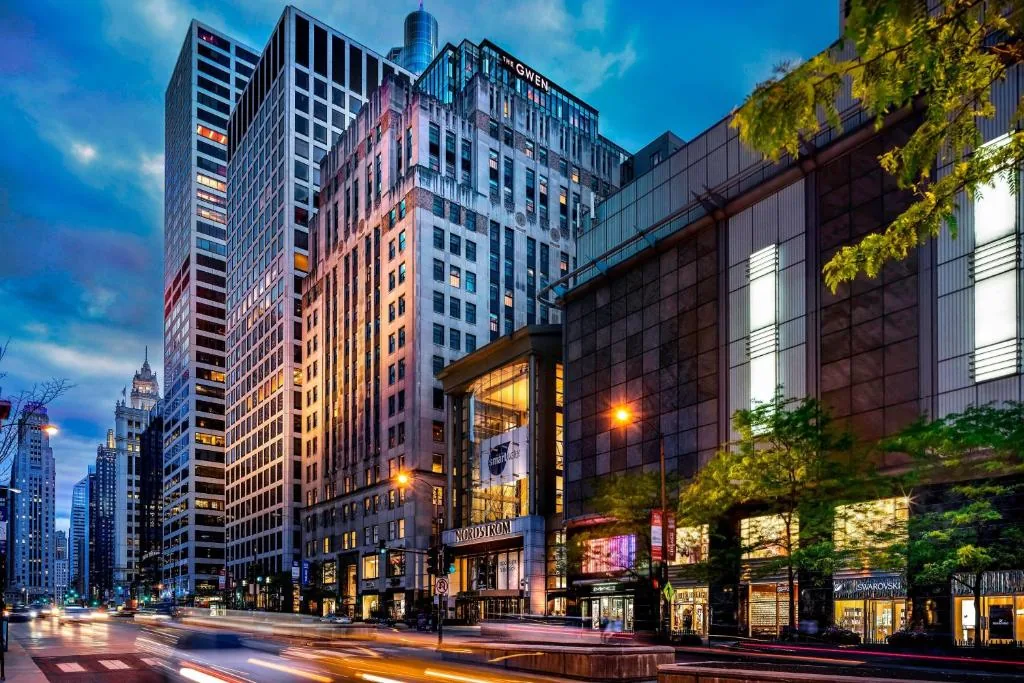
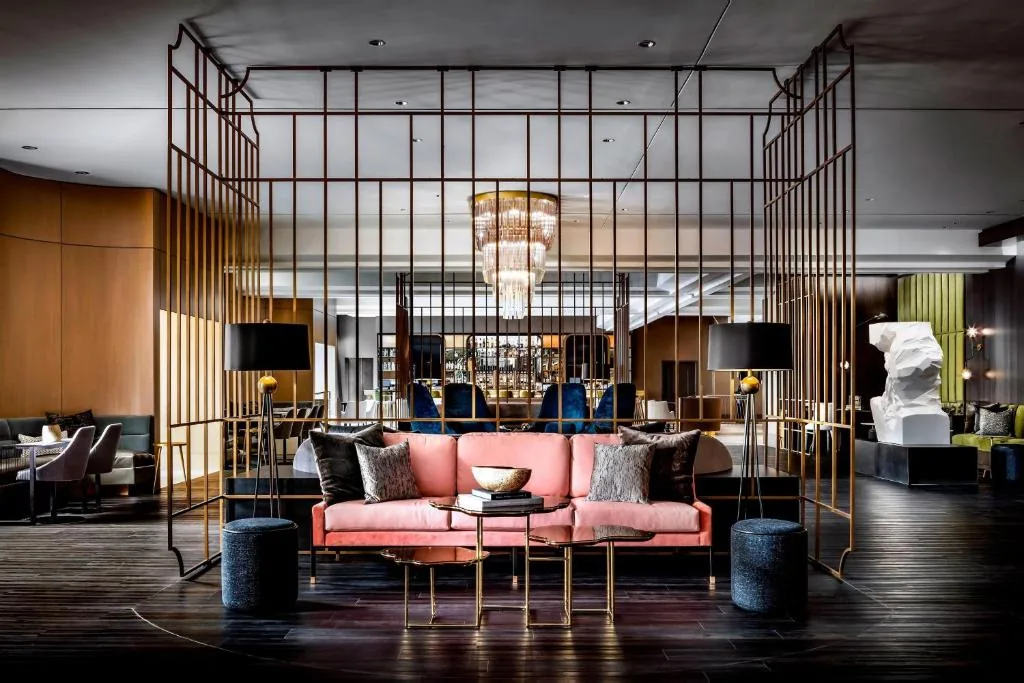
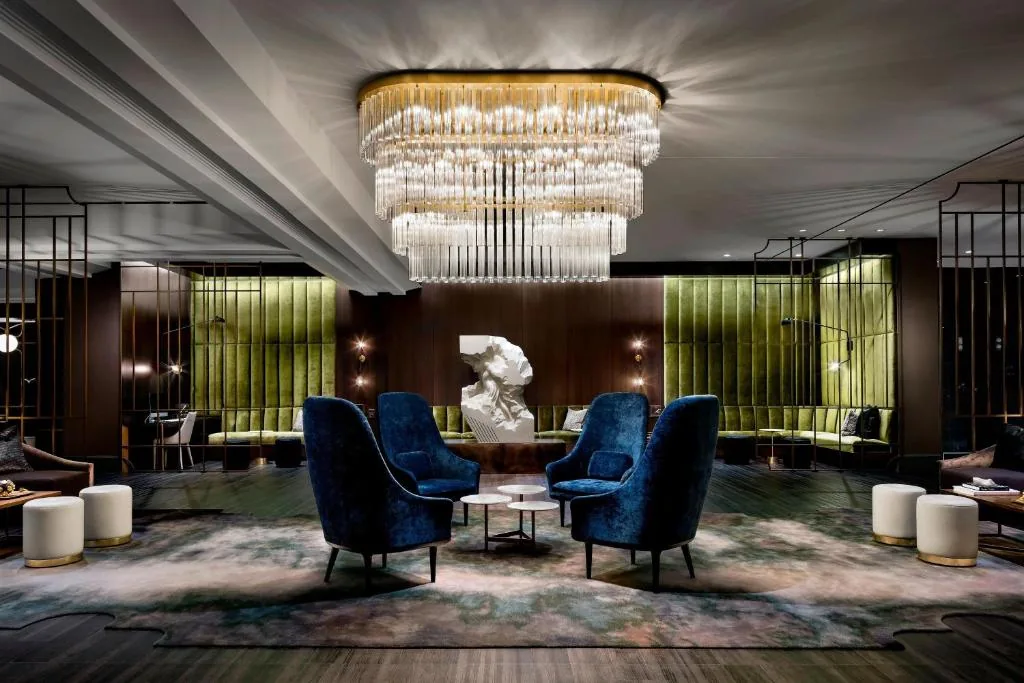
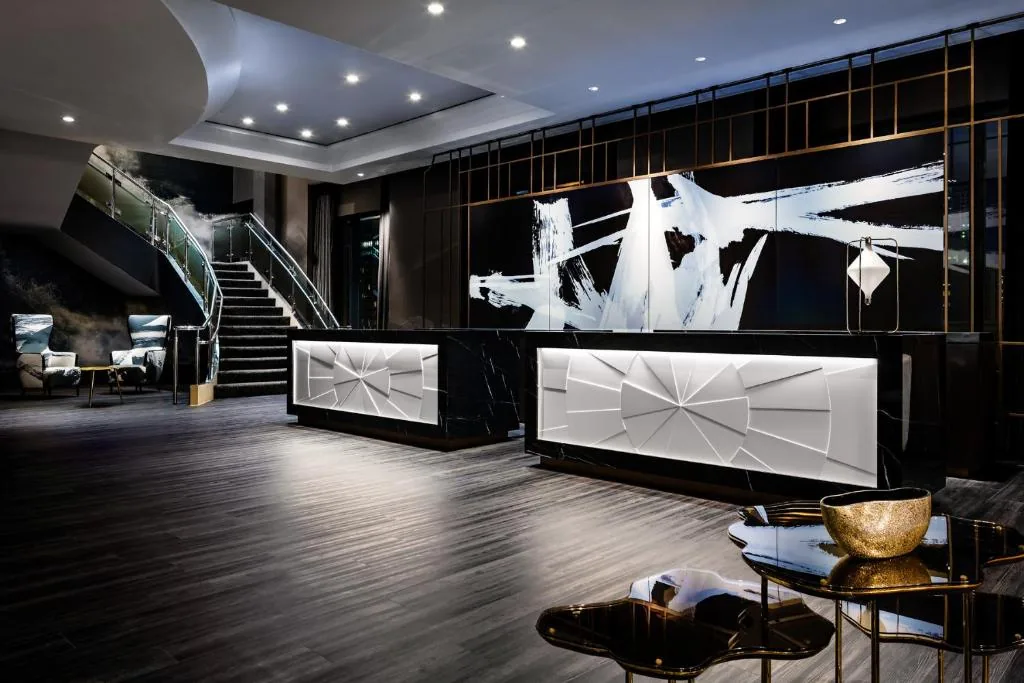
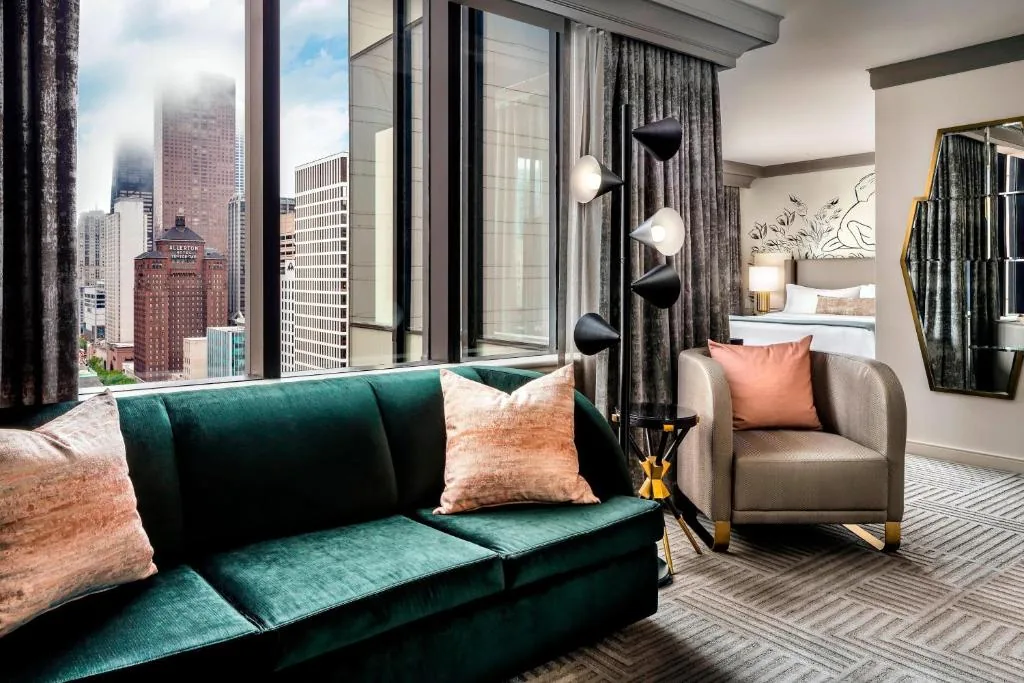
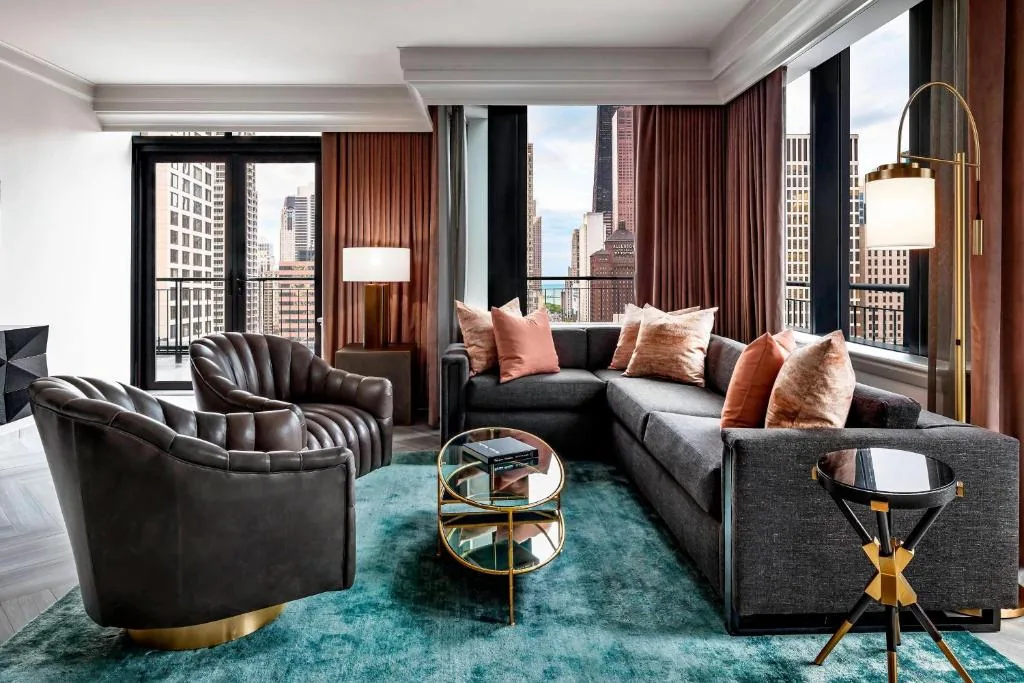
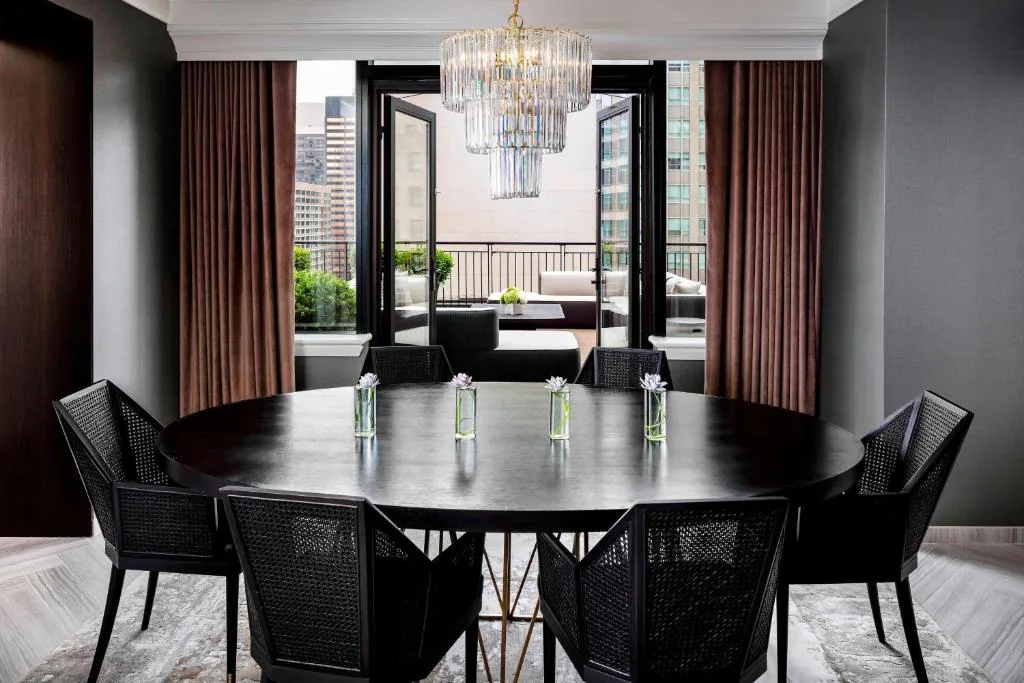
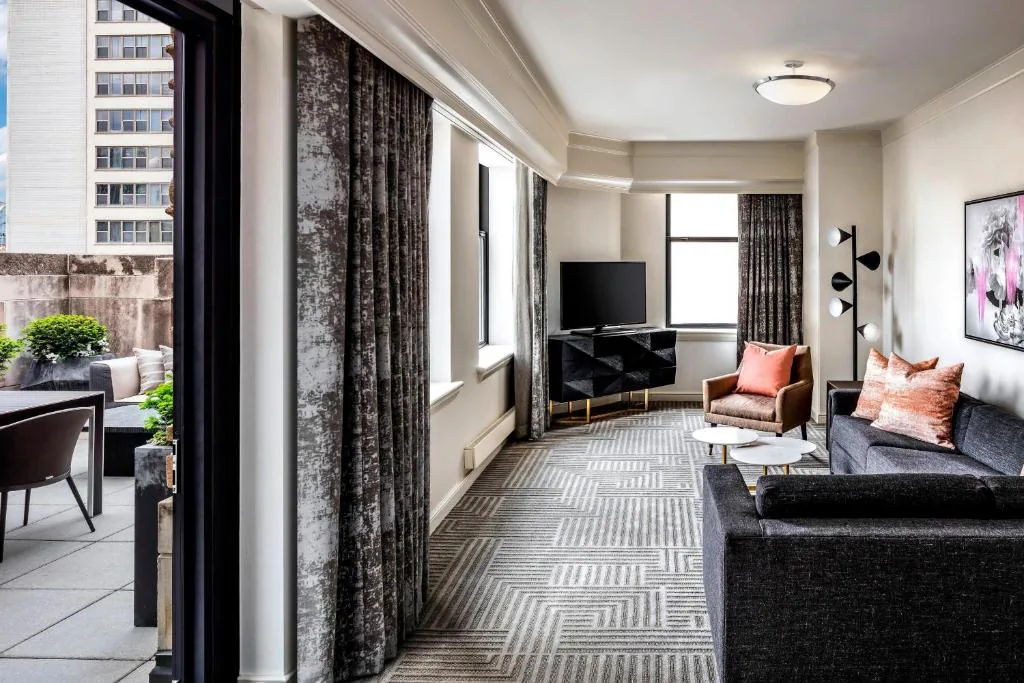
The hotel occupies the former McGraw-Hill Building, a 1929 Art Deco work whose limestone facade carries bold figural reliefs by the pioneering sculptor Gwen Lux — for whom the hotel is named. Restored and opened as a Luxury Collection hotel, it pairs that Jazz-Age artistry with a sleek contemporary interior and a popular rooftop.
The sculptors on the fourth and fifth floors
Stand across Michigan Avenue and look up. Between the fourth-floor windows runs a band of limestone panels carrying the signs of the zodiac — the bull for Taurus, a girl for Virgo — cut as incised lines into flat stone so they read cleanly from the pavement. A floor higher, cross-shaped panels anchor the piers with three Greek gods: Diana with her deer, Atlas carrying the globe, and Helios driving the horse that pulls the chariot of the sun. These are carved in bolder relief than the zodiac below, which is what pulls the eye upward. Around on Grand Avenue the same panels carry only heavy stylized vines.
They are the work of a married couple, Eugene and Gwen Lux, and the hotel takes its name from her. It was one of her earliest commissions. Born Gwen Wickerts in 1908, she had worked in Detroit in the art-pottery studios of Mary Chase Stratton — the founder of Pewabic Pottery — studied in Baltimore and Boston, and traveled to Yugoslavia to study under the sculptor Ivan Mestrovic.
What came after is why the name was worth borrowing. Her first major solo commission was an aluminum Eve for Radio City Music Hall, installed in 1933. That same year she won a Guggenheim fellowship. She designed for Steuben Glass, and went on to head the sculpture department at the School of the Detroit Society of Arts and Crafts.
Eugene Lux was born in Hungary in 1900 and trained at the fine-art academies of Paris, Vienna and Munich, studying under the same Mestrovic — whose mounted Native American figures stand at Congress Plaza, a mile down Michigan Avenue. In the 1930s he moved into industrial design.
A speculative building that found a famous tenant
In June 1928 a development company announced a sixteen-story office building for the southwest corner of Michigan and Grand, on ground held under a ninety-nine-year lease. The permit came through that August. It was built on spec, with no tenant lined up — and then the McGraw-Hill Publishing Company took a twenty-five-year lease on four floors for its Midwestern headquarters, and the building got its name.
Several magazines were edited here, among them System, Factory, The Magazine of Business — which is now Business Week — and the Harvard Business Review.
The building belongs to a very particular decade. North Michigan Avenue as anyone recognizes it today was built between the opening of the Michigan Avenue Bridge in 1920 and the crash of 1929, a span in which thirty-one major buildings went up or were remodeled along the widened street. Unusually for a Chicago street, that was planned: proposals by Burnham and Bennett in 1909 and by a property-owners’ association in 1918 set out to make it a “carriage street” the equal of anything in New York or Paris.
The McGraw-Hill went modern where its neighbors went historical — Spanish Renaissance at the Wrigley Building, Gothic at Tribune Tower. Its architects, Thielbar and Fugard, drew instead on the stripped classicism coming out of Vienna and Paris, which is why a 1928 office block wears Greek gods without a single column. Directly across the street, the old Medinah Athletic Club — now the InterContinental — was going up at the same moment with sculpture of its own.
Drawn from the building’s Chicago Landmark designation report. Read the report →
Explore more like this
Art Deco hotels in Chicago · Chicago hotels with rooftop bars