









What guests are saying
What guests love
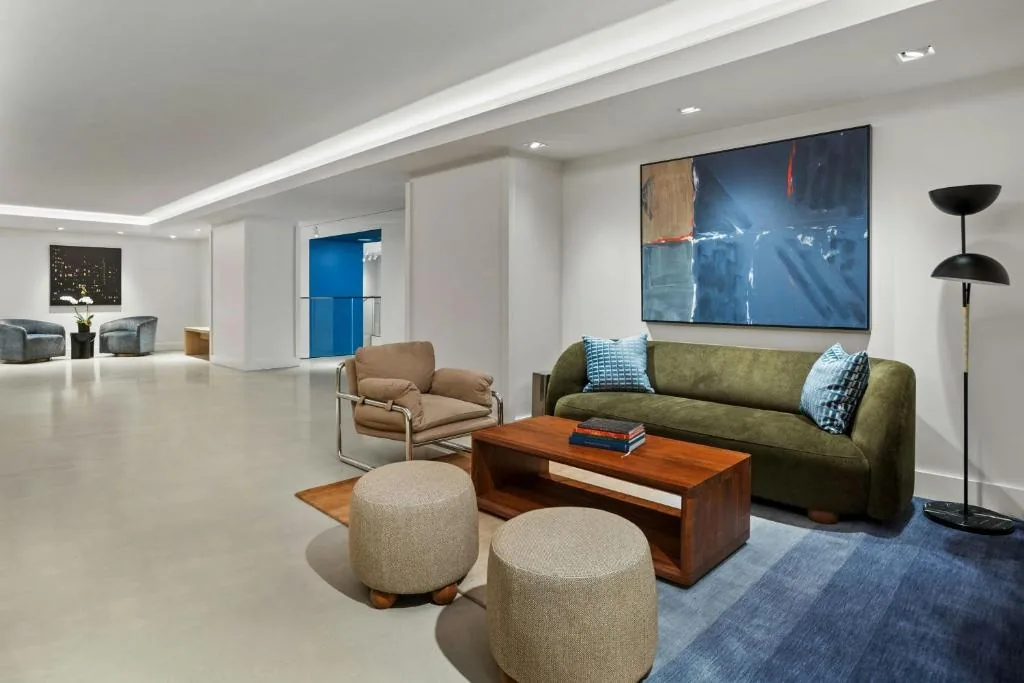
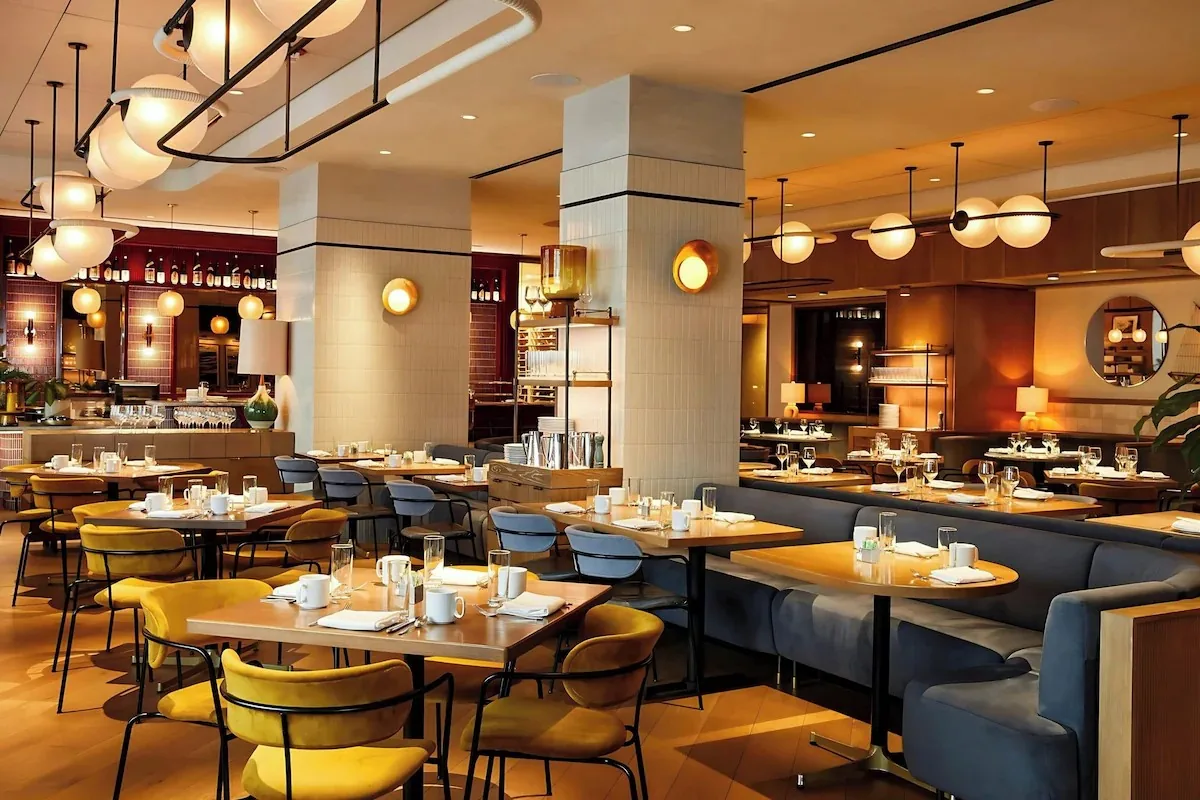
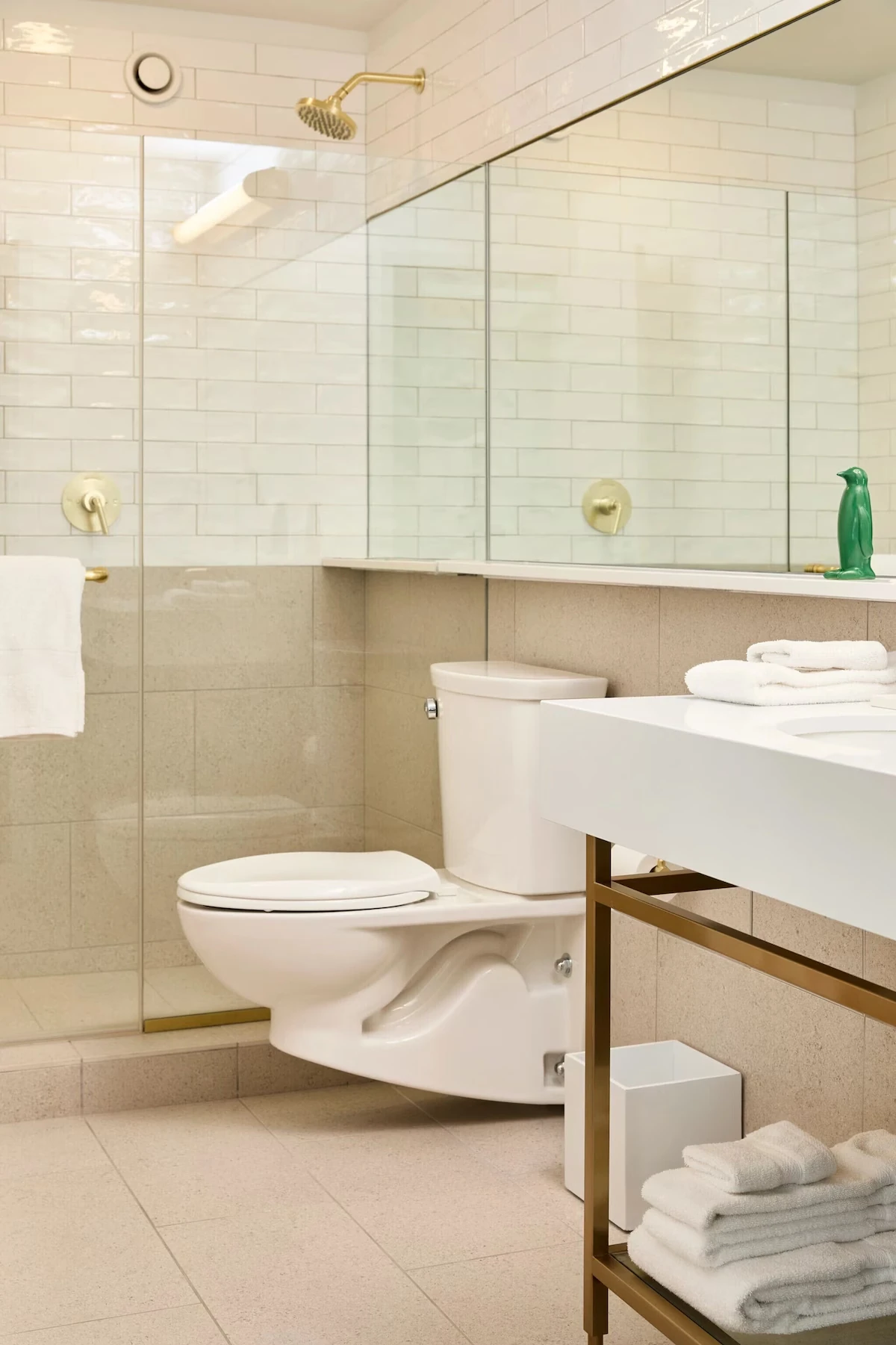
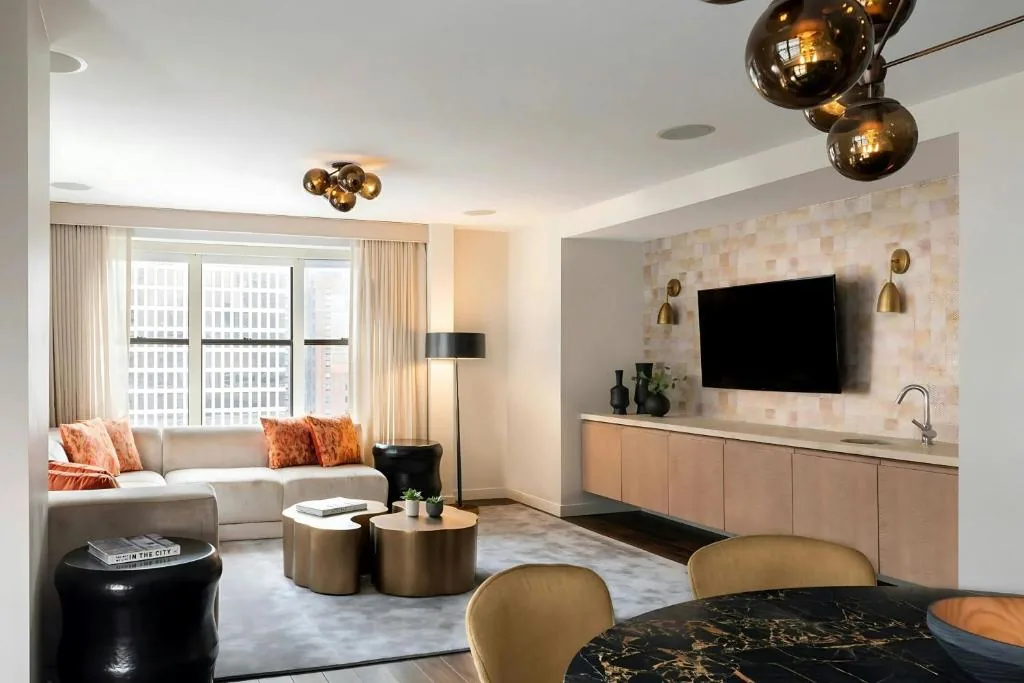
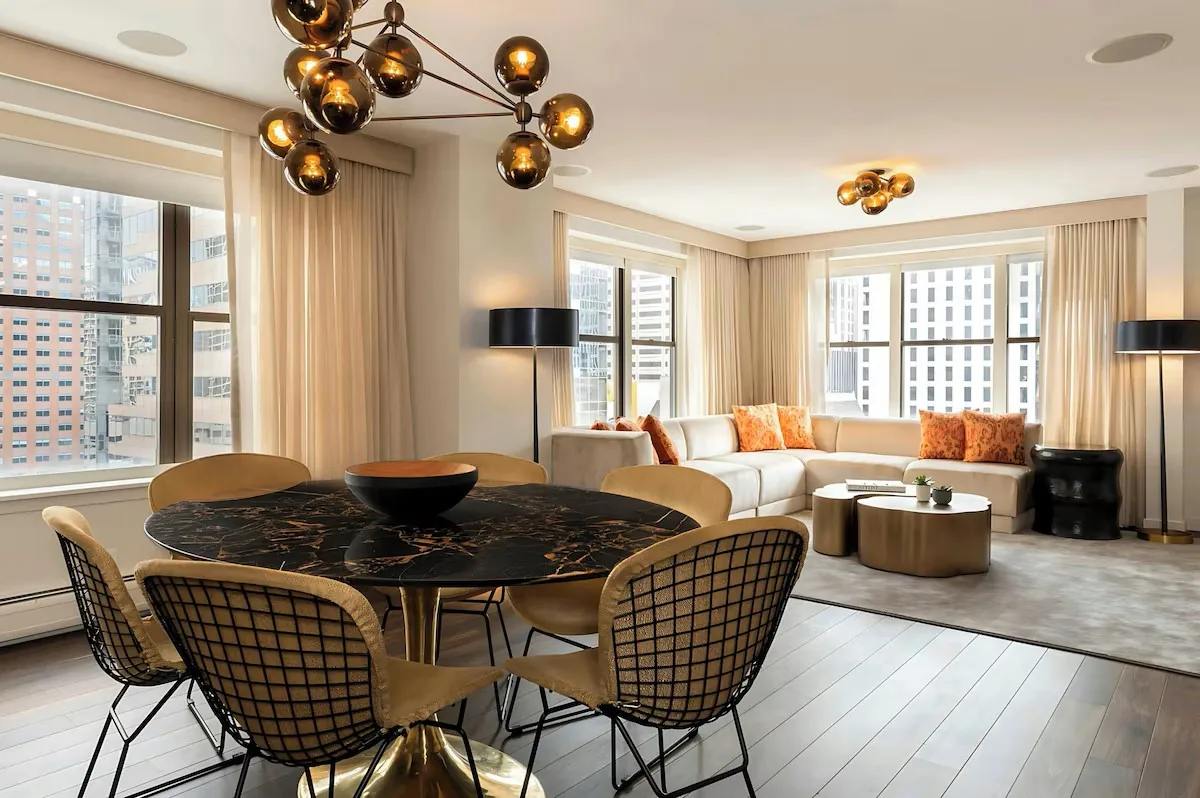
- A design-forward boutique with real character, recently refreshed inside.
- A prime River North address a block from the Magnificent Mile, galleries, and restaurants.
- Boutique scale and design in one of downtown’s most walkable neighborhoods.
What to keep in mind
- Recently rebranded — brand/operations are settling in
- A boutique conversion: room shapes and sizes vary
Best for Design-minded travelers who want a characterful boutique stay in the middle of River North, within easy reach of the Mag Mile and downtown attractions.
Summary of guest reviews. Sources: The Croydon name, height, foundations, architect and engineer from Frank A. Randall, History of the Development of Building Construction in Chicago (University of Illinois Press, 1949), p. 293. Hotel 55 Chicago Downtown, Preservation Chicago. Photography courtesy of Hotel 55 Chicago Downtown, used with permission. Details may change over time.
Why this building matters
What sets this hotel apart is its lineage. The same River North address opened in 2006 as The James Chicago, a pioneering design hotel, then reopened as the art-filled 21c Museum Hotel Chicago — part boutique hotel, part contemporary-art museum — and continues today, freshly renovated, as Hotel 55 Chicago Downtown. Few addresses in the neighborhood have carried so many of Chicago’s defining hospitality concepts under one roof.
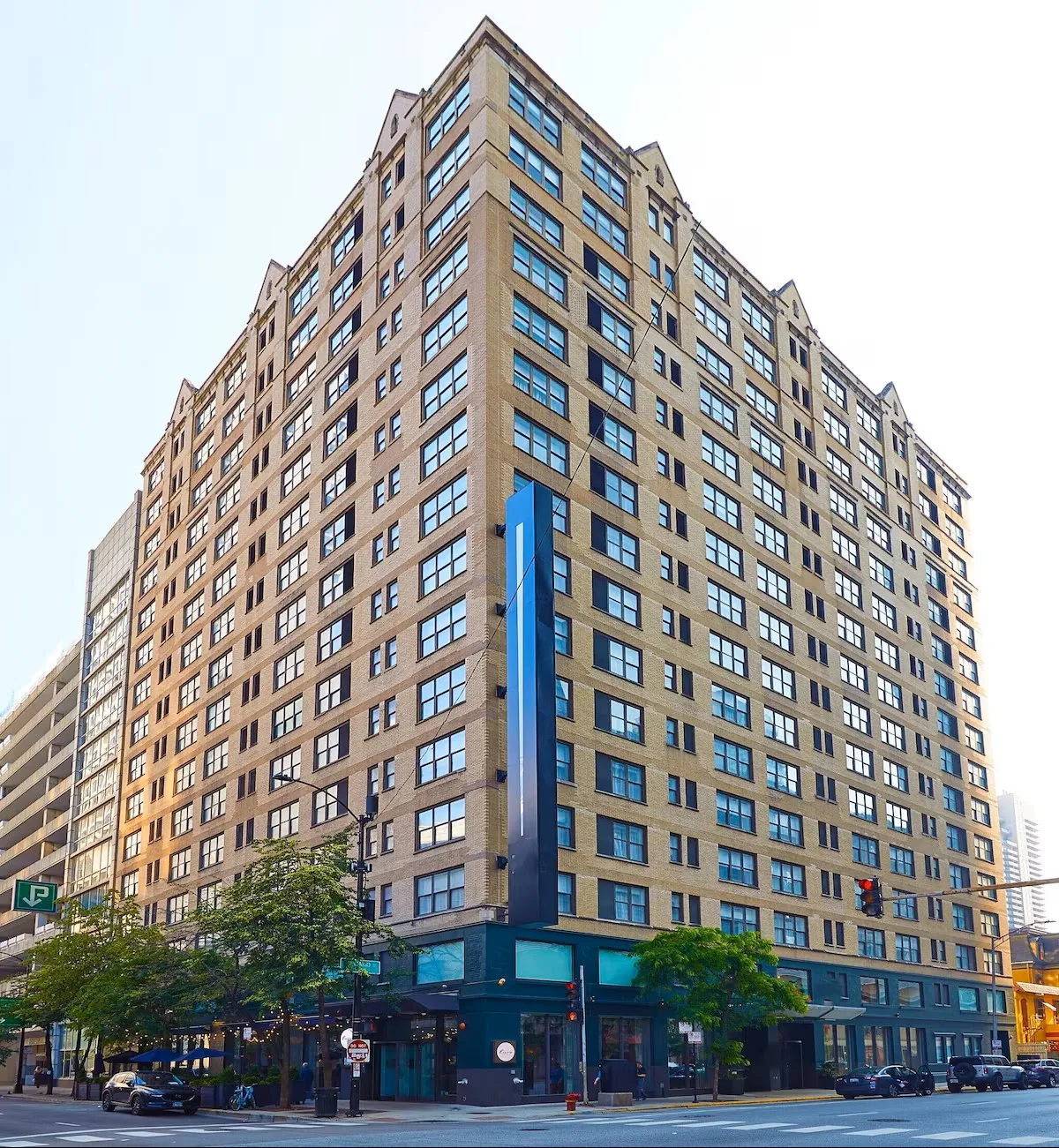
Randall records the building under a name it has since lost. “CROYDON HOTEL, at 616 N. Rush street, formerly known as the McCormick Hotel, built in 1927, is 16 stories and one basement high, on wood piles. Edmund J. Meles was the architect and Frank A. Randall the engineer.”
The building opened as the McCormick and was the Croydon by the time Randall wrote in 1949 — one link in a chain of names this address has worn, with the Lenox House and the James still to come. He files it on Rush Street where we file it on Ontario — the same corner, seen from its two frontages. And the structural engineer was Randall himself, which makes this one of three buildings in this guide engineered by the man who wrote the standard reference on Chicago building construction.